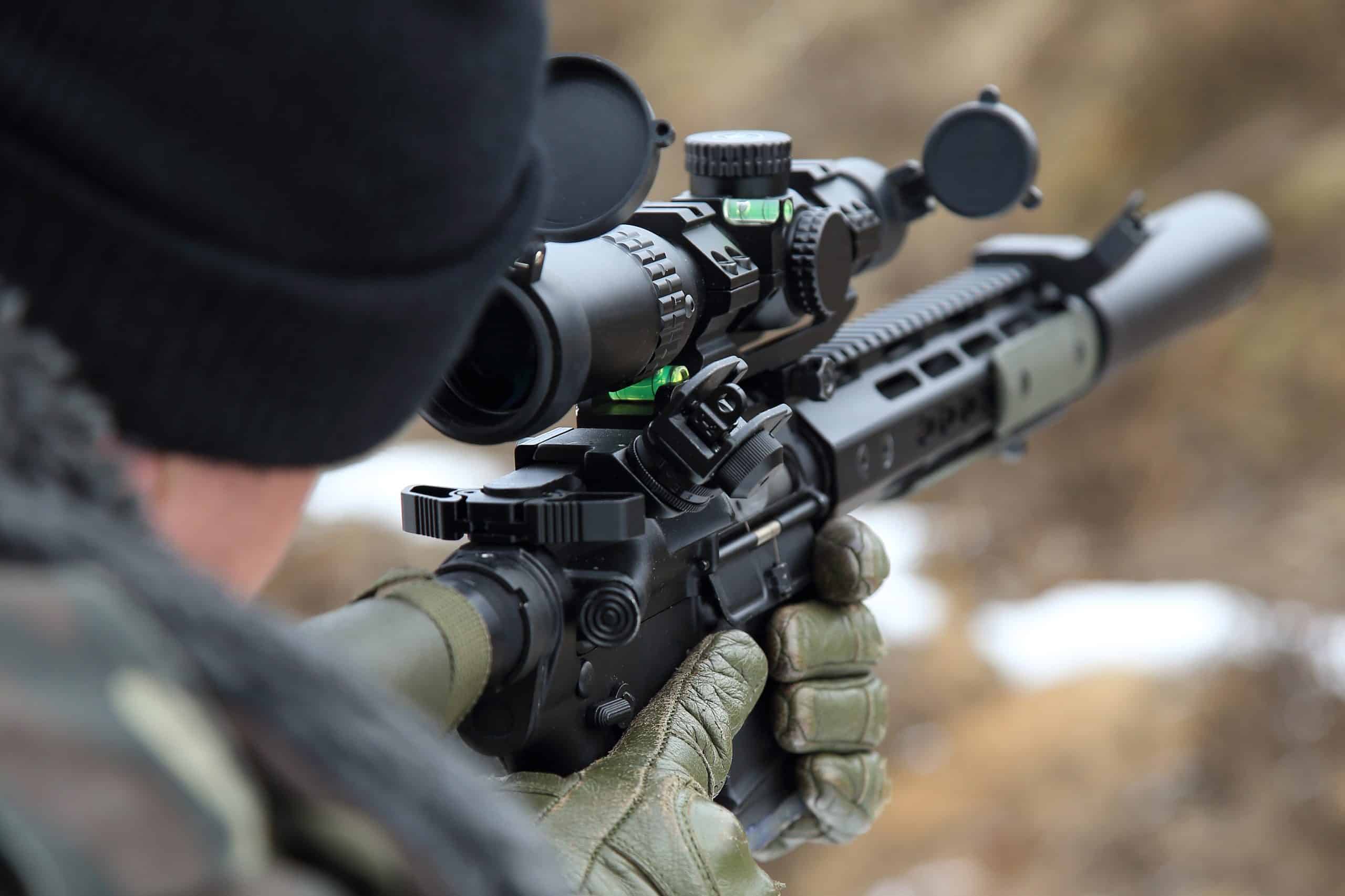

Sniper rifles occupy a strange place in military history. As weapons designed for precision, their operators are intended to exercise patience, control, and place accurate shots at ideal engagement distances. Dedicated sniper rifles weren’t really a thing until around the Cold War or so, but the Second World War did see the start of sniper schools, however. Their reputations have been forged on the battlefield, whether it be the frozen forests of Finland, urban ruins, or deserts across history. One thing is certain: the marksmen who used these weapons have propelled them into the stuff of legends.
What makes a sniper rifle isn’t pure power. That’s a reductive method of thinking when it comes to any sort of sniping. Some of the rifles we’re covering today have record-breaking kills, while others have changed how militaries approach long-range engagements. With that in mind, let’s dive into the deadliest sniper rifles to take to the battlefield.
Mosin-Nagant M91/30
©"Mosin Nagant M91/30 Profile" by Josiah Purtlebaugh is licensed under BY 2.0. – Original / License
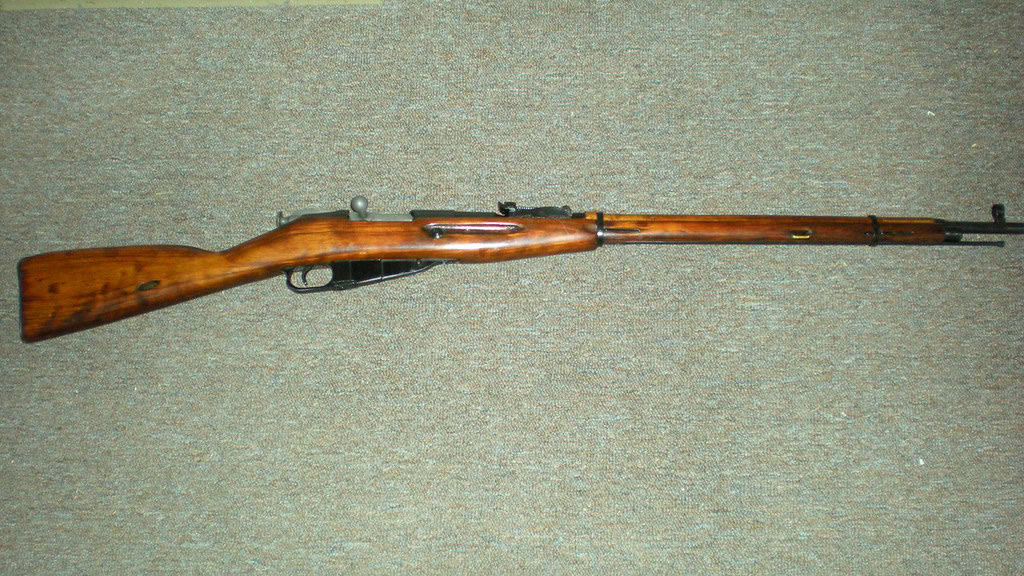
Few weapons can contend for the title of deadliest sniper rifle than the Mosin-Nagant M91/30. This was an antiquated design by the time it was pressed into combat at the start of World War 2. It was produced in vast numbers, with millions produced throughout the 1930s and 1940s. However, it has become the stuff of legends thanks to being tied to the record of one of history’s deadliest snipers. Finnish marksman Simo Hayha made use of an M91/30 throughout the Winter War, racking up an estimated 500 kills.
Hayha’s shots were taken without a scope, meaning it was operating much like its standard infantry configuration. Hayha reasoned that the scope’s glare would be noticeable in the snow’s glare, as the harsh winter conditions of the Winter War would have given him away. The standard chambering of 7.62x54mm was plenty potent, being comparable to the likes of the 8mm Mauser or .30-06.
Compared to the Western designs of the era, the Mosin-Nagant was designed to be cheap, rugged, and able to operate in the harshest conditions. This didn’t make it an ideal candidate for one of the deadliest sniper rifles in history. Hayha cemented his reputation, with his bolt-action rifle serving as a psychological weapon in addition to wreaking absolute havoc on the Soviets’ ranks.
Kar98k
©"WW2 German weapons Army rifle (repetergevær) Mauser Kar98K MP38 Schmeisser sub machine-gun Pistol P.08 Luger Armed Forces Museum (Forsvarsmuseet) Oslo Norway 2020-02-24 2813" by Wolfmann is licensed under BY-SA 4.0. – Original / License
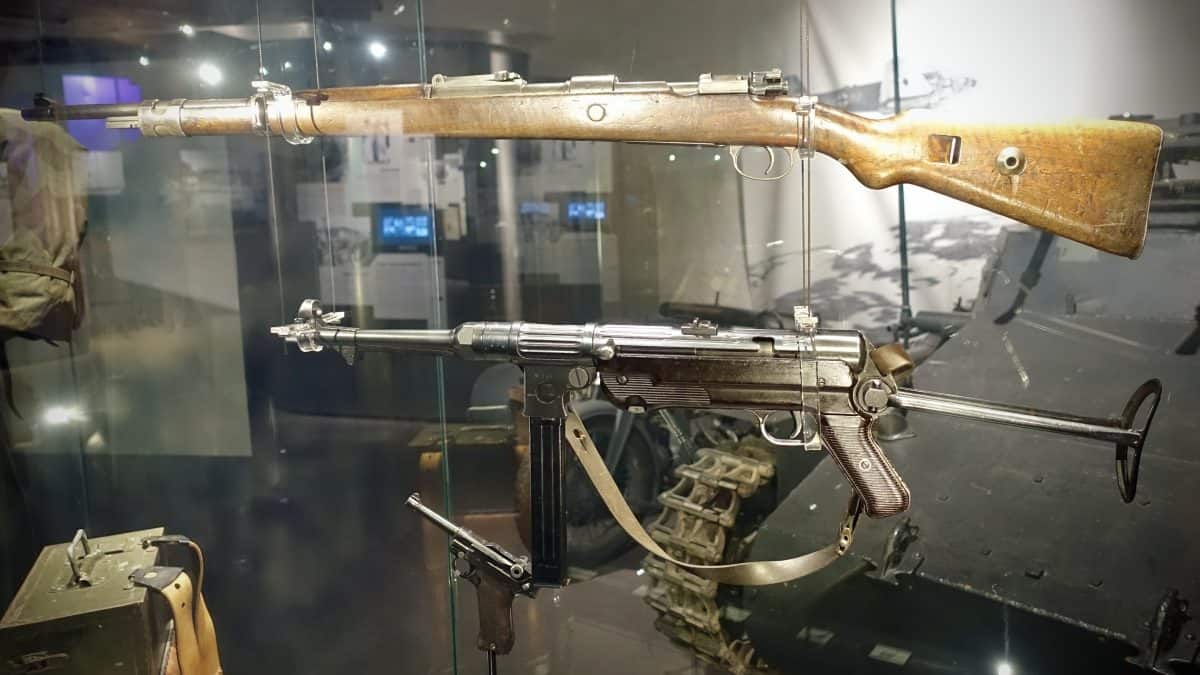
The Karabiner 98k, or Kar98k as it is more popularly known, is the culmination of valuable lessons learned from the First World War. Built on the venerable Mauser bolt-action, it is one of the most robust and high-performance bolt-action systems to ever be designed. German engineering was second-to-none during the early years of the Second World War, with tight production tolerances and astounding fit and finish.
German snipers were equipped with scoped Kar98ks and quickly became a feared presence across multiple theaters in World War 2. Optical sights allowed for long-distance engagements, something that was a rarity in the era of full-power rifle cartridges. The early war production examples were capable of astounding accuracy, something that was further emphasized by hand-selecting precise models for use by sharpshooters.
The Kar98k’s reputation as one of the deadliest sniper rifles in history is further emphasized by its adaptability. While not modular by any means, it was readily used as a standard infantry weapon, alongside being a great platform for sniping. Whether it was in the cramped chaos of Stalingrad or the more wide-open spaces on the Western Front, the Kar98k and German training made for a potent combination.
Lee-Enfield No. 4
©"Lee-Enfield No 4 Mk I (1943) – AM.032027 noBG" by Armémuseum (The Swedish Army Museum) is licensed under BY-SA 4.0. – Original / License
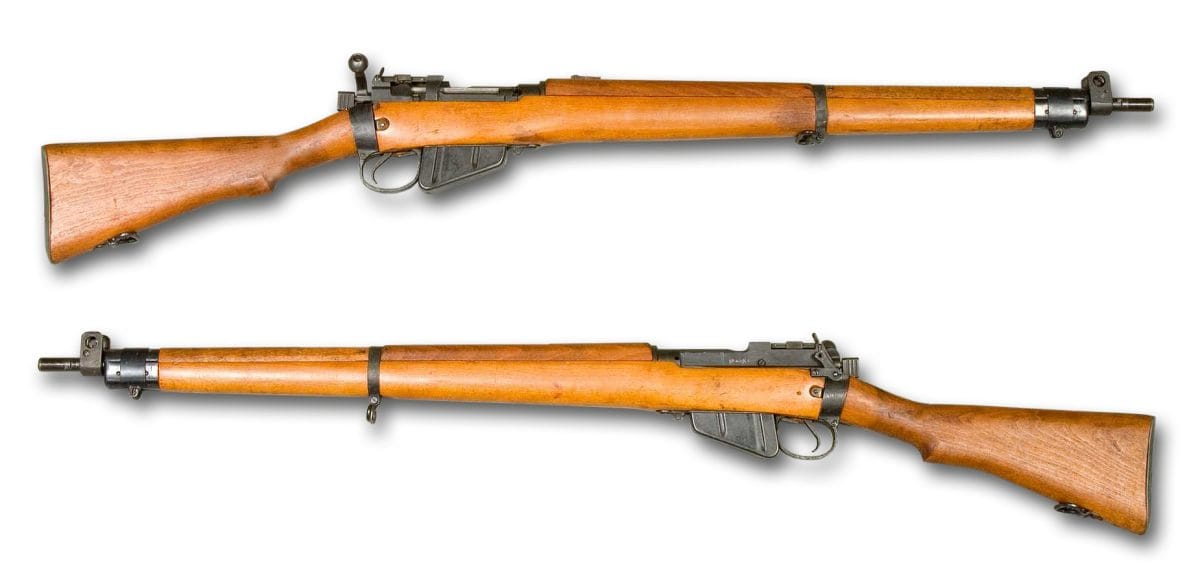
The British Army prided itself on precise rifle fire, something it practiced ably throughout the First World War. By the time the Second World War was picking up in earnest, the venerable Lee-Enfield bolt-action rifle had seen some changes and revisions, and specialized platforms like the No. 4 (T) were developed. It marks the first true sniper variant of a rifle developed by Western nations, thanks in part to careful selection, telescopic sights, and a rapid rate of fire, making for a highly flexible package.
Unlike its contemporaries, the Lee-Enfield made use of a rear-locking bolt. This allowed for smooth cycling, as snipers quick rapidly engage targets and place follow-up shots without losing sight alignment. The balance of speed and precision was invaluable in the chaotic battlefields of Northern Africa and Western Europe.
British and Commonwealth forces utilized the No. 4 (T) across just about every theater of combat they participated in. Whether it was the jungles of Southeast Asia or the deserts of Northern Africa, the Lee-Enfield acquitted itself well. This wasn’t down to just the mechanical design, but rather the methodology behind British marksmanship training. Snipers were taught to exploit the rapid fire rate of the rifle, serving as a force multiplier without the heavy logistics needs.
M40
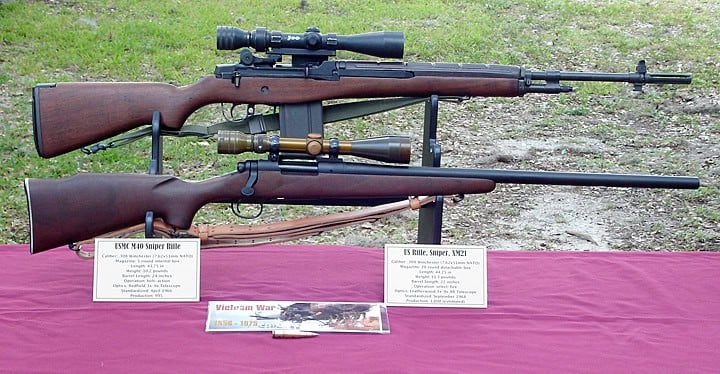
©"Sniper Rifles M40 XM21" by Curiosandrelics is licensed under BY-SA 3.0. – Original / License
Moving past the Second World War, we start to see truly dedicated sniper platforms being developed. These were rifles engineered with precision and accuracy in mind, rather than making use of pre-existing service rifles. The M40 was built on the Remington 700 action, designed for use by the United States Marine Corps.
It quickly entered the ranks of deadliest sniper rifles thanks to seeing engagements throughout the Vietnam War. Notably, sniper Carlos Hathcock was one of the most accomplished snipers in American history. Hathcock had a prolific career throughout the Vietnam War, hitting targets at extreme distances while making the most of the precise nature of the rifle.
Considering the harsh conditions of the jungles of Vietnam, the M40 rarely skipped a beat. Its heavy barrel minimized vibration. The refined high-powered optical sight allowed for improved target acquisition, a must for the heavy jungle foliage. The cat was out of the bag, dedicated manufacturing lines, and a shift in marksmen training helped to redefine modern snipers.
Barrett M82
©scguard / Flickr / Public Domain
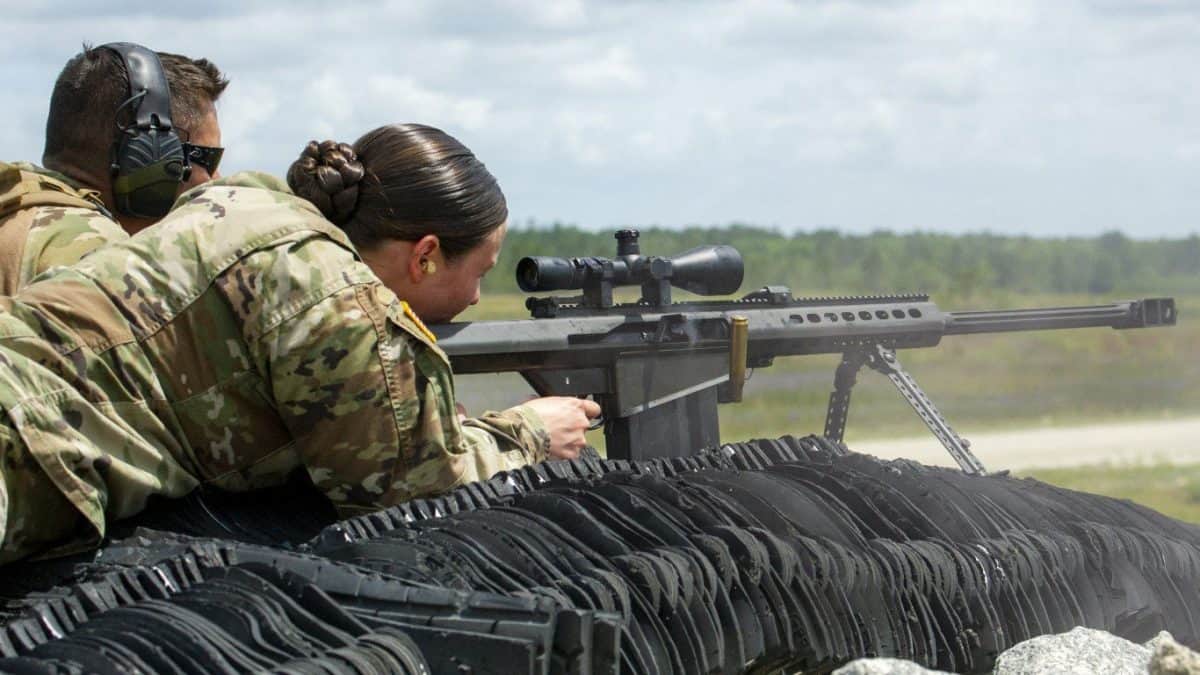
Anti-materiel rifles are a divergence of sorts from traditional sniper rifles, emphasizing destructive power and extreme engagement distances. Ostensibly, these are intended to engage thin-skinned vehicles, supplies, and other structures. In a pinch, they serve as potent sniper rifles, capable of delivering precise firepower at distances that were unthought of.
The Barrett M82 is chambered in the powerful .50 BMG, a cartridge originally intended for use in heavy machine guns. It is capable of disabling vehicles, radar installations, and other fortified positions. Despite the extreme size and weight of the weapons platform, it has seen use across modern battlefields in all sorts of conditions.
In trained hands, the M82 is capable of killing well past a mile. It might not be engineered for engaging personnel, but it is capable of delivering devastating firepower at distances where enemies can’t bother to engage.
Dragunov SVD
©zim286 / iStock via Getty Images
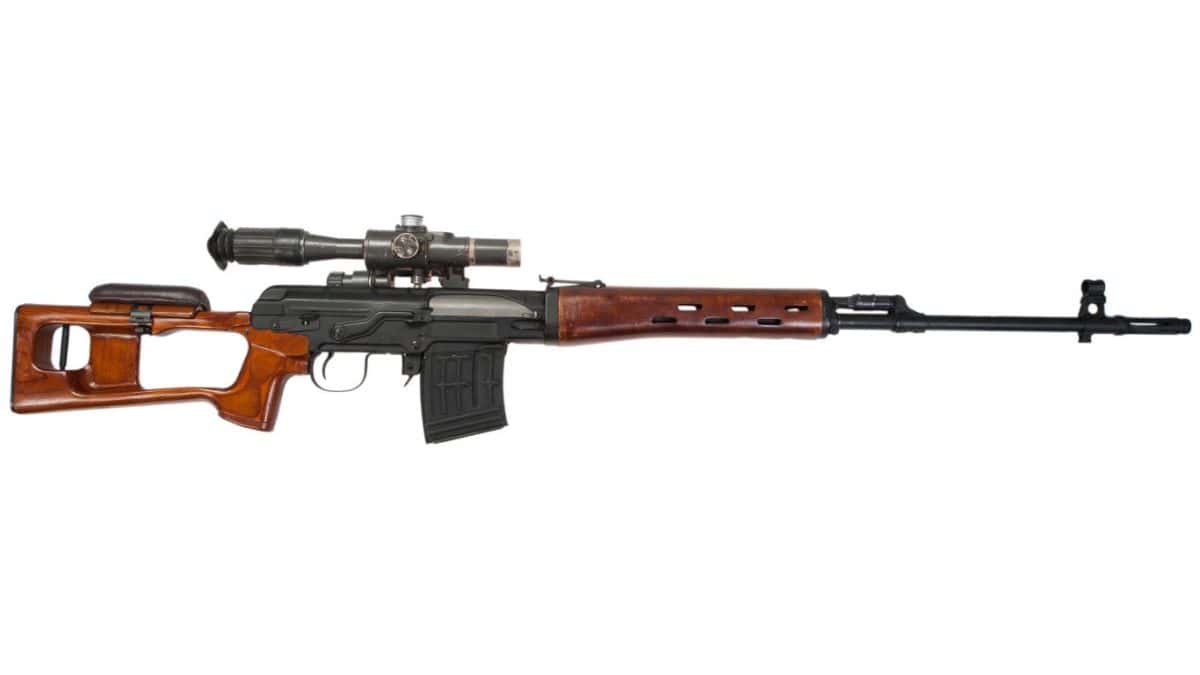
Rounding out our deadliest sniper rifles is something of a paradigm shift. The SVD is arguably the first true designated marksman rifle, something that bridges the gap between snipers and standard riflemen. The SVD’s prolific production run has more than cemented its place in the ranks of the deadliest sniper rifles in history.
Chambered in the same 7.62x54mm as the Mosin-Nagant, it isn’t lacking in stopping power. However, where the SVD differs is the use of a semi-automatic action, allowing for rapid engagement of targets and follow-up shots. The Soviets’ approach to precision fire was a marked difference from the likes of NATO client states. All units were equipped with SVDs, meaning they were capable of operating independently and providing accurate fire at distances.
This concept is something that was a bit slower to catch on in Western nations, but given the adoption of weapons like the M110 by the United States, it seems to have caught on. Precision distributed across the battlefield only serves to increase overall lethality, rather than relying on independent specialized units.
Conclusion
The use of sniper rifles on the battlefield has evolved over the years. Starting out of a place of necessity, it was quickly realized that dedicated production lines would only benefit the ability of marksmen to place accurate fire on targets. It isn’t just about engaging targets, but being able to serve as a force multiplier that can tie up much larger units with minimal resources needed. As we’ve seen with the deadliest sniper rifles covered today, there are some decidedly different approaches to precision fire.
The image featured at the top of this post is ©syid/Shutterstock.com