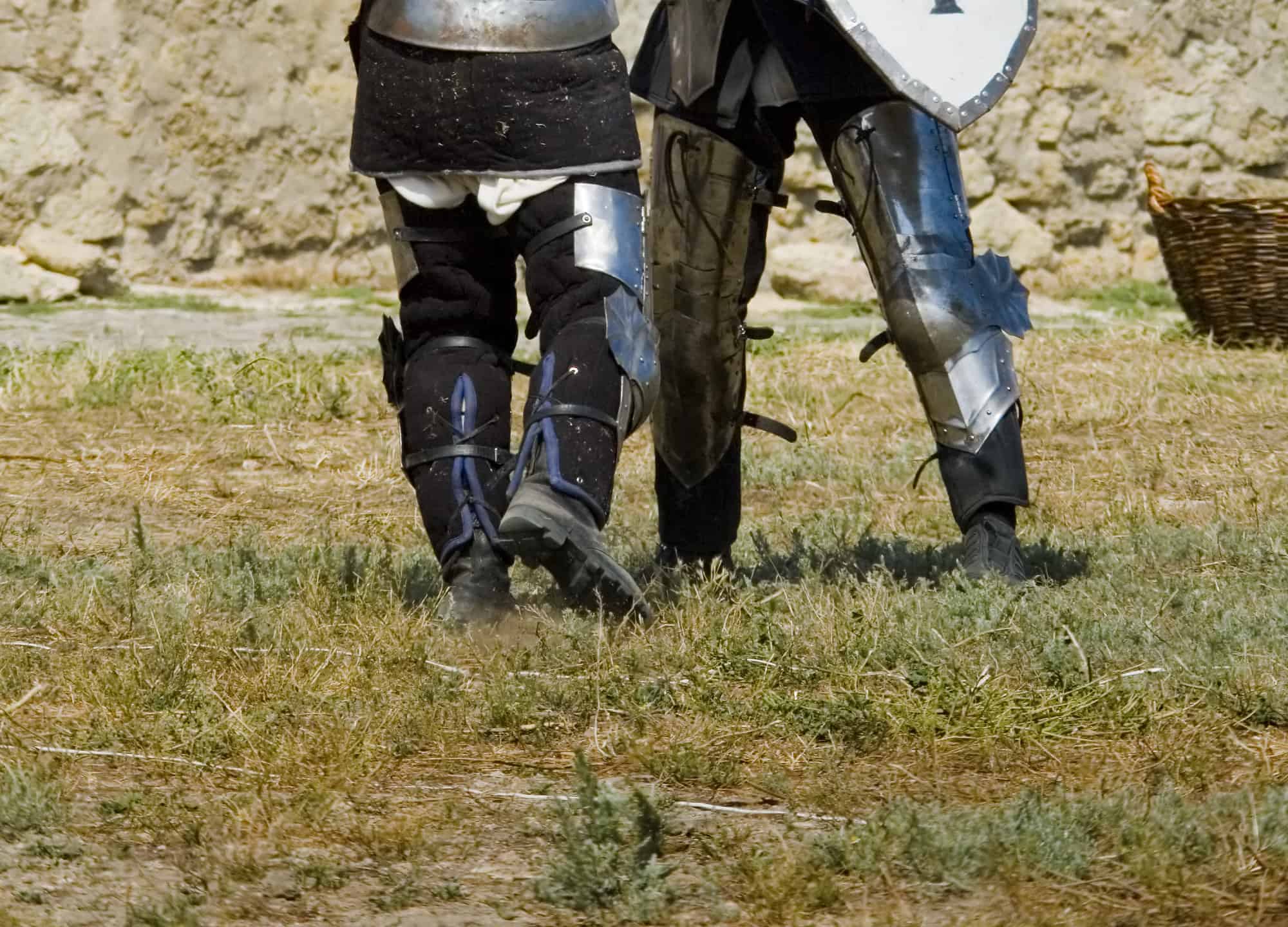

We often romanticize the Middle Ages, seeing them as a time of chivalry, gallant knights, and castles. Beneath all of this pageantry and myth lies the stark reality of an era defined by brutal warfare. Battles weren’t decided solely by the tactics and valor of the men on the battlefield, but by implements designed to maim, pierce, and cleave in the most efficient way possible. Medieval arms evolved as a direct response to the advances in armor made in the era, alongside fortifications and other defensive emplacements. This naturally led to weaponry becoming more specialized and lethal as time went on.
Unlike modern warfare, combat in the Middle Ages meant that you were directly in the path of any sort of immediate violence. Soldiers had to rely on skill, strength, and their comrades to succeed. Some of the weapons we’re covering today were feared due to their raw killing power, while others had a hefty psychological impact to consider. Today, we’re looking at the deadliest medieval weapons in all of history.
Longbow
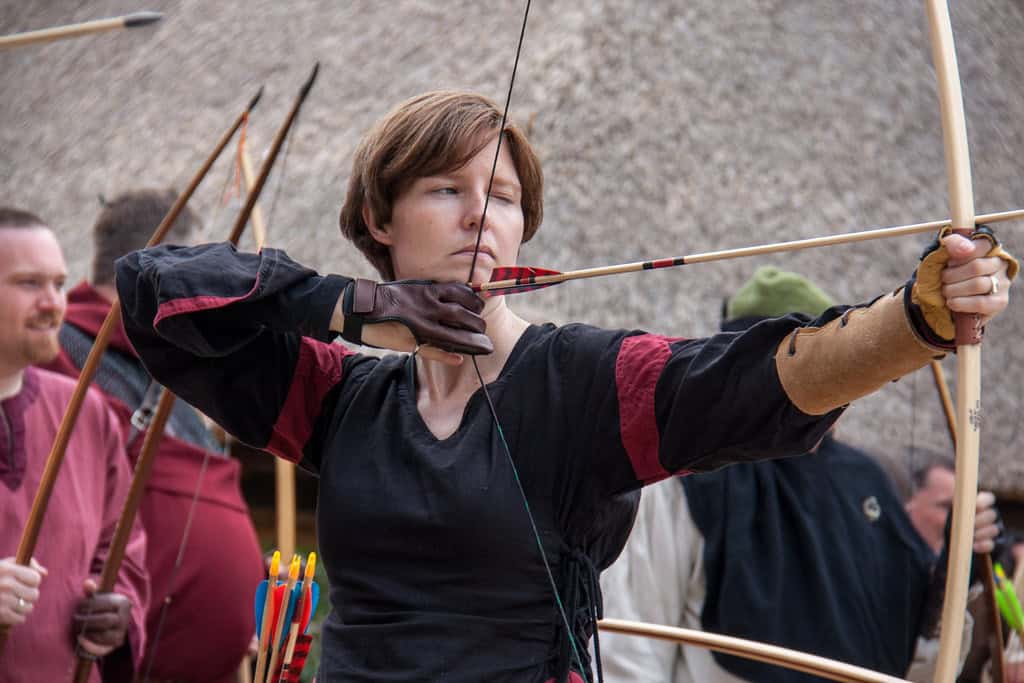
©"longbow shoot" by hans s is licensed under BY-ND 2.0. – Original / License
Before the age of gunpowder, the longbow was the great equalizer on the battlefield. Armies of the Middle Ages relied overwhelmingly on heavy cavalry to destroy levied forces. The English armies of the Hundred Years’ War were the most renowned users of the longbow, often training from a young age to master the weapon. This was a massive bow, capable of firing arrows over remarkable distances while retaining plenty of killing power.
A skilled longbowman could fire off around 6 to 10 arrows a minute, with massed formations creating devastating volleys that could break an enemy before they closed ranks. If armored foes got closer, the longbow made short work of armor, piercing through chainmail and punching through thinner portions of platemail. Its best use is exemplified at the Battle of Agincourt, where longbowmen destroyed the French armored knights before they could even strike.
There is something to be said about how effective the longbow was and the social disruptions it represented. Heavy cavalry was the domain of the aristocracy, while mere peasants were trained in the use of such a weapon. There was nothing mere about the peasants who had mastered the longbow, however, as they could destroy armored knights with ease.
Poleaxe
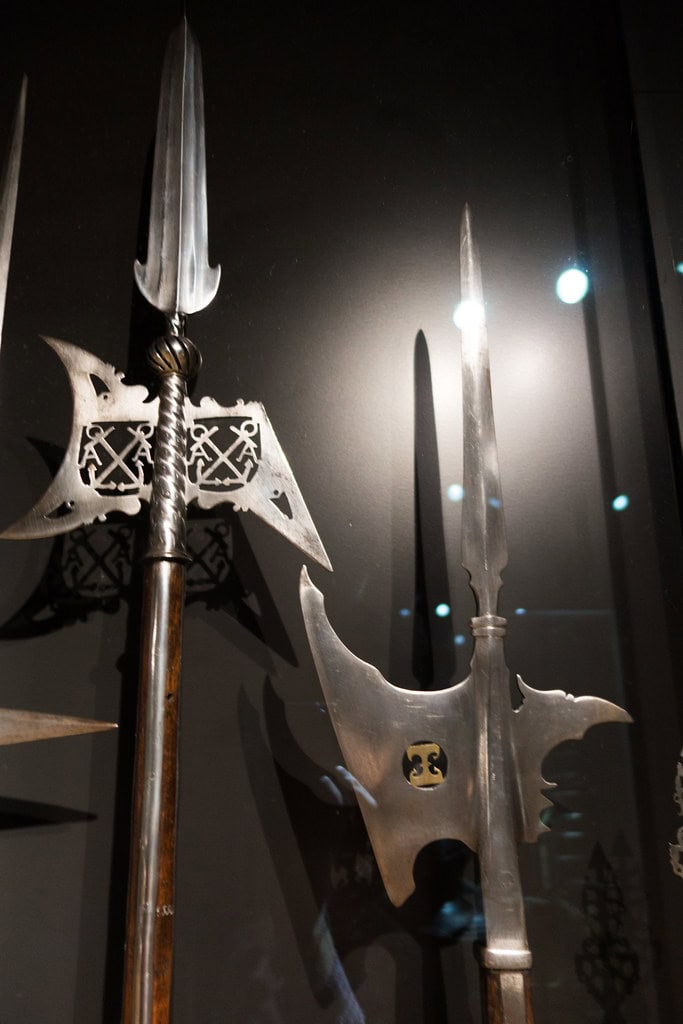
©"Decorative poleaxes" by quinet is licensed under BY 2.0. – Original / License
Measuring around 5 to 6 feet in length, the poleaxe was a direct response to the advances in armor seen across the medieval period. It combined an axe blade, a spike, and a hammer into a cohesive, deadly implement of warfare. Swords struggled against plate mail, as they could bounce off the more rigidly constructed helmets and breast plates. However, a poleaxe made quick work of them.
When effectively used, the hammer could crush bone beneath armor, rendering the advantage a moot point. The sharp spike was used to root for gaps and openings, delivering a swift killing blow if possible. In the right hands, the poleaxe could handily take out even the most skilled of knights.
The poleaxe quickly gained a reputation, becoming a standard choice for knightly combat. Surviving manuals from the medieval period show a bevy of techniques intended to kill, wound, and disarm opponents in a matter of seconds.
Warhammer
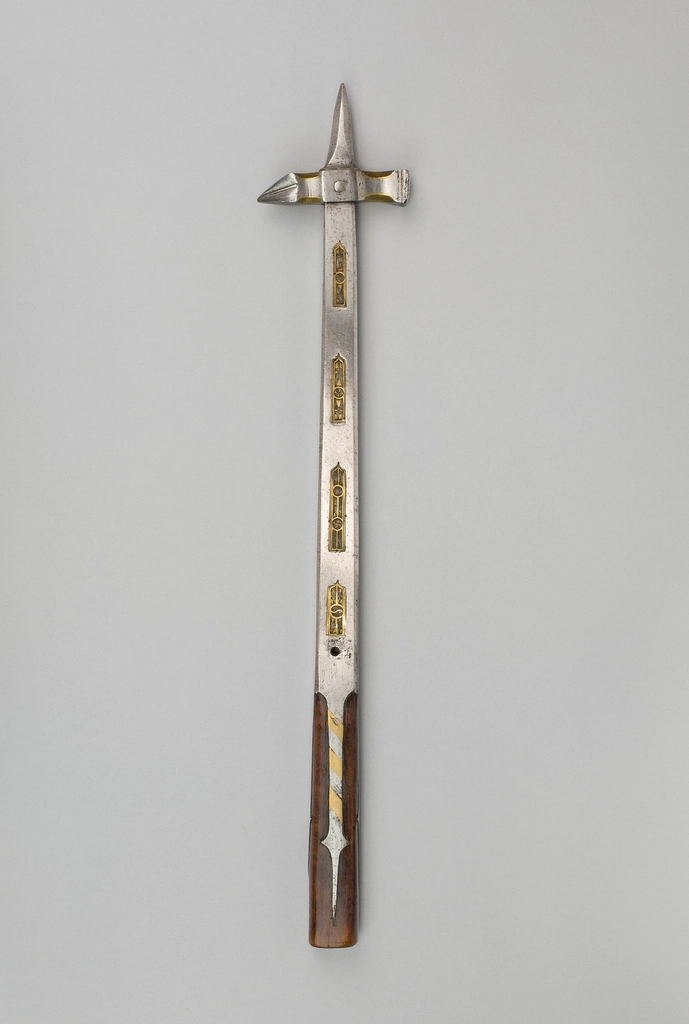
©"War Hammer" by artinstitutechicago is licensed under CC0 1.0. – Original / License
As plate armor became more prominent on the battlefields of Europe, blunt force weapons became a preferred means of dispatching knights. The medieval warhammer was developed as a direct counter to plate armor, succeeding where slashing and piercing weapons failed.
The design is rather simple, making use of a short handle and heavier metal head. Typical examples usually had a hammer head on one side and a long spike on the other. Like the poleaxe, this was intended to maim and kill those encased in armor, rather than attempting to punch through it.
Warhammers became a feared weapon in time, thanks in part to just how lethally effective they could be. For heavy cavalry, they became terrifying, as a single well-placed blow could take out the rider and horse alike. It took a bit of finesse to properly use, but it was more than capable of taking out even the heaviest armor of the time.
Crossbow
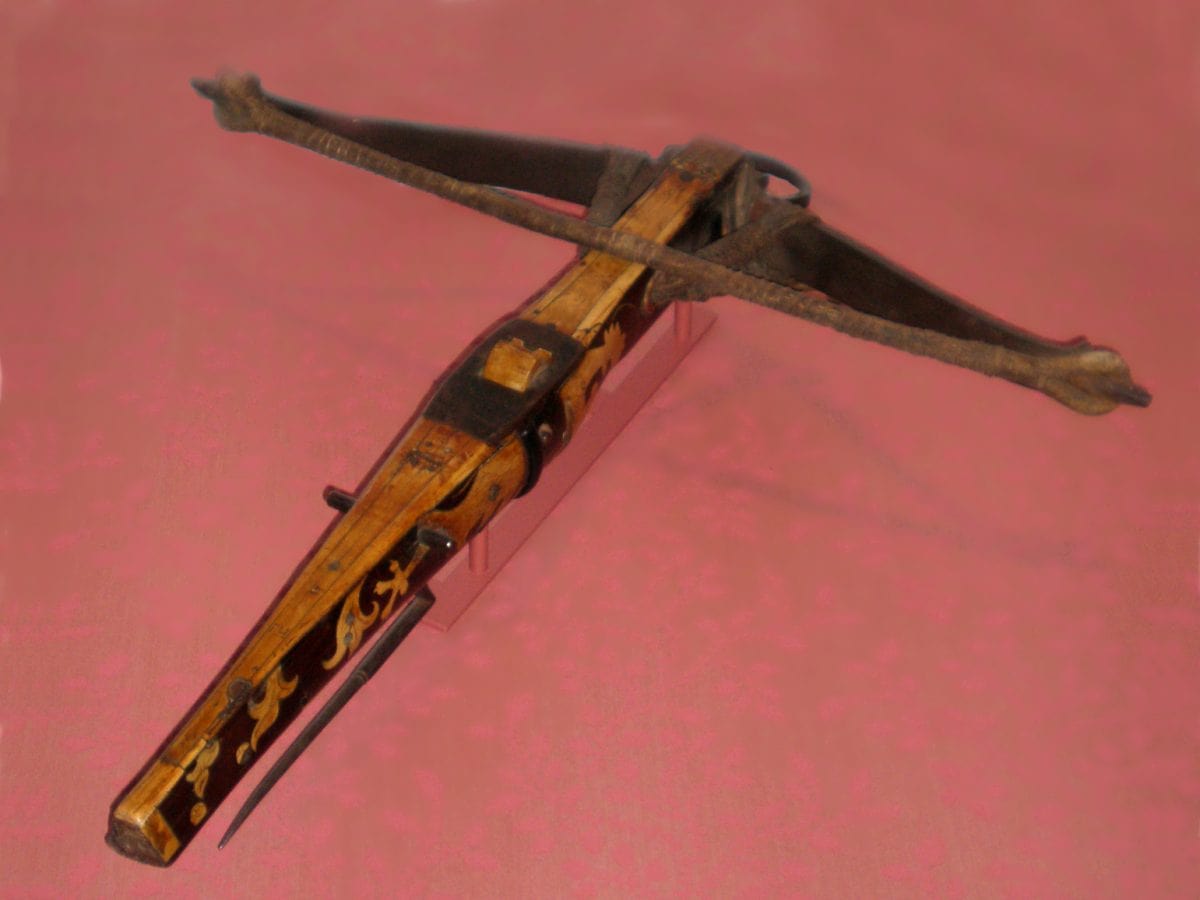
©"German 16th century crossbow CAC" by BrokenSphere is licensed under BY-SA 3.0. – Original / License
Ranged weaponry with any degree of power behind it is going to have a certain degree of lethality, while also removing the potential danger faced, at least in the Middle Ages. Now, we talked about the longbow earlier, but that required years of training to master the heavy draw weight and be able to hit a a target with some degree of proficiency. For those who didn’t have the means to train, a crossbow could bridge that gap ably. You didn’t need much training to use one, much like the later muskets and rifles that would come to dominate the battlefield in the centuries to come.
Crossbows could deliver a tremendous amount of power without any muscular strain to the operator. At closer ranges, this meant a well placed bolt could punch through chainmail, plate armor, and shields. They were slower to reload than a longbow, often putting the operator at risk, but they more than made up for it with raw power and accuracy.
Where crossbows truly shined was in sieges, where defenders could reload with some defenses backing them up. A single bolt could dispatch a knight, regardless of their fame and renown. If anything, the crossbow and its growing prominence in the Middle Ages represents the shifts of ideals on the battlefield. It wasn’t about noble houses fighting one another in some chivalric conflict, but something instead marked with technological progress.
Greatsword
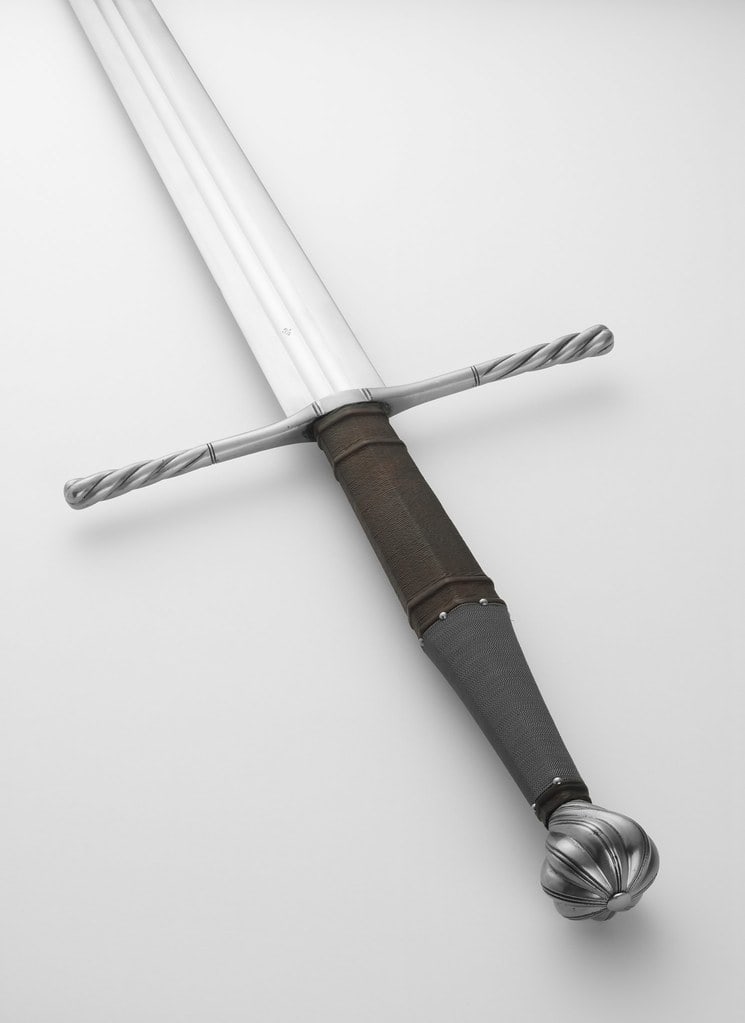
©"Albion_Maximilian_Medieval_Sword_08" by Albion Europe ApS is licensed under BY 2.0. – Original / License
These aren’t your typical arming or broadsword. Massive swords like the greatsword were built to control space, dictating the flow of skirmishes. There is a bit of a reputation for these being intended solely for ceremonial duties, but you can find evidence of them being used in combat.
In the right hands, a greatsword was a devastating weapon, being able to cut through ranks of lightly armored troops or tear through pike formations. Reach and momentum were the name of the game, and in open combat few could match their ferocity, at least where infantry was concerned.
A greatsword is a rather impractical weapon for confined spaces, as their length and heft don’t make for an ideal close quarters weapon, like say something you’re using while defending against a siege. There is certainly something to be said about the psychological impact of the weapon as well, as it certainly leaves quite the impression.
Morningstar
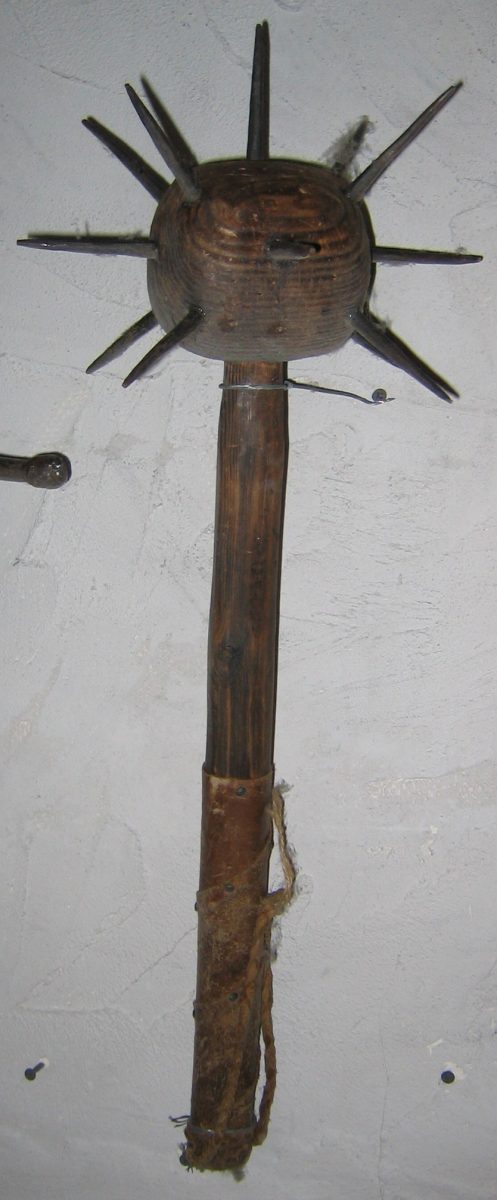
©"Fomfr morning star" by Flominator is licensed under BY-SA 3.0. – Original / License
Conceptually, you don’t get more dead simple than the morningstar. You’ve got a heavy metal ball covered in spikes affixed to a shaft and handle. Functionally, they have quite a bit in common with the warhammer, being designed primarily for anti-armor use. The spikes on the head of the weapon were concentrating force into smaller points, allowing to pierce helmets and tear through gaps in the armor.
If you weren’t covered in armor, they were far more gruesome as a whole. Given their overall design, even survivors from a glancing blow were left maimed. They have a counterpart in the mace as well, which typically just had a weighted head without the spikes. You didn’t need elaborate training to utilize them well, as you could just swing at vital points and hope for the best.
Lance
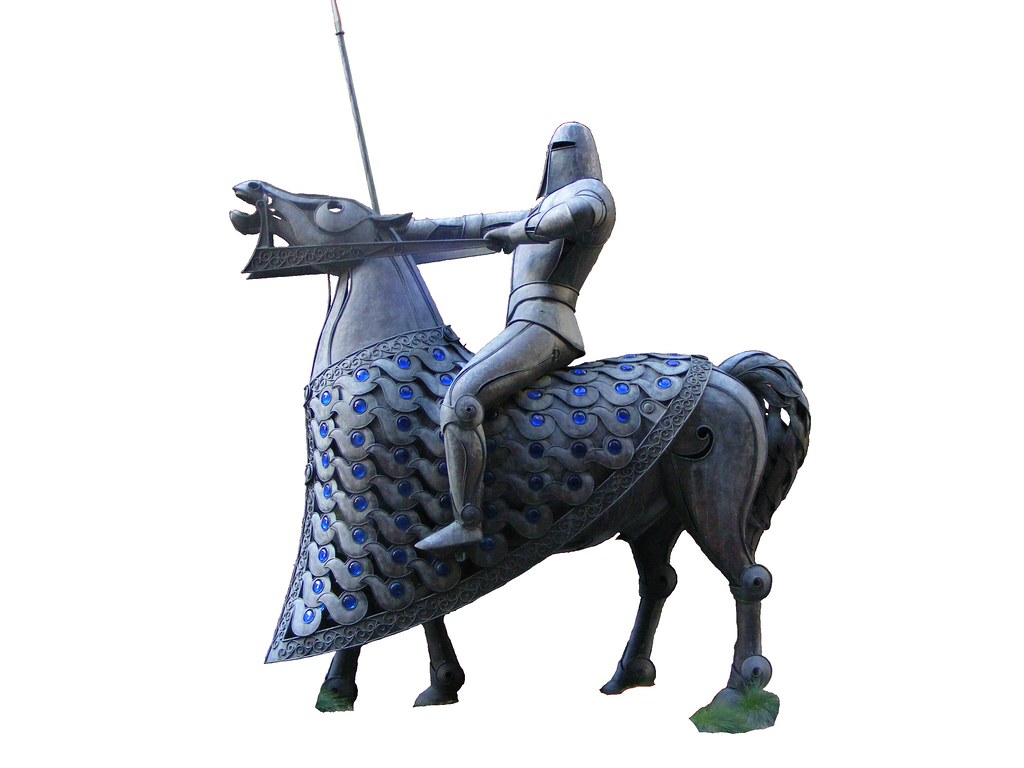
©"knight snip" by monkeywing is licensed under BY 2.0. – Original / License
We often think back on lances as the archetypal weapon of the knight, second to something like a sword. It conjures up a rather romantic image of fierce warriors jousting at tournaments to curry favor with a lady of the court. However, that dismisses the sheer power of the lance, which is perhaps one of the most powerful single use weapons in use during the Middle Ages. A charging knight equipped with a lance could devastate infantry formations, imparting tremendous force even against heavily armored opponents.
The lance had to be couched, and it wasn’t something you could readily use on foot, as you needed to be mounted to make full use of it. When properly deployed, it could smash into a target and impart the full force of a galloping horse concentrated into a steel tip. They were often broken after a single charge, but that was by design. If something survived the initial shock of the lance, the mounted knight would likely be galloping back into place to finish the job with a sword or poleaxe.
Swords
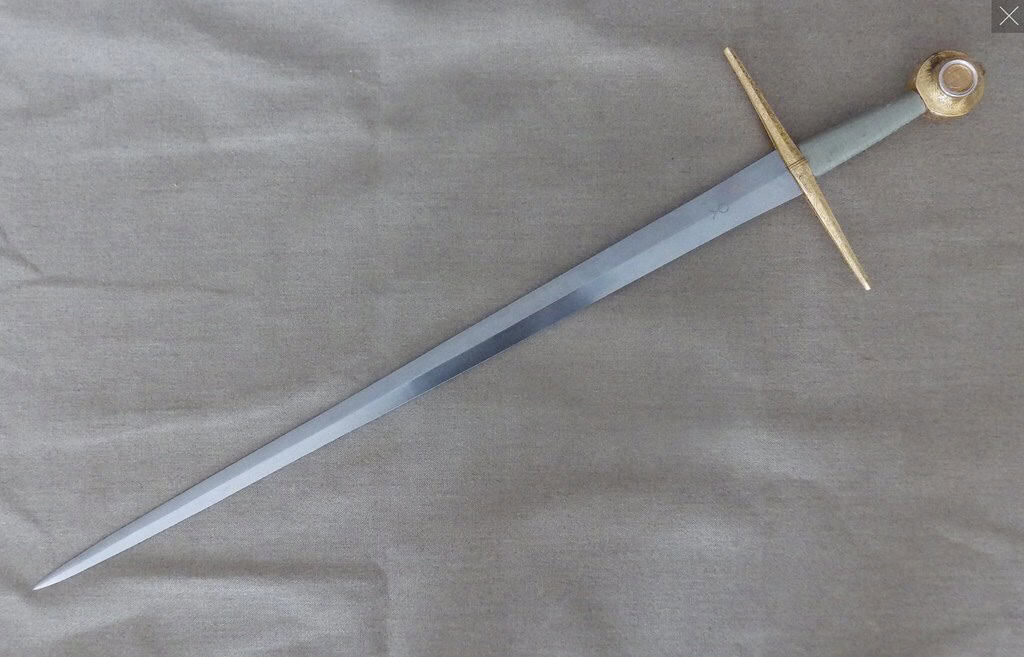
©"arming sword" by Tysto is licensed under BY 2.0. – Original / License
Speaking of swords, they certainly have something of a reputation. For some reason or another, people tend to think of swords as the primary weapon for just about anyone fighting in the Middle Ages. While swords were a common sight, especially when considering the likes of the arming sword and longsword, their deadliness wasn’t so much due to their form or design, but rather the fencing techniques developed around them.
Longswords in particular had whole systems of martial arts developed around them, making use of things like half-swording to turn the weapon into a versatile jack-of-all-trades. The idea was to control the engagement and end it in a decisive fashion. This is at constant odds with the more Hollywood depiction of swords, where knights on horseback clash against one another while using what was essentially a very versatile sidearm.
Where they shined wasn’t so much in their deadliness against mounted troops or light infantry, but rather their constant availability. Depending on your rank and position in any medieval army, you’d likely have a sword as a sidearm for when the fighting closed in. It didn’t have the cumbersome dimensions of a polearm like a spear or pike, meaning you could more effectively close the distance and deliver a killing blow.
Conclusion
Medieval warfare was an unforgiving way of fighting, with survival depending on your ability to adapt and make effective use of the lethal implements at your disposal. The deadliest weapons of the era weren’t designed in a vacuum, however, but rather the culmination of years of design and countering technological advances like plate mail. It paints a more complete picture of warfare in the Middle Ages, rather than it being some honorable contest as pop culture seems to depict it. Battles were won not by kings or lofty speeches, but rather metal, wood, and human ingenuity.
The image featured at the top of this post is ©dtopal/Shutterstock.com