

Military innovation is often driven by competition and the desire for a tactical advantage. Behind the scenes of every major war, governments, defense engineers, and scientists have envisioned weapons that promised to change the very face of warfare itself or end it completely. Many of these projects were highly ambitious, prohibitively expensive, and occasionally in violation of any sort of ethical considerations. This meant that they never left the drawing board, with plans being left merely to a handful of blueprints, failed tests, and classified documents.
However, these “paper weapons,” as they were, reveal quite a bit about the eras of their respective conflicts. Realistically, we can see just what sort of ends that nations were working toward in any given war. These weapons may never have been a viable solution, partly due to being impractical, dangerous, and in some cases obsolete before they ever got past the testing phases. Today, we’re looking at those failed secret weapon projects and what they meant in the grander scheme of things.
The Sun Gun

©Pero Lope/Shutterstock.com
Nazi Germany had no shortage of wonder weapons in the works throughout the duration of their involvement in World War 2. Of note is the Sonnengewehr, or Sun Gun, an orbital weapon that was proposed late in the war. The basic concept was to make use of a concave mirror in space to focus sunlight on targets back on the Earth. They hoped it would be enough to engulf cities in flames or boil oceans.
Being realistic, however, we’ll point out that the means to deploy any sort of space-based infrastructure were woefully lacking in the 1940s, let alone today, for such a weapons platform. Launching, assembling, maintaining, and ultimately utilizing this weapon would’ve required significant advances in materials science, a keen understanding of orbital mechanics, and a fairly advanced rocketry program. Even if it were built, controlling the Sun Gun with any degree of precision would have been next to impossible for the time period.
The Sun Gun never progressed beyond theoretical musings by German scientists. It is a clear demonstration of just how desperate the Nazi war effort was becoming as the war was drawing to its conclusion. If anything, the Germans should’ve been focusing less on these expensive wonder weapons and more on the matters at hand as the Western and Eastern Fronts collapsed.
Project Pluto
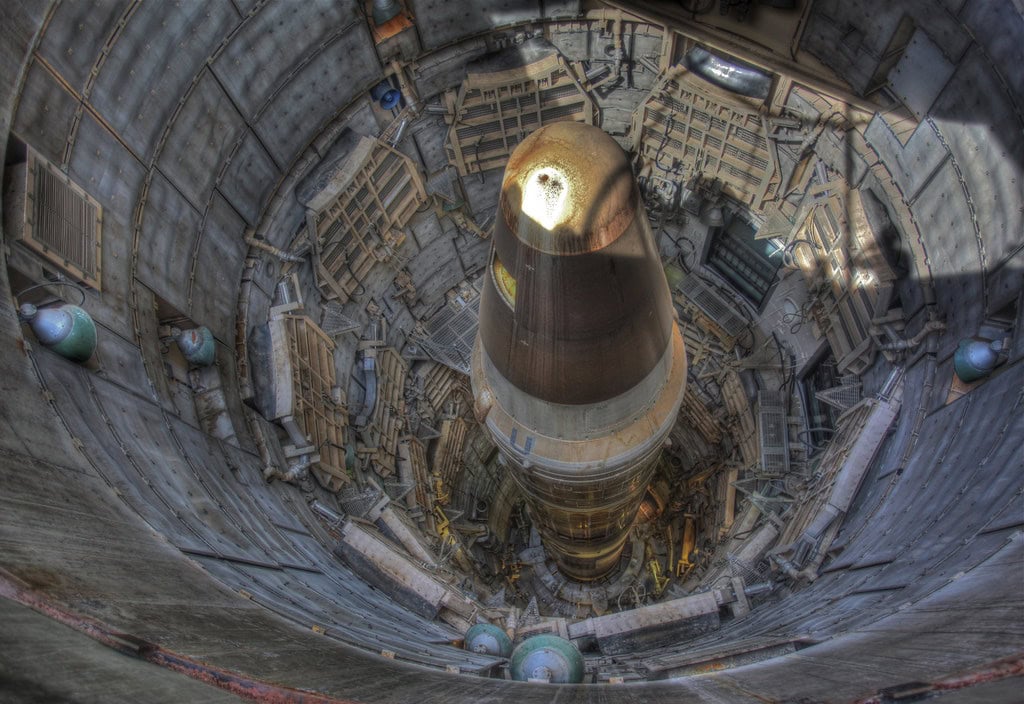
©"Nuclear Missile Silo" by jurvetson is licensed under BY 2.0. – Original / License
The Nuclear Age has its fair share of rather bizarre weapons. The United States, in particular, was rather fond of developing some rather extreme platforms, like the Davy Crockett recoilless rifle, which was capable of launching a low-yield atomic warhead as the precursor to any sort of armed assaults. Project Pluto was a theorized nuclear-powered, nuclear-armed cruise missile that was intended to spew radioactive exhaust over enemy territories for months at a time before striking a target.
It is a concept known as a SLAM, or Supersonic Low Altitude Missile. When properly implemented, such a weapon could avoid radar detection, outrun interceptors, and sow untold destruction on a target when considering its payload and exhaust. The concept was feasible, even in the era when it was theorized, as engineers successfully tested a nuclear ramjet engine.
The project was ultimately shelved in the 1960s, however. It was politically indefensible, being rather bald-faced in its intentions. Project Pluto proved to be too uncontrollable to contend with as well, promising to wreak the same sort of havoc on allied nations as it did on America’s enemies. Finally, it was proven to be completely obsolete with the successful development of intercontinental ballistic missiles. Project Pluto remains as a terrifying reminder of what could have been, and a clear show of the extremes the Cold War was pushing nations to reach.
Blue Peacock

©"Landmine in ground, Cambodia" by kyle simourd is licensed under BY 2.0. – Original / License
Speaking of Cold War brinksmanship, we can only look to the fear and paranoia of a hypothetical Third World War for our next item of discussion. During the 1950s, British forces developed a plan to deter a Soviet invasion of Western Europe through nuclear arms, which isn’t too outlandish. However, said plan relied on the use of nuclear landmines, which would be detonated on British or German soil as enemy forces advanced. It was hoped that they would completely decimate enemy forces, while contaminating the land for decades to come.
One of the stranger aspects of Blue Peacock is the proposed means of keeping these weapons warm during freezing conditions. In each landmine, there would be a live chicken encased with the low-yield nuclear landmine. The bird’s body heat would keep the electronics operational, preventing the likelihood of malfunctions.
Prototypes were built, but the British shelved the concept due to a variety of factors. Chief among them were the ethical implications of detonating a nuclear bomb on allied territory. It did prove to have some significant safety risks as well. That said, Blue Peacock is a clear demonstration of how Cold War paranoia overrode any degree of common sense when it came to military planning throughout the 1950s and 1960s.
Schwerer Gustav
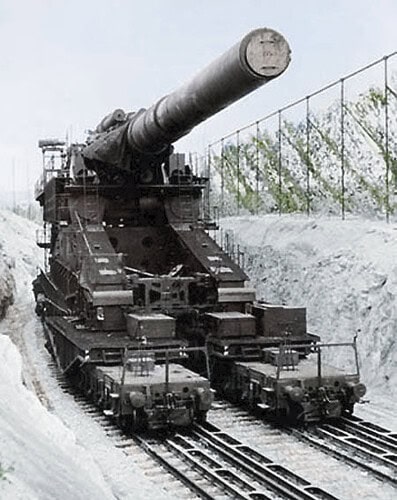
©"Schwerer Gustav" by Cassowary Colorizations is licensed under BY 2.0. – Original / License
Returning to World War 2, we’ve got another German wonder weapon. This one harkens back to earlier concepts, like the Paris Gun employed by Imperial Germany during the First World War. This was a massive artillery piece, lobbing huge shells across hundreds of miles to strike cities. There were numerous proposed artillery pieces like this going into World War 2, but the Schwerer Gustave is perhaps the most famous.
It was built, but quickly proved to be tactically useless when compared to things like bombers and more conventional artillery pieces. The super cannon required an extreme amount of resources while being highly vulnerable to air attacks. In fact, the largest example of these cannons was destroyed during a British bombing raid, while smaller ones were used in Luxembourg toward the end of the war.
These super cannons pull back to this seemingly bizarre fascination Nazi Germany had with wonder weapons. The sheer size and potential terror of such a weapon outweighed any sort of practical considerations. You can’t help but wonder if they would’ve better suited to building more conventional artillery pieces to handle their woes along the Western and Eastern Fronts instead.
T-15 Project
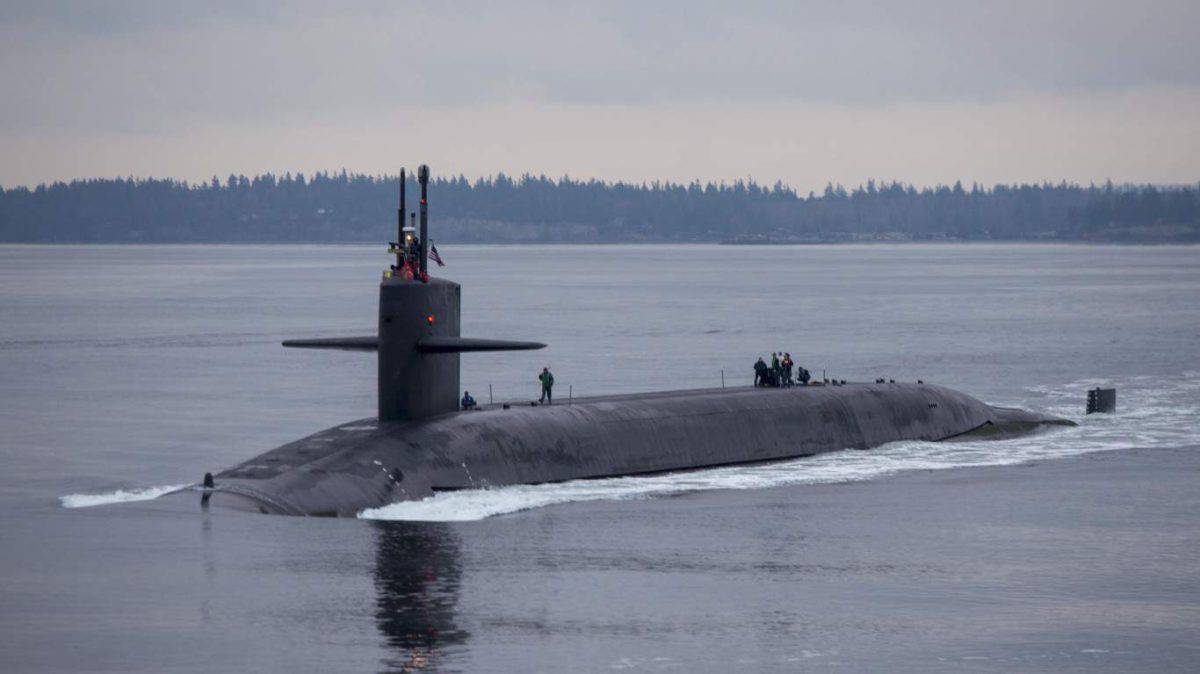
The West wasn’t the only one caught up in the paranoia and fear of the Cold War by any measure. In the early years of the Cold War, Soviet planners proposed a massive nuclear torpedo. The T-15, as it came to be known, would carry a multi-megaton nuclear warhead that would be launched near enemy coastlines. Theoretically, it would generate a massive radioactive tsunami, wiping out entire cities in the blink of an eye.
Impracticalities came to light rather quickly, however, as the torpedo was so massive that it required specially modified submarines that couldn’t carry a full combat load for patrols. Further, it met resistance from Soviet naval officers who deemed it strategically infeasible at best, and morally questionable at worst.
That isn’t to say the Soviets were done with nuclear weapons by any means. The T-15 Project was shelved, with more controllable, smaller nuclear weapons being the preferred armament for any sort of submarine for some time to come. Still, you can’t help but feel the desperation and apocalyptic thinking central to the war planning by both NATO and the Soviet Union during the time period.
Project Habakkuk

©MPI / Archive Photos via Getty Images
Britain was in rather dire straits throughout World War 2. They faced steel and other material shortages, which greatly reduced their ability to build ships as the war dragged on. Planners came up with a rather novel solution by constructing a massive aircraft carrier out of ice and wood pulp, a mixture called pykrete. Rather than making use of just pure ice, which could melt given the conditions, pykrete was slower and more durable, given the rigors expected of an aircraft carrier.
Project Habakkuk seemed like a tenable solution for a time, as small-scale prototypes demonstrated that the concept had some merit. It was highly durable, as bullets and explosives didn’t seem to compromise its integrity. However, some shortcomings became known fairly quickly, as despite the slower rate of melting for pykrete, it still required near constant refrigeration. Further, advances in shipbuilding and material loans from the United States quickly made Project Habakkuk unnecessary.
The project never reached full production and remains one of the stranger proposals to arise throughout the war. That said, there were plenty of plans that were just throwing things at the wall to see what would stick. Given the sheer scope of the war, you can’t fault the British planners for trying.
Flying Aircraft Carrier
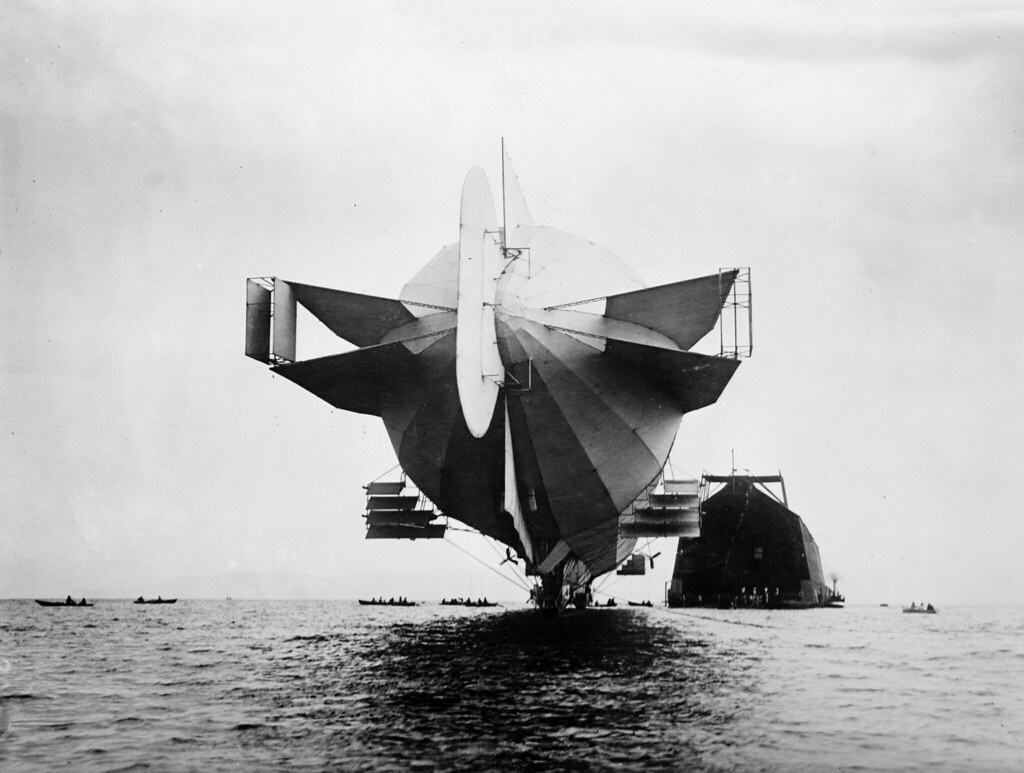
©"Stern of Zeppelin LZ-4 airship, 1908" by trialsanderrors is licensed under BY 2.0. – Original / License
In the interwar period, or the couple of decades between the First and Second World Wars, quite a few nations started experimenting with the idea of quickly deployed airpower from a centralized air vessel. This would be a large airship, or zeppelin, or bomber-like craft capable of launching and recovering smaller aircraft as they flew to the combat area. The United States and Germany both entertained the concept.
In theory, these airborne aircraft carriers would extend the operational range of fighters and reconnaissance craft. In practice, however, mid-air docking was extremely dangerous, being highly dependent on the weather and requiring significant mechanical complexity to even work.
Some limited trials were conducted, which showed promise. However, as the 1930s drew to a close, the concept was quickly shelved. Advances in conventional aircraft had quickly overshadowed the novelty of a flying aircraft carrier, and more viable solutions were found in naval vessels that would prove to dominate the war.
Amerika Bomber Project
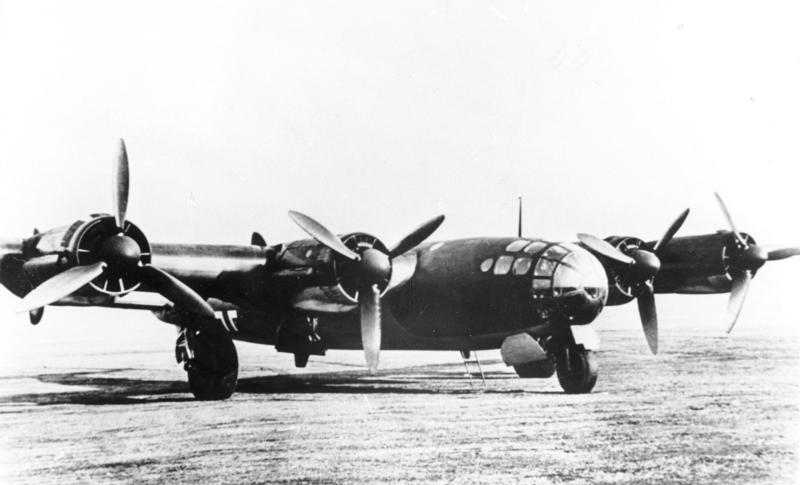
©Bundesarchiv, Bild 146-1989-039-16A / CC BY-SA 3.0 – Original / License
For our final topic of discussion, we’re returning once again to the wonder weapons of the Second World War. As the war began to draw to a close for Nazi Germany, they started proposing a long-range bomber capable of launching from Europe and striking the United States. The Amerika Bomber, which no guesses on how they came up with the name, included designs from competing manufacturers for an aircraft with unprecedented range given the time period.
Realistically, for a bomber to reach the United States from Germany, it would’ve required significant technological advances in engines, navigation, and materials engineering. As you might imagine, these were all in rather short supply by 1944 and 1945, as the German war effort was crumbling under the weight of a two-front war. Germany simply couldn’t produce these elements, let alone in ideal conditions, but especially when considering targeted Allied air raids.
The Amerika bomber never got past theoretical proposals, some studies, and classified research documents. What was recovered in the aftermath of the war had some impact on the field of rocketry and missile defense doctrines. However, the concept was mired in science fiction, rather than the technological limitations of a nation reaching the end of its war effort.
Conclusion
The items we’ve covered today reveal quite a bit about their places of origin. You can see a sense of desperation, fear, and paranoia as wars and ideological conflicts were waged. They’re certainly ambitious, make no mistake about that, reaching far beyond the technological limitations of the time. While these weapons were never deployed, we can safely say that it is perhaps for the best in some cases.
The image featured at the top of this post is ©Allahfoto/Shutterstock.com