
Some naval vessels are just built differently. The sea can be unforgiving, with the likes of storms, torpedoes, mines, and the sheer violence of modern warfare coming to bear. Throughout history, however, some ships have simply endured everything that has been thrown at them. They’ve taken punishment that would see lesser vessels sent ot the bottom of the sea, something that often defies any sort of rational explanation. Today, we’re looking at naval vessels that did the impossible and survived to tell their tales.
USS Johnston
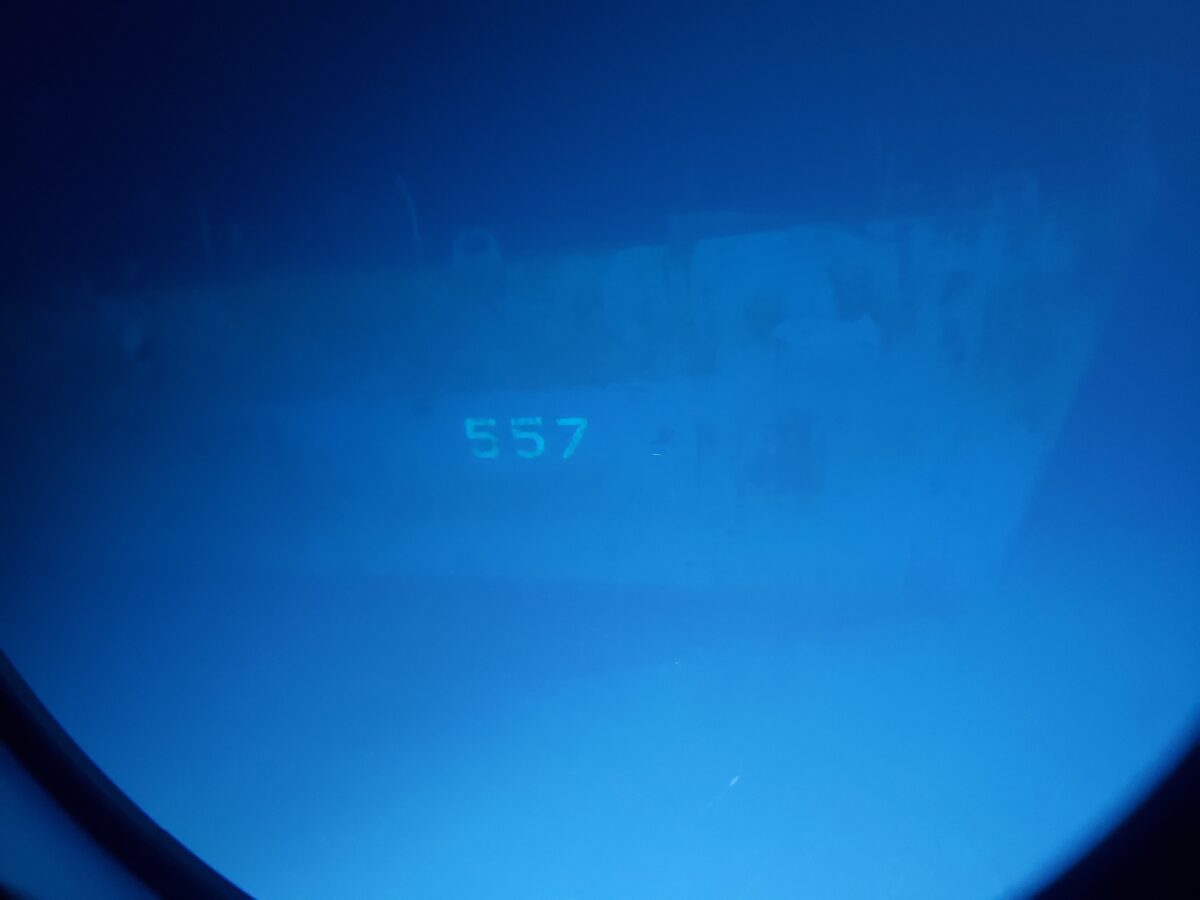
©"Starboard bow of the wreck of the USS Johnston DD-557" by Vlvescovo is licensed under BY-SA 4.0. – Original / License
You can mention any remarkable naval vessels without at least giving some attention to the USS Johnston. While it might not have survived its final engagement in October 1944, its endurance in the face of insurmountable odds bears mention. The USS Johnston was set upon by an entire Japanese fleet. Battleships, cruisers, and destroyers descended on an American escort carrier group. The Johnston was first into the fight, turning straight into the line of fire and sending shells at the enemy ships.
It took 14-inch shells and kept going, with hit after hit landing. Slowly, it lost more and more crew, power, and eventually its captain. Despite all of this, what survivors remained on the Johnston kept firing their guns, eventually completely running dry of ammunition. It would withstand a barrage from an enemy fleet for nearly 3 hours, something that would seem impossible going by any sort of reasonable odds. Japanese crews would salute the Johnston as it finally sank, honoring its valiant last stand against one of the world’s most powerful navies.
HMS Warspite
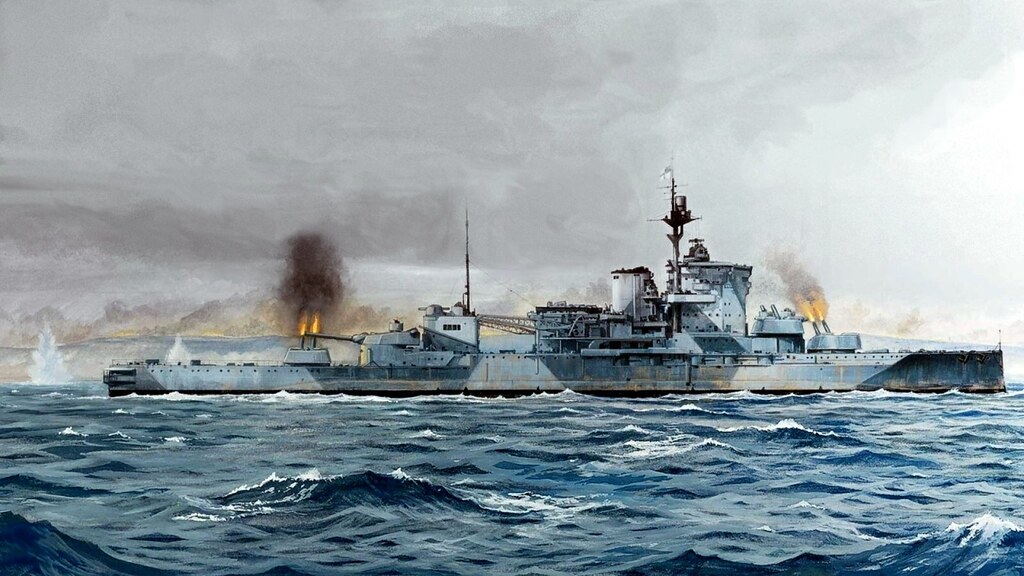
©"1944 HMS Warspite D-Day" by aeroman3 is licensed under PDM 1.0. – Original / License
The HMS Warspite has a rather storied service history, lasting through two World Wars and seeing damage records that would have lesser ships scuttled. During the Battle of Jutland in 1916, the Warspite would take dozens of large-caliber hits without the ability to return fire. Its helm had jammed early during the battle, leaving it to turn uncontrollably. Somehow, it still limped back to port, was repaired, and returned to service.
The Second World War would seem to have the Warspite’s number, as it was struck repeatedly by air-dropped bombs in the Mediterranean. A notable instance of this happened in 1943, when a radio-controlled glider bomb, one of the first successful uses in history, mind you, inflicted damage. Despite only having partial power, the Warspite returned to Malta. Throughout the rest of the war, it would face mines, strafing runs, and more dive bombs.
That didn’t keep the Warspite down, however, as its guns were blazing during the landings at Normandy during D-Day in 1944. Its final voyage was dramatic, which was rather fitting given how indestructible the ship seemed. It ran aground on the Cornish coast after breaking its two lines in a storm.
USS Laffey
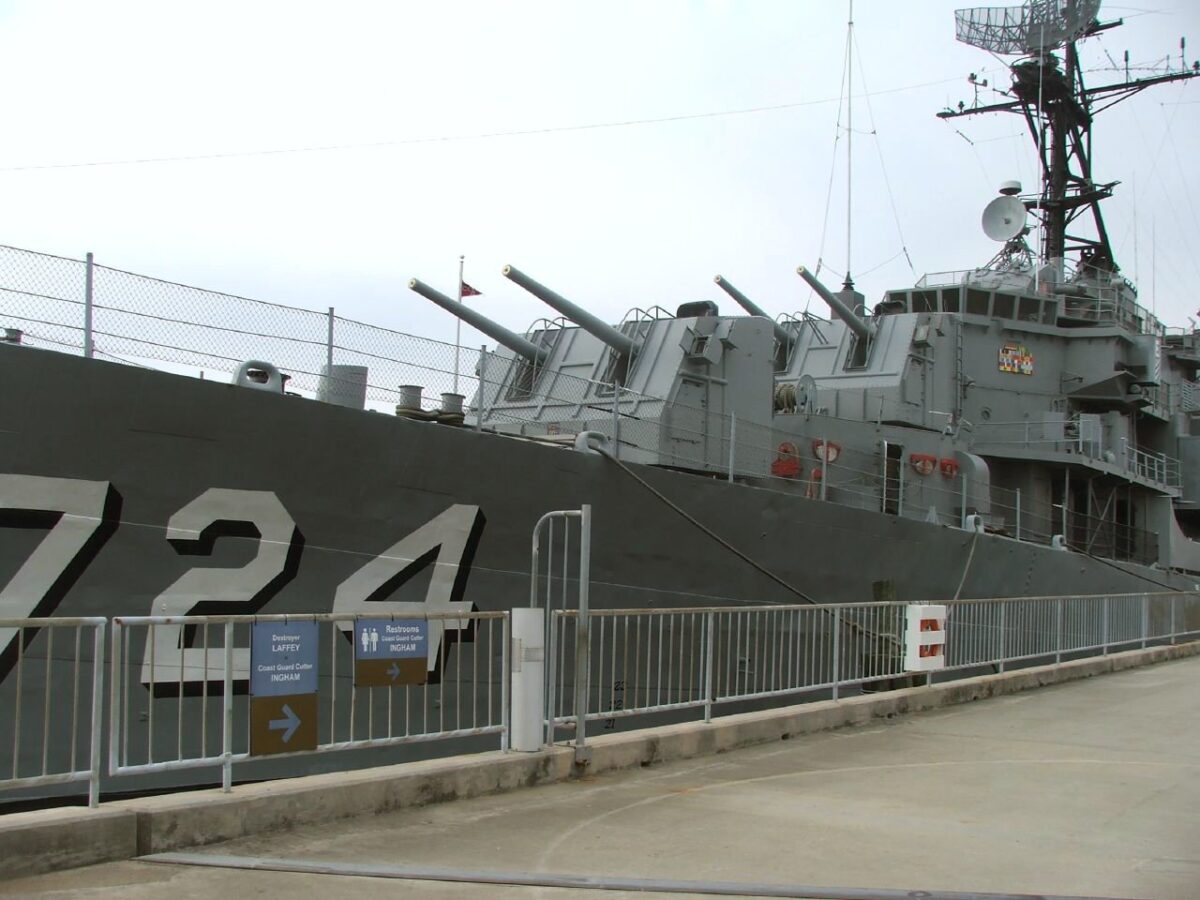
©"USS Laffey DD-724 2007" by allison from Hickory, NC, USA is licensed under BY 2.0. – Original / License
An estimated 22 kamikaze aircraft and bombers would strike the USS Laffey off the coast of Okinawa on April 16, 1945. This barrage of attacks came over the course of 80 minutes, with 6 kamikaze planes striking the Laffey directly, and 4 bombs hitting it. The Laffey’s crew would shoot down another 9 aircraft before the battle came to an end. 32 of the ship’s crew were dead, its steering section was a mess, and the aft was little more than twisted metal and fire. Other ships weren’t as lucky, some meeting an untimely end as the Japanese onslaught came pouring through.
The surviving crew contained the fire, shored up the ship’s flooding compartments, and kept it afloat. By all rights, the Laffey should’ve sunk in the water. It isn’t an exaggeration to say the naval vessel faced one of the most concentrated onslaughts from an enemy force in the history of warfare. Despite all of this, the Laffey would travel back to port under its own power, where it was then repaired and returned to service. Its nickname, “The Ship That Would Not Die”, is well earned.
HMS Victorious and HMS Suffolk
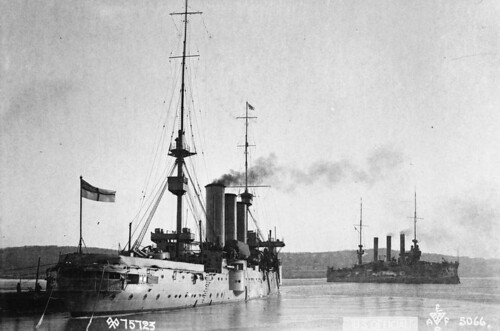
©"US Cruiser BROOKLYN with HMS SUFFOLK, Vladivostock, 1919" by Great War Observer is licensed under CC0 1.0. – Original / License
The flagship of the Kriegsmarine, the Bismarck, broke into the Atlantic in May 1941. Subsequently, the Royal Navy would throw everything it could at the ship. The Bismarck quickly gained a reputation for being nearly unsinkable, taking an unbelievable amount of punishment in the process. However, that was nothing compared to the beating the Royal Navy was taking trying to eliminate the Bismarck.
Two ships in particular eluded the Bismarck following its successful strike on the HMS Hood: the HMS Victorious and HMS Suffolk. The Suffolk would trail the German ship for days, knowing that the only thing between it and sinking to the bottom of the sea was the crew of the Bismarck catching sight of it. As both ships moved through the Denmark Strait, the Suffolk would broadcast its position, ultimately guiding the Royal Navy to a successful kill on the crown jewel of the German Navy.
The HMS Victorious was fresh off the line, manned by a green crew, and laden with admittedly obsolete bombers. Against all odds, this naval vessel sortied its bombers, which wove through anti-aircraft fire to score a direct hit on the Bismarck. All aircraft would return to the carrier unharmed, with a deck crew that was still learning the ropes, having scored a decisive victory over one of the most powerful navies on the Atlantic.
S-13
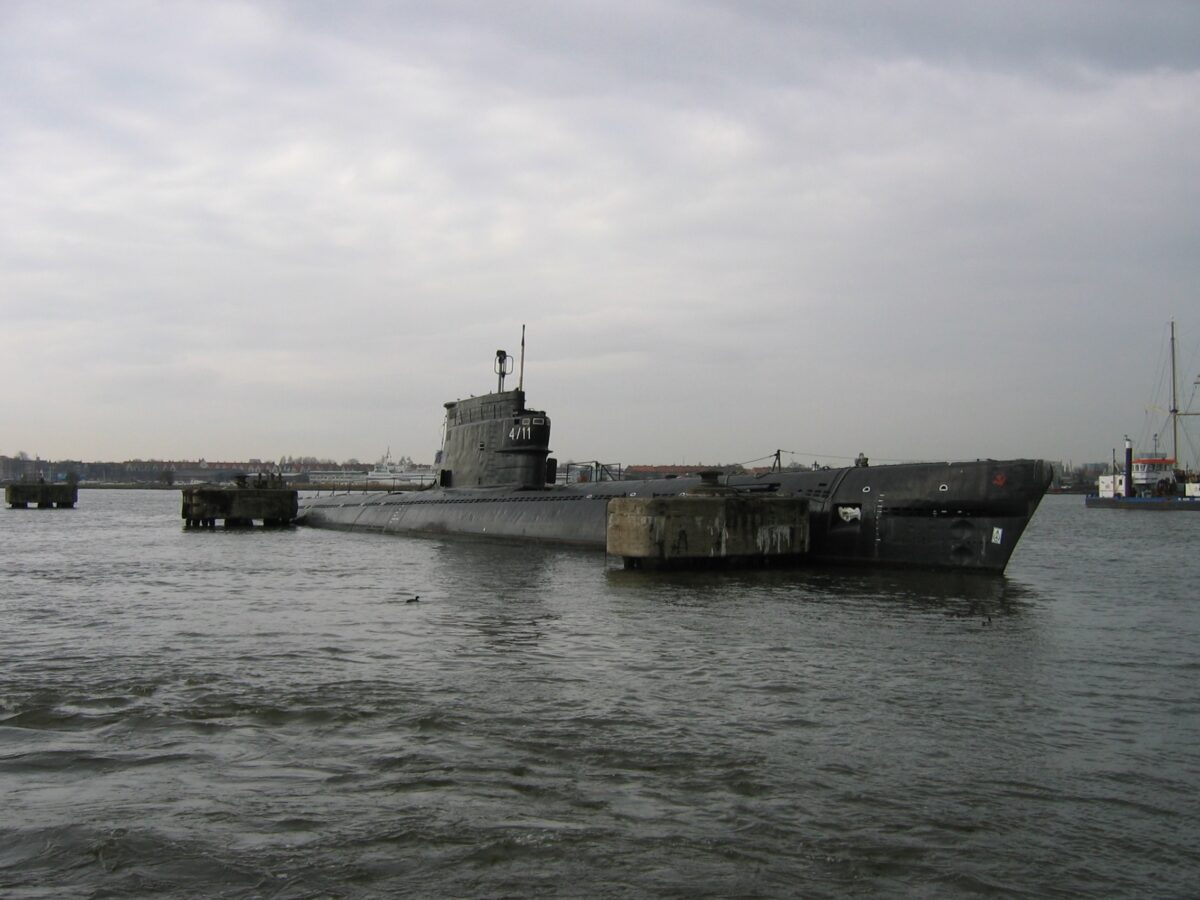
©"Soviet submarine Amsterdam" by Anrie is licensed under BY-SA 3.0. – Original / License
It isn’t always enemy fire that leads to peril on the seas. Sometimes, it’s Mother Nature herself that proves to be your greatest enemy. Soviet submarine S-13 had conducted one of the most infamous naval patrols of the war in January 1945, having sunk the Wilhelm Gustloff. It evaded relentless counterattacks by the Kriegsmarine’s anti-submarine forces throughout the shallow waters of the Baltic Sea.
S-13‘s commander, Alexander Marinesko, didn’t waver despite the insurmountable odds, which certainly worked in his favor when it came to getting his naval vessel back to port. While Marinesko would never be officially recognized for the seemingly impossible task of evading countless enemy patrols across the Baltic Sea, the S-13 survived well past the end of World War 2, and continued serving even after the fall of the Soviet Union.
HMAS Sydney
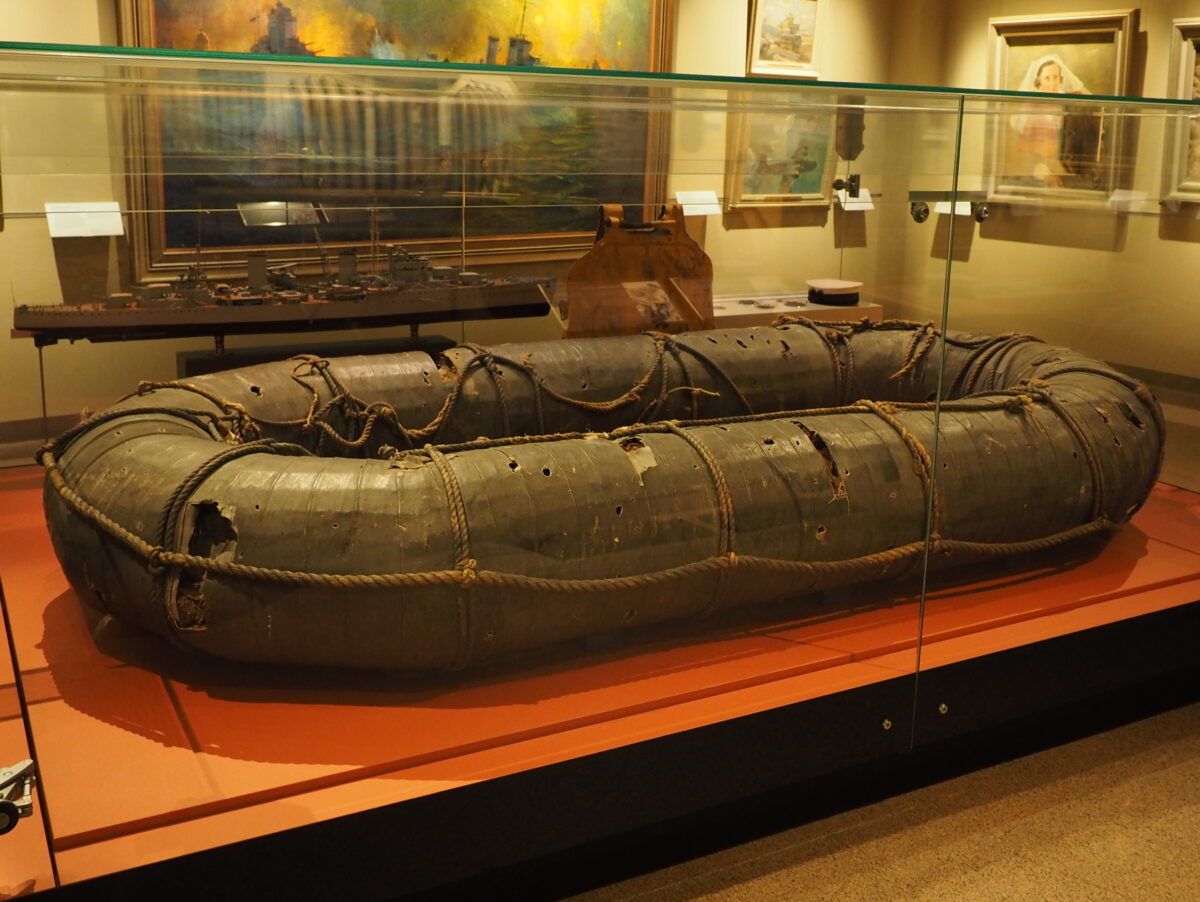
©"Carley float from HMAS Sydney at the AWM January 2022" by Nick-D is licensed under BY-SA 4.0. – Original / License
Luck isn’t the sole factor in the safe return of some naval vessels. One thing that often gets lost in discussing these sorts of ships is the sheer skill, grit, and technical prowess that lead to capitalizing on such luck. The HMAS Sydney was staffed by seasoned crew members, taking out Italian cruisers in 1940 and surviving some of the earliest engagements of the Second World War.
The vessel would meet a tragic end in November 1941, as it faced the German Kormoran off the west coast of Australia. A close-range engagement ensued, seeing both ships damaged and ultimately sinking in the aftermath. The Sydney would lose all hands, around 645 men, with no true accounting for the ship’s final moments.
While the Sydney might not have survived, its story is something of a counterweight to the more remarkable tales we’ve covered today. All ships have skilled, technically able crews. It takes a little bit of luck, strong decision-making, and some exceptional engineering to make the impossible happen. Sadly, the Sydney was met with a fate worse than any of the previously mentioned ships might have suffered, but it survived the early uncertainty of the war’s start.
Conclusion
It can be easy through the lens of history to see such ships as somewhat monolithic entities. However, some common elements run through each story, like the crew. Cohesion, morale, and courage under fire saw some naval vessels perform well past when they might have been expected to sink or list without power. The sea, and the wars waged upon it, are an unforgiving place, and the ships we’ve covered went past all reasonable expectations.
The image featured at the top of this post is ©Royal Navy / Public Domain – License / Original