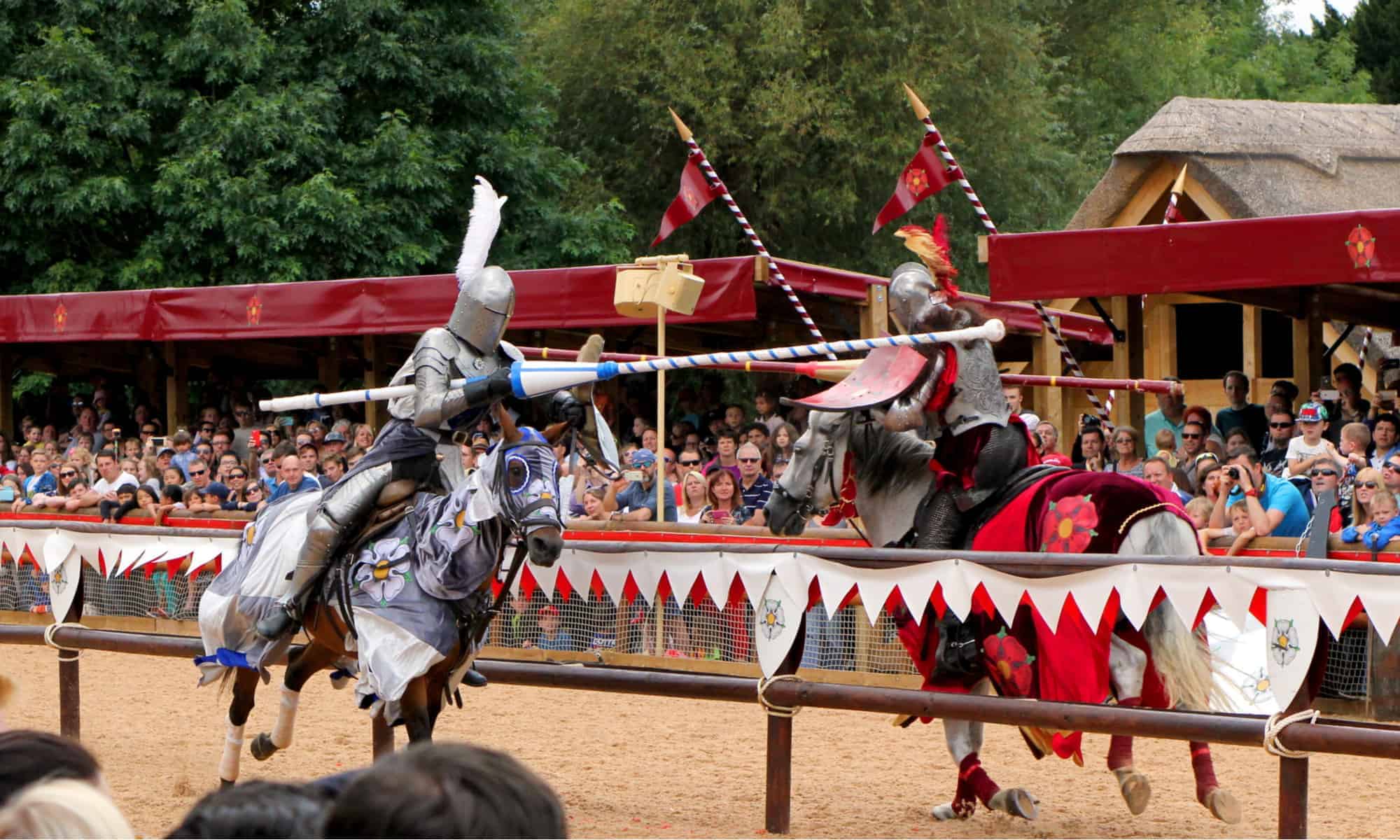

One of the most misunderstood periods of history is the Middle Ages, which ranged from the fall of the Western Roman Empire in the 5th century to the start of the Renaissance in the 15th century or so. It is often outright dismissed as an era of stagnation and regression. Pop culture depicts it as a period of armies clashing with crude weapons, with a shameful level of organization, while knights were among the top echelon of troops to take to the field. However, the reality of the Middle Ages is far more nuanced, with evolving technology, shifting social structures, and the demands of constant warfare.
Whether you’re looking at technological advances in weapons and armor, breakthroughs in defensive fortifications, or even how battlefield doctrine evolved, the Middle Ages transformed the very nature of warfare from Antiquity. Further, the foundations of modern warfare started during the Middle Ages, setting the tempo for the next few centuries. Rather than being a period of stagnation, the Middle Ages were a time for experimentation, adaptation, and a near-relentless arms race between protection and destruction.
Heavy Cavalry
©"medieval knights" by hans s is licensed under BY-ND 2.0. – Original / License
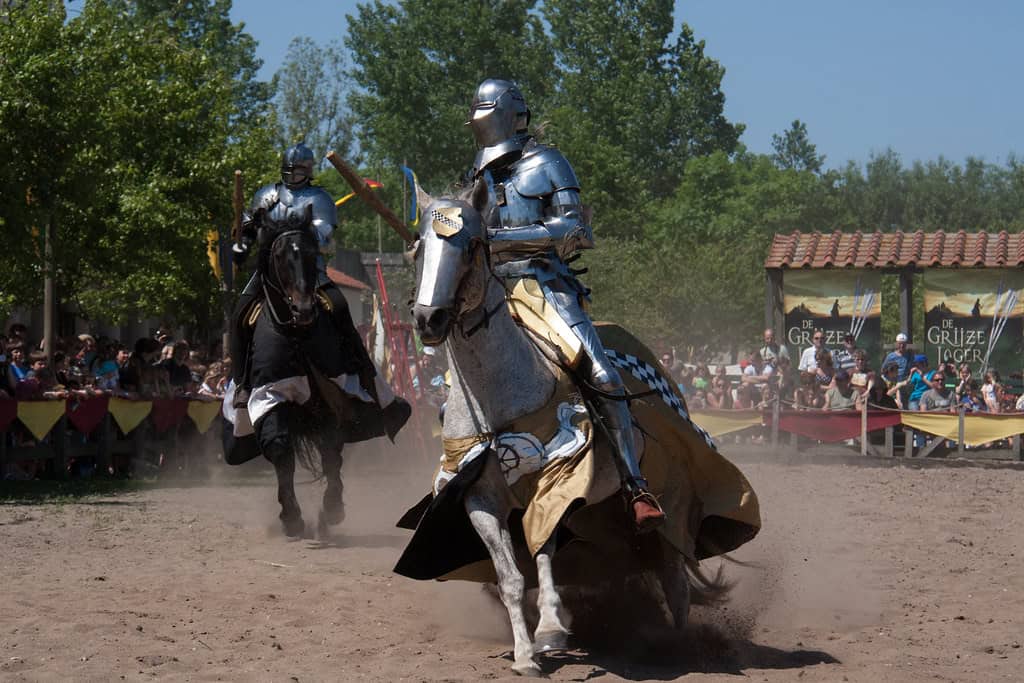
One of the biggest developments and dominant forces of the Middle Ages would have to be heavy cavalry. This came about thanks to the introduction of the stirrup to Europe around the 8th century or so, which enabled riders to stabilize themselves while retaining control of their weaponry.
This had a profound effect on the battlefield. Armored knights could charge infantry formations and deliver devastating attacks, all while retaining control and stability on horseback. The mounted warrior became the centerpiece of military planning for the era. Further, it had an impact on the social order of the era, as knights were members of the aristocracy and were granted land and wealth for their success on the battlefield.
Given this focus on cavalry, the tactics became more and more sophisticated. It also led to more reliance on combined arms, with heavy cavalry acting as a shock force while infantry held the center of the battlefield in most cases. Cavalry would be challenged, as we’ll discuss further on, but it marked a definite change in how warfare was waged.
Armor
©SK_Artist/Shutterstock.com
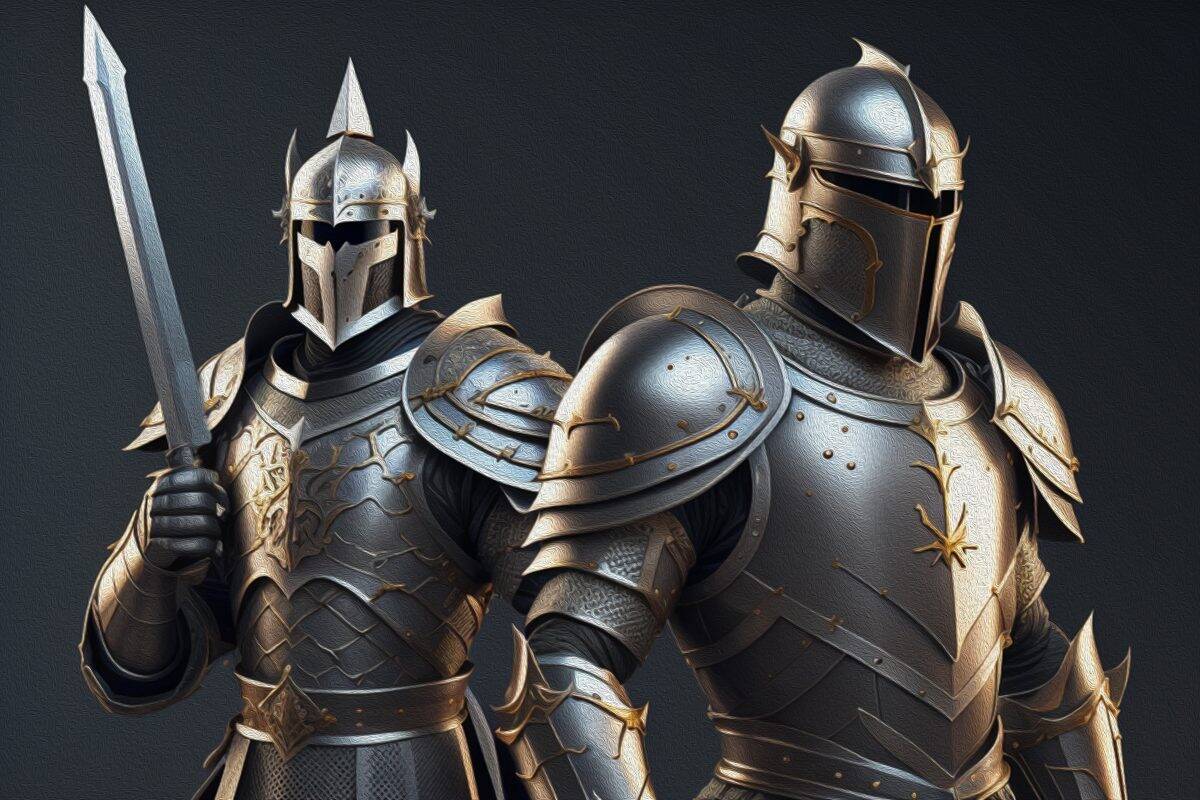
Speaking of heavy cavalry, one of the biggest developments that enabled the dominance of knights was the technological advancement in armor. Soldiers in the Early Middle Ages made use of chainmail, which provided a fair amount of flexibility and was more than enough against slashing attacks. When combined with padded garments like a gambeson or jerkin, you had more than enough protection, but it was a rather costly endeavor. As such, it was only feasible for those in the aristocracy, like the aforementioned knights.
By the late Middle Ages, plate armor was developed, and it was the absolute pinnacle of personal protection. Articulated steel plates covered the entire body, rendering the wearer nearly invincible against arrows and swords. Advances in metallurgy would see plate armor become stronger, while seeing vast reductions in overall weight.
Plate armor spurred further development in weaponry, as infantry had to be able to contest heavy cavalry. This started an arms race with a constant cycle of adaptation and responses, not unlike more modern conflicts like the Second World War.
Polearms
©"Decorative poleaxes" by quinet is licensed under BY 2.0. – Original / License
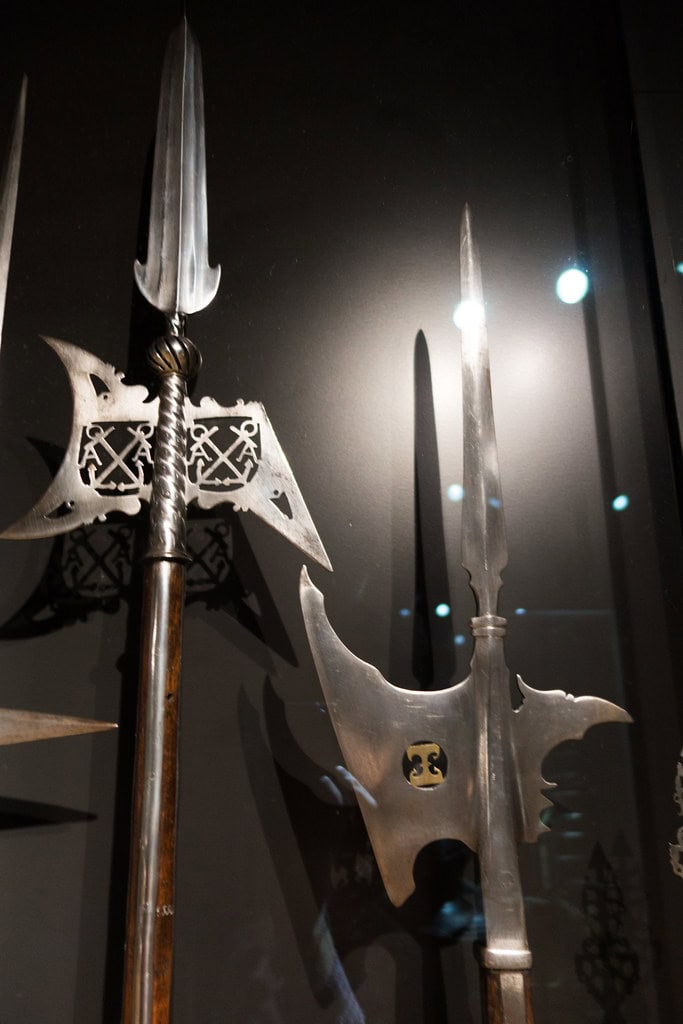
Traditional arms became ineffective when it came to dealing with armor. A humble spear was less effective against a knight wearing plate armor. This led to the development of polearms, multi-role weapons that combined blades, spikes, hooks, or hammers to pierce, crush, and pull knights from their horses.
Weapons such as the halberd, poleaxe, and billhook became mainstays of infantry. Their reach and versatility enabled regular foot soldiers to contest cavalry, especially when meeting against disciplined formations. Swiss pikemen and Flemish militias demonstrated that even low-born infantry could defeat knights, giving a much-needed shock to the social order of the time.
The development of polearms marks a notable shift in the Middle Ages, with feudal levies giving way to more professional armies. It presages the notion of modern armies, where social status doesn’t matter.
Ranged Warfare
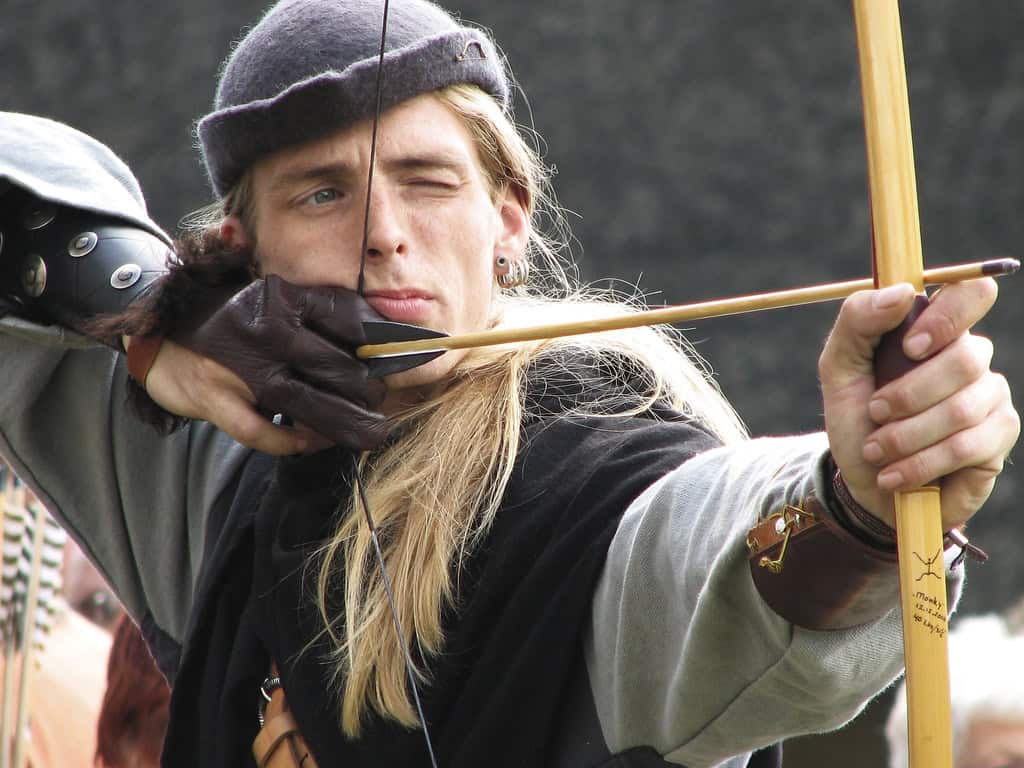
©"9th open Archeon Longbow shoot" by hans s is licensed under BY-ND 2.0. – Original / License
I’d be selling the importance of melee weaponry short in the Middle Ages, especially when considering weaponry like the longbow. Ranged warfare served as something of a hard counter of sorts to heavy cavalry, as England proved during the Battle of Agincourt in 1415. The English longbow is the stuff of legends, and it has the performance to back up its rather lofty claims throughout history.
Armor didn’t matter when massed longbow fire was sweeping the battlefield. English longbowmen could make short work of armored knights, especially when considering the renown of the French heavy cavalry of the era. Like polearms, the longbow was seen as something of a lesser weapon, something wielded by the common folk as opposed to more honorable weaponry.
Commanders took note of the efficacy of ranged warfare, despite the challenges it presented to things like chivalry. More important things to consider going forward were things like training, discipline, and tactical positioning over individual martial prowess and social status.
Mechanical Innovation
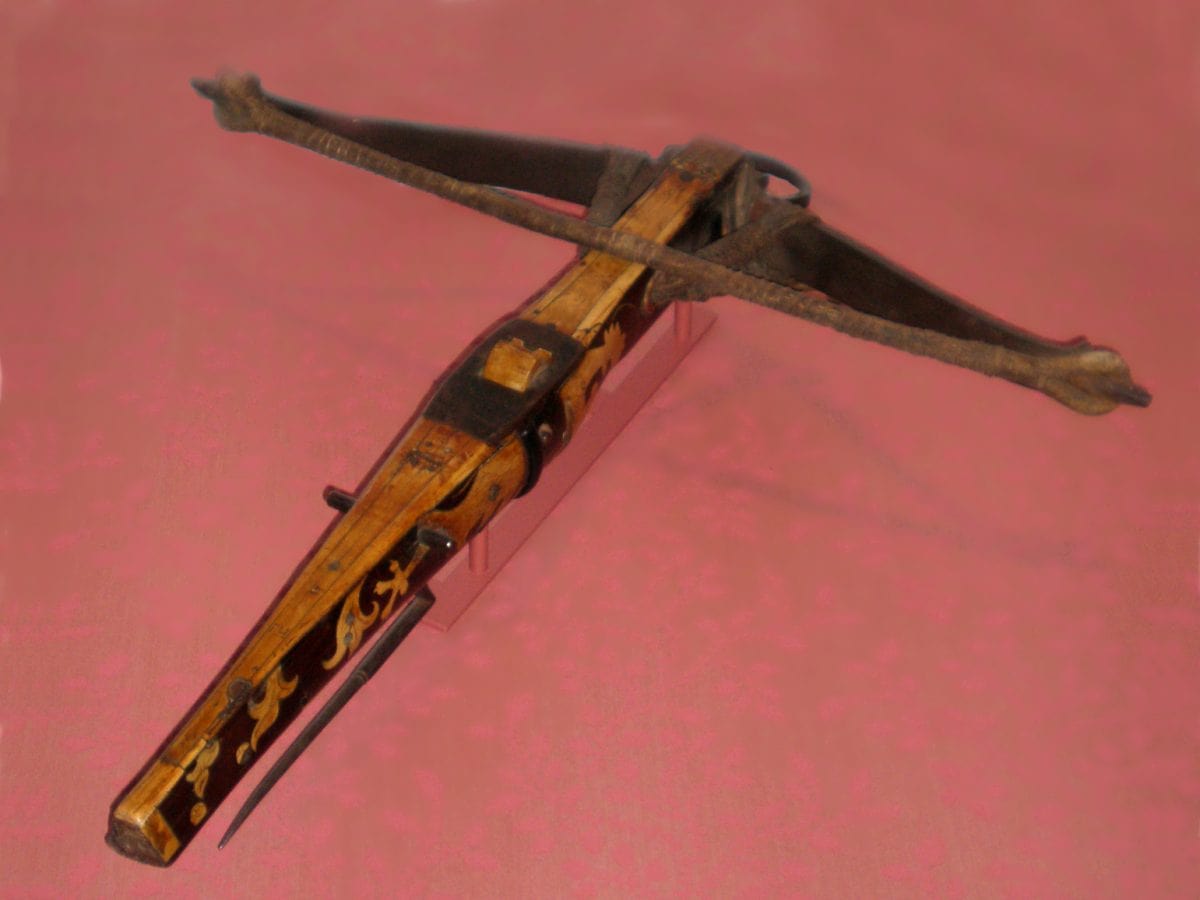
©"German 16th century crossbow CAC" by BrokenSphere is licensed under BY-SA 3.0. – Original / License
The longbow required years of training to use. However, the crossbow could be used by anyone who could point and shoot. This marks a notable shift in the thinking behind military weaponry of the Middle Ages. A purely mechanical design, the crossbow could let untrained soldiers deliver powerful, accurate arrow fire with minimal practice.
Crossbows were quite powerful for the time as well, punching through chainmail and some plate armor when close enough. This effectiveness made it a rather controversial weapon for the time, with the Catholic Church decrying its use and attempting to ban the crossbow from use against Christian soldiers.
The crossbow spread across Europe, showing a reliance on technology over skill. The battlefield was changing, and we’ll touch on the biggest innovation surrounding mechanical weaponry during the Middle Ages.
Fortifications
©WH_Pics/Shutterstock.com
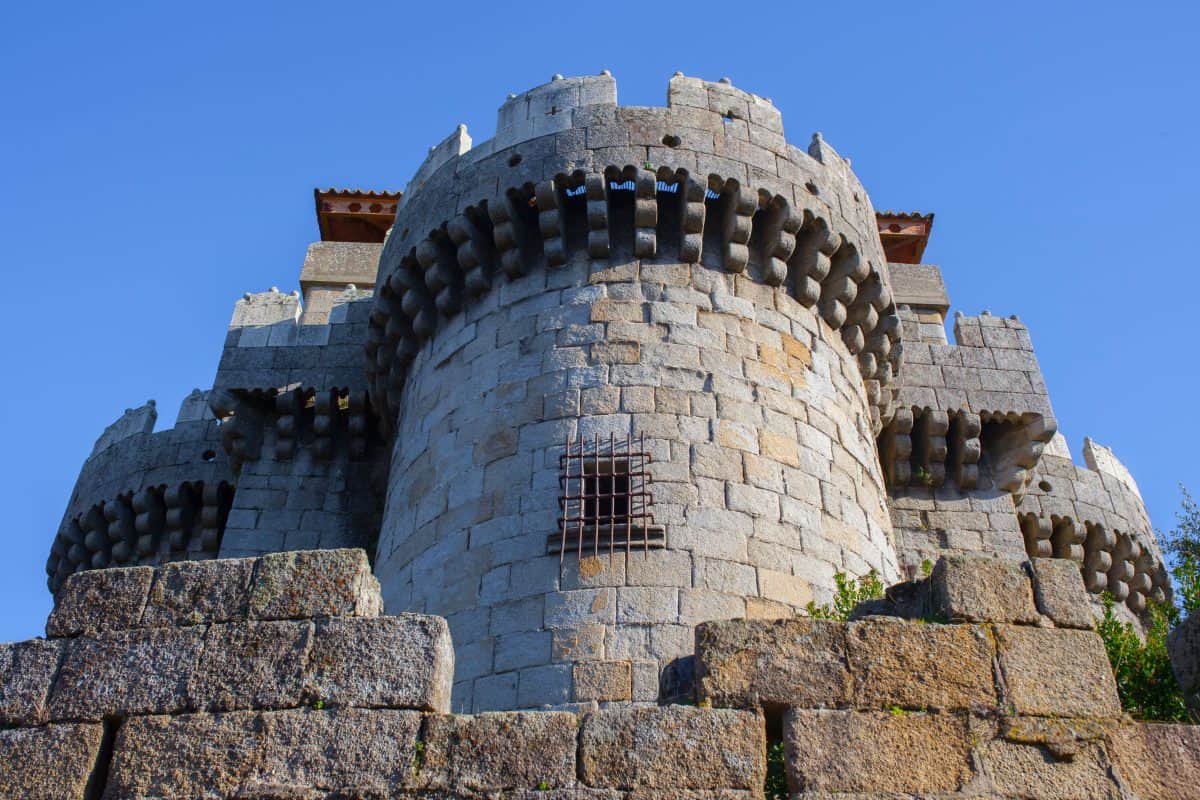
Innovations from the Middle Ages weren’t solely relegated to the weaponry and armor of the period. Those meant nothing without the fortifications needed to protect your land holdings. Starting the period as wooden forts, they gave way to stone castles with thick walls, towers, and fortified gates.
With the introduction of gunpowder, things changed once again, with multiple layers of walls designed to absorb attacks and delay attackers. The introduction of obstacles and deterrents like moats and portcullises turned castles and fortifications into a formidable defensive network.
Sieges
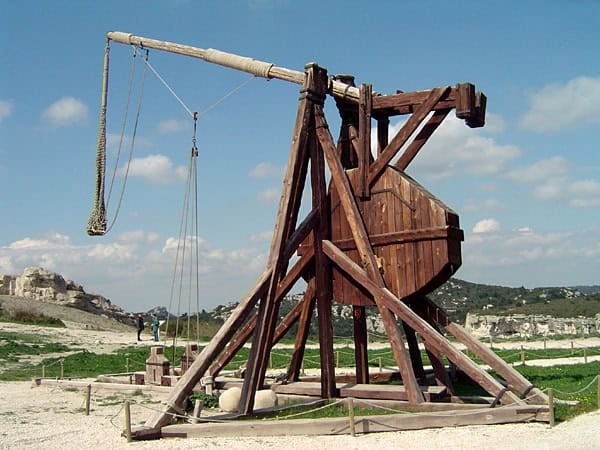
©"Trebuchet" by No machine-readable author provided. Quistnix assumed (based on copyright claims). is licensed under BY-SA 3.0. – Original / License
With the advances in fortifications, there was a natural change in how sieges were conducted. Engineers would develop powerful machines, like trebuchets, which could batter a wall from a safe distance.
Sieges have always been grueling affairs, something that holds even in the modern era. Common tactics involve starvation, psychological pressure, and negotiations. When those don’t work, attackers will just go on the assault.
Siegecraft became a specialized field, with mathematics and physics taking center stage. The innovations developed during the Middle Ages would be instrumental in the early stages of artillery warfare, something that would become a dominant force during the High Middle Ages.
Naval Warfare
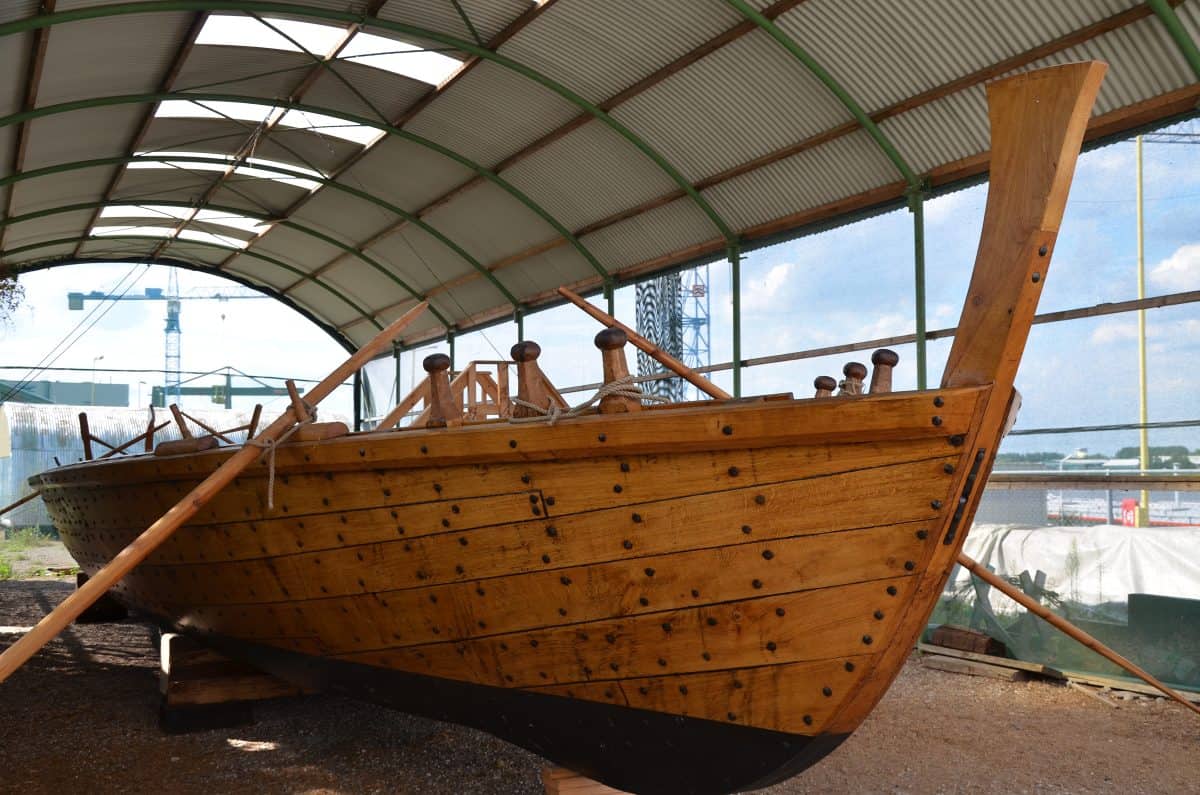
©"File:Full size replica of a 20 meter long Liburna, small galley used for raiding and patrols, particularly by the Roman navy, in Millingen aan de Rijn, Netherlands (9554338443).jpg" by Carole Raddato from FRANKFURT, Germany is licensed under BY-SA 2.0. – Original / License
It wasn’t just land-based combat that saw profound changes during the Middle Ages, as naval warfare shifted as well. Viking longships were the first innovation, making use of raw speed and adaptability to navigate the open seas and inland rivers. This enabled Viking invaders to rapidly raid at any time, while supporting troop movements across vast distances.
Later in the Middle Ages, Mediterranean powers developed ships like galleys. These vessels were geared toward tactics like ramming, boarding, and even ranged warfare. Further advances in shipbuilding, rigging, and navigation expanded the overall strategic importance of naval power.
Control of the waterways would soon be essential for trade, logistics, and overall military dominance, foreshadowing the rise of naval powers like England and the United States during the modern era.
Military Organization
©Gorodenkoff/Shutterstock.com
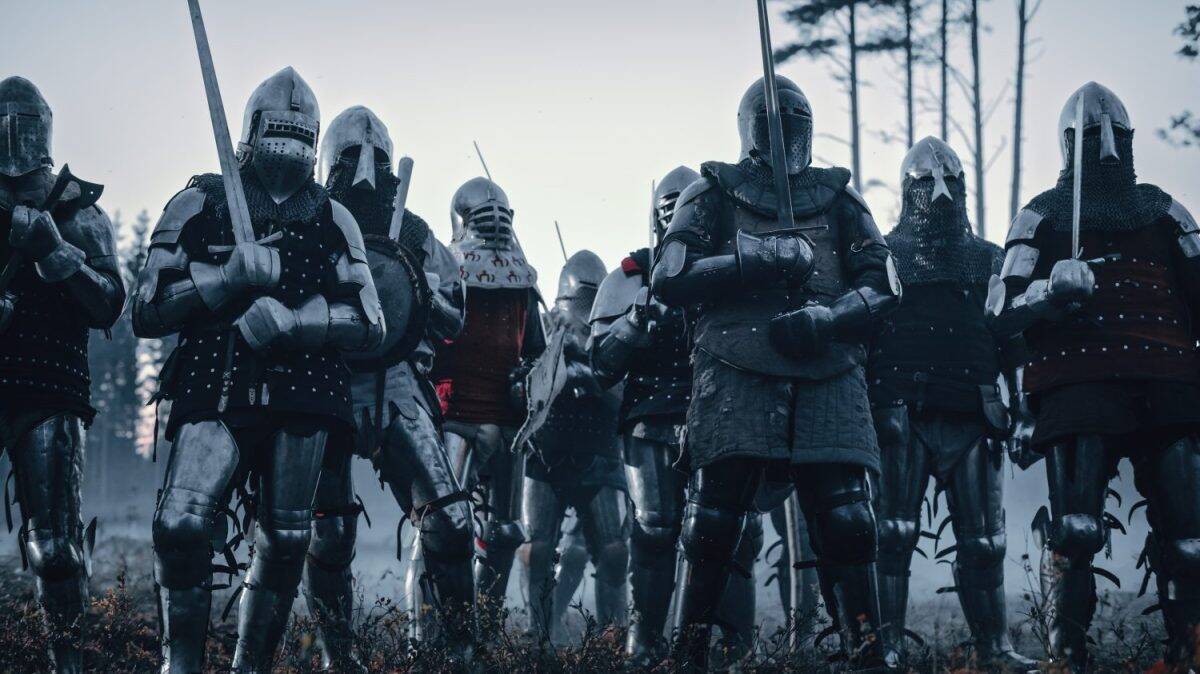
One of the most undersung innovations of the Middle Ages has to be how militaries organized themselves. Armies became more structured, with clear chains of command, standardized roles, and higher levels of discipline.
Before the rise of conscription, mercenary companies, the nobility, and feudal levies were the norm. However, the High Middle Ages started seeing the development of professional militaries, with organizational doctrine developing right alongside them. Training manuals, fighting treatises, and even documented tactics started to emerge, showing the changes in how wars were fought.
Professional armies had the added benefit of improved coordination, discipline, and overall effectiveness. Centralized armies would come to dominate the wars of the Renaissance and early modern eras.
Gunpowder
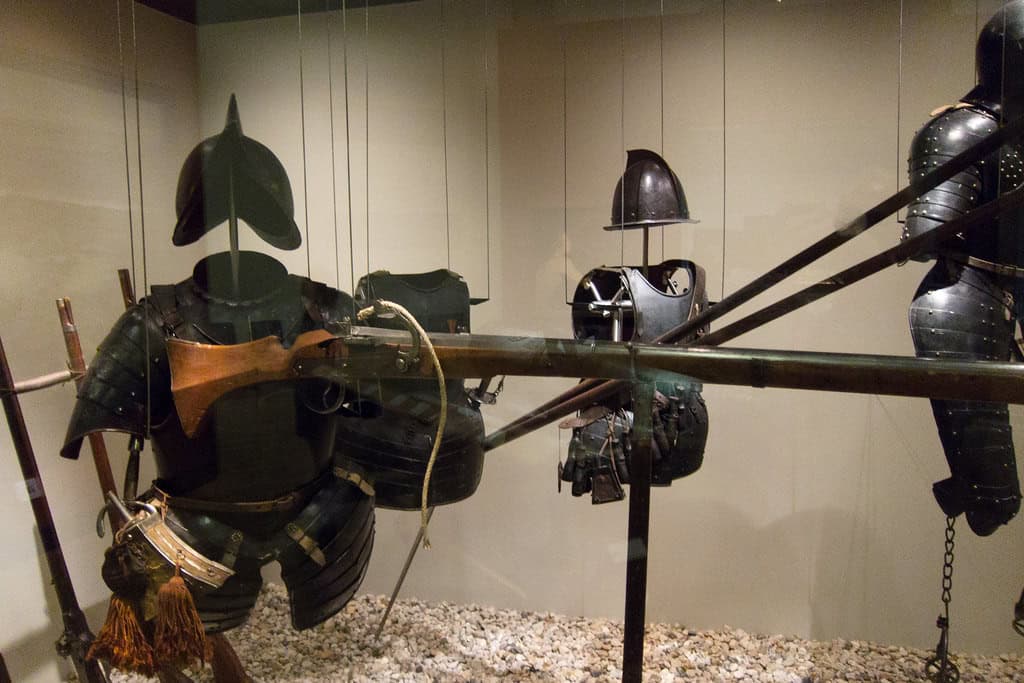
©"Armour and arquebus" by quinet is licensed under BY 2.0. – Original / License
No write-up covering the Middle Ages would be complete without mentioning gunpowder. Early cannons and muskets were crude, but highly effective, with fortifications being made obsolete seemingly overnight.
Handheld firearms became one of the dominant weapons of the infantry of the era. They wouldn’t fully mature for years to come, but it heralded a new era in personal weaponry. The old ways of waging warfare would change, with things like heavy cavalry falling by the wayside as professional armies and conscription replaced them.
Gunpowder didn’t end the Middle Ages, but it started the decline of things like feudal levies and knights. Professional, standing armies would take center stage. Further developments like centralized command and the use of technology over martial prowess would show the shape of things to come.
Conclusion
The Middle Ages were far from a period of stagnation, but rather one of constant innovation driven by necessity and competition. The rise of heavy cavalry, advanced armor, and breakthroughs in ranged weaponry reshaped the art of war.
These innovations didn’t just change battles, but reshaped society on the whole. By the end of the Middle Ages, the foundations of modern warfare were in place. They were forged through centuries of adaptation and creativity.
Innovations from the Middle Ages reveal a far more dynamic and complex period of conflict than pop culture depicts. It reminds us that even in the age of knights and castles, warfare was defined by raw human ingenuity and technological advances.
The image featured at the top of this post is ©Gary Perkin/Shutterstock.com