
The whole of recorded history is littered with stories about historic soldiers. We read of their defeats, their victories, and ultimately, the sorts of deeds that elevate them beyond mere warriors who take to the battlefield. It isn’t an easy path by any means, as courage, sacrifice, and the force of will needed to transcend conflict are beyond most soldiers. The stories we’re covering today aren’t just about military prowess, but rather lasting stories that have had an impact on cultural identity. The historic soldiers we’re covering didn’t just make their mark on the battlefield. They became enduring symbols of their nations, woven into the very cultural fabric of their societies.
Leonidas of Sparta
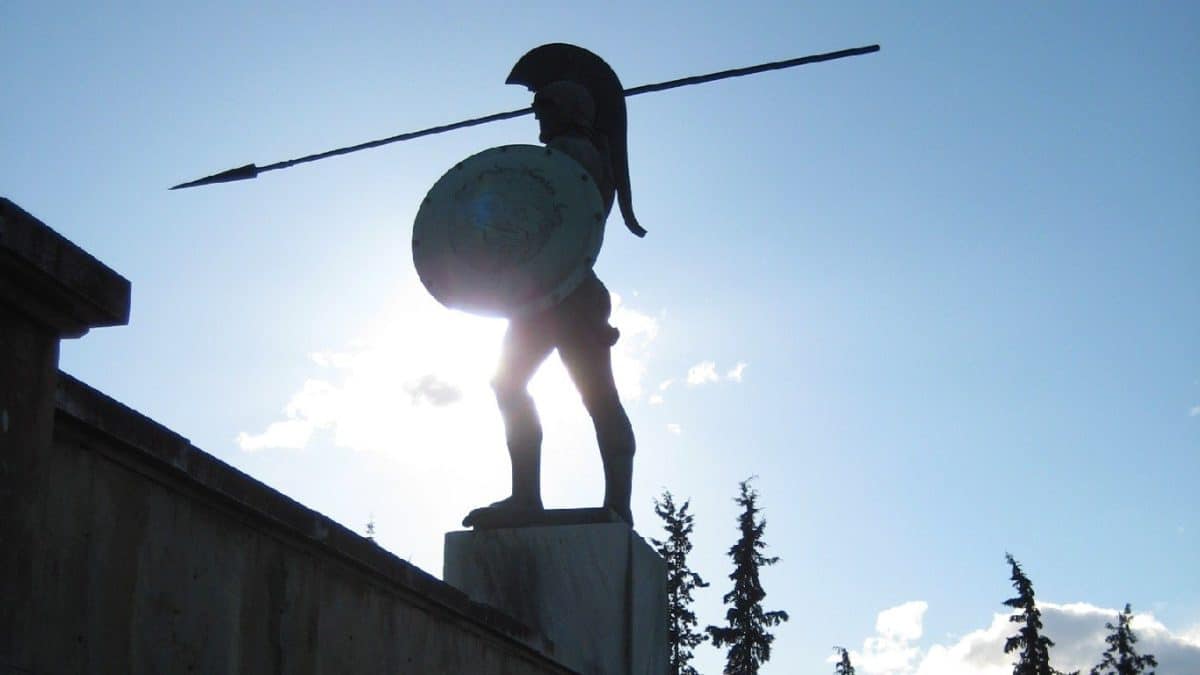
©Guillaume Cattiaux / flickr / CC BY-SA 2.0 – Original / License
The Greek city-state of Sparta was forged under the idea of all men being warriors. A brutal, authoritarian state, it was known for taking children as young as five and having them participate in bloody trials of combat. By the time these children grew to adulthood, they were purported to be among the finest historic soldiers to take to the battlefield. In 480 BCE, the threat of a land invasion by the Persian Emperor Xerxes loomed. The Greek city-states couldn’t stand up to fractured fronts and needed to act as a unified bulwark against the invading forces. The Spartans and their king, Leonidas, took it upon themselves to halt the Persian advance.
The legend goes that 300 Spartans, Leonidas included, took to the narrow coastal pass at Thermopylae, with their aim being to delay the Persian advance by any means necessary. They were outnumbered, facing one of the military superpowers of their era, with little recourse but to embark on what seemed to be a fool’s errand. The Spartans and their allies at Thermopylae gave as good as they received, holding the pass for three days against insurmountable odds.
They were betrayed by a local shepherd and were outflanked and eventually encircled by the Persians. Leonidas pressed on, giving the order to his troops to keep fighting, and the bulk of his soldiers surged into the spears and swords of the Persian army. The Battle of Thermopylae wasn’t a victory of the Spartans, as they were killed to the last man, with Leonidas falling in battle. However, the extraordinary valor shown by the Spartan king and his troops has endured long past the war. Leonidas isn’t remembered for winning a hard-fought victory. Instead, he’s remembered for daring not to flinch in the face of daunting odds.
Joan of Arc
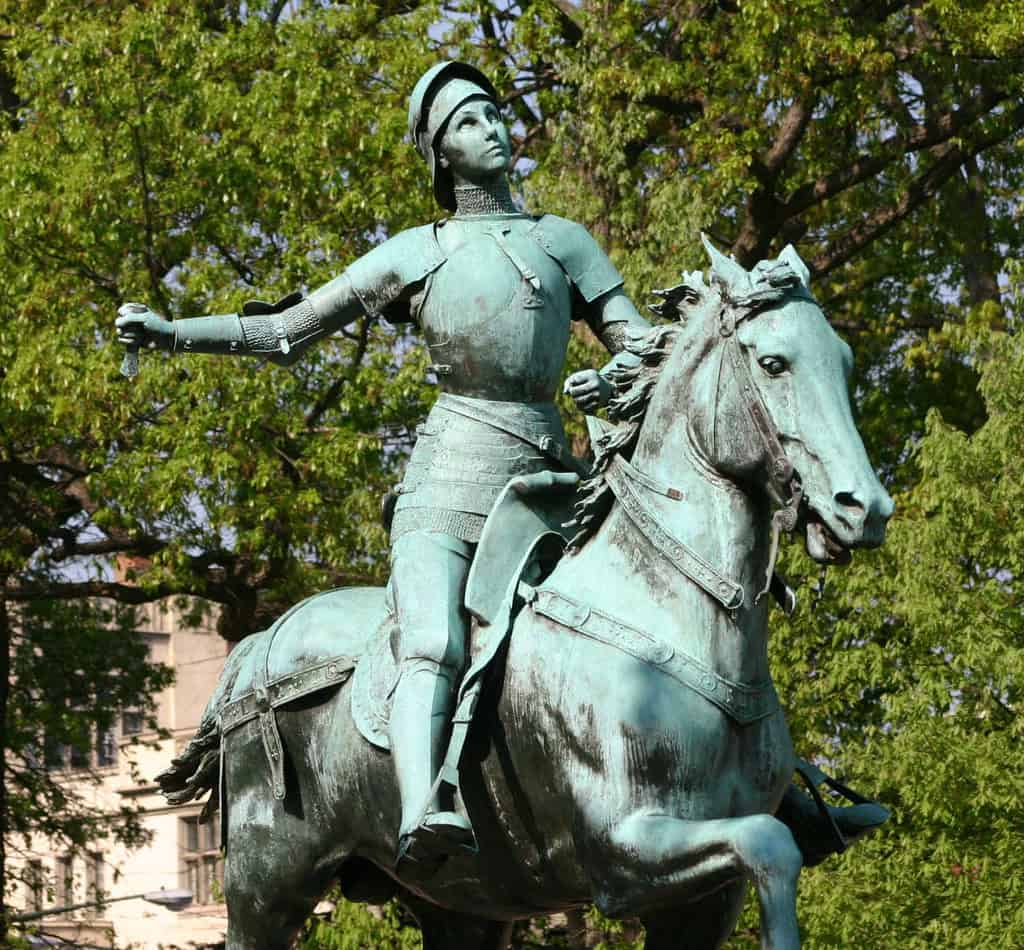
©"Joan of Arc" by dbking is licensed under BY 2.0. – Original / License
Few stories throughout military history are quite as extraordinary as Joan of Arc’s. At first glance, she doesn’t seem to have the same sort of origin as most historic soldiers you’ll see mentioned. Born a peasant girl in 15th-century France, she seemed relegated to the pastoral life you’d expect for such an upbringing. She claimed early in her adolescence to hear voices, those of saints and angels, and their urging to drive the English from the French demense during the Hundred Years’ War. At 17, she persuaded the French Dauphin Charles VII to grant her a military escort. She aimed to relieve the besieged city of Orleans.
Shockingly, she succeeded, liberating Orleans and embarking on a series of victories that shifted the momentum of the entire war. A mere year after her rise in the ranks, she was captured by Burgundian troops and eventually ransomed to the English. She was tried for heresy, as her claims of the divine were treated as apostasy by the English. At 19, a mere two years after her victory in Orleans, she was burned at the stake. For most historic soldiers, such a rapid ascension and seemingly brutal end would have them regarded as little more than a curiosity when looking across battles and wars.
Joan of Arc was canonized as a saint, nearly five centuries after her burning at the stake. Her story resonates not just because of her military prowess, but also because of its grounding in faith. A teenage girl casting her lot in a brutal war is one that flew in the face of conventions and norms of the time. She serves as a permanent symbol of the French spirit, flying in defiance and backed by faith, looking to resist invading forces against all odds.
Khalid ibn al-Walid
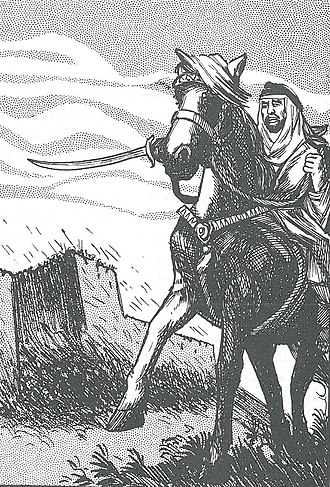
©Unknown author / https://en.wikipedia.org/wiki/public_domain – Original / License
Born in the 7th century, Khalid ibn al-Walid bears the incredible sobriquet, “Sayf Allah”, or translated to English, “The Sword of God”. He sits in rather rare company, being one of the most gifted tacticians and generals to take to the battlefield during the Middle Ages. He honed his legend well, participating in over a hundred battles and never feeling the sting of defeat. While such claims are rather dubious, if true, al-Walid is one of the undisputed greatest generals to ever lead a military.
There is no denying his brilliance, as at both the Battle of Walaja and the Battle of Yarmouk, he executed stunningly complex pincer movements and flanking maneuvers that sent the Byzantines and Sassanid Persians, respectively, reeling. His title was bestowed upon him by the Prophet Muhammad, as legend goes, thanks in part to his ability to fight across multiple fronts and emerge victorious.
Eventually, Caliph Umar would relieve the famed general of his command, out of a growing concern that troops attributed victories to him, rather than God. That said, even his removal from the battlefield is the sort of stuff that most historic soldiers would envy. There is something to be said for a general so successful that he posed a theological crisis. The Sword of God would only command troops for 9 short years, but his impact on the rise of Islam cannot be understated.
Audie Murphy

©"Audie Murphy (20 June 1925 – 28 May 1971)" by aeroman3 is licensed under PDM 1.0. – Original / License
Rounding things off is a more modern example of a legendary historic soldier. As the largest, bloodiest conflict in human history, World War 2 has no shortage of heroes. Millions of men would face certain death and give their all to secure a better tomorrow. However, in the United States, the most shining example is Audie Murphy. Born into abject poverty in rural Texas in 1925, Murphy was rejected from military service while lying about his age. He was a slight man and was turned away thanks to being underweight.
Eventually, he’d enlist in the United States Army, which saw him deployed to the North African Theater and then the Western Front. As the war drew to a close and the Allies started to encircle the embattled German forces, Murphy would enter the annals of history. On January 26th, 1945, he single-handedly held off an entire German infantry company and armor support, while under heavy fire and wounded. He was awarded the Medal of Honor for his actions, which saw him manning a machine gun atop a burning tank destroyer and calling in heavy fire on his position.
Murphy’s return to the United States was celebrated as one of heroism, but he was tortured by his service. In his life in the postwar era, Murphy was plagued by PTSD, sleeplessness, and took to sleeping with a loaded pistol under his pillow. There was a poignancy to the lionizing of an American hero, revealing as just as human as everyone else. Murphy spoke frankly about his experiences in the war, something that was culturally discouraged at the time.
He became a household name thanks to his memoir, “To Hell and Back”, which received a film adaptation. Murphy is the quintessential American war hero, and there is something to commend about his willingness to peel back the facade of valor to show the human cost of those who survive such brutal conflicts.
Conclusion
You could point to many historic soldiers and cite them as the stuff of legends. There is no shortage of courageous, skilled troops who have fought and died on the battlefields of history. What distinguishes the people we’ve covered today isn’t so much their accomplishments on the battlefield, but rather the lasting legacies they’ve left in their wakes. There is no universal commonality between the people we’ve covered, save for their experiences in war, but they endure as a cultural touchstone thanks to embodying the ideals of their eras. Something about their stories resonates, even centuries down the line, as we look back through history.
Being a soldier isn’t solely about the wars they fight in. Instead, we can view those who fought in such conflicts as a reflection of the human condition. These very real people endured, often choosing to go above and beyond what was expected of them. As long as mankind chooses to wage war, there will be people worth honoring and stories worth telling.
The image featured at the top of this post is ©Merydolla/Shutterstock.com