

The history of naval aviation is often shaped by giants like the USS Enterprise and the massive supercarriers that dominate the seas today. The evolution of the aircraft carrier is one of paradigm shifts, where the power of aircraft could dominate the seas. This often happened on ships that serve as little more than footnotes when looking at the grander scheme of things.
As such, the ships we’re covering today are forgotten aircraft carriers in a sense, as they certainly weren’t the biggest or most famous types of vessel for their time. That said, they served as a testbed for technologies, strategies, and concepts that would prove vital to the future of naval aviation.
HMS Argus
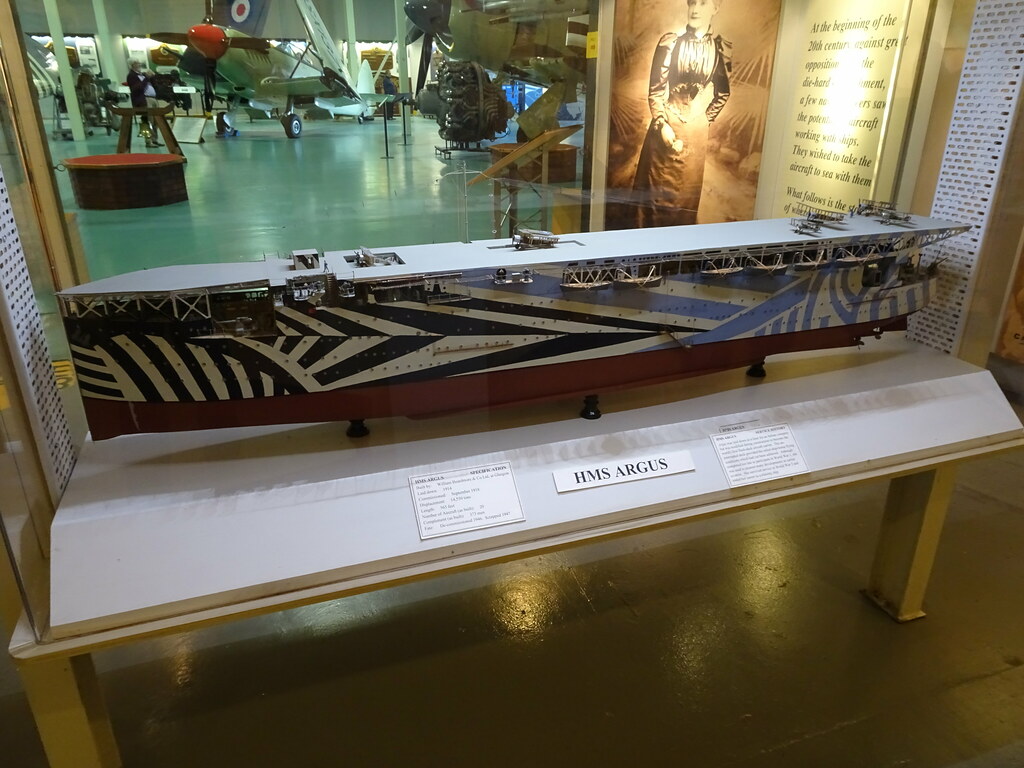
©"HMS Argus" by hugh llewelyn is licensed under BY-SA 2.0. – Original / License
Before the First World War came to a close, navies around the world were experimenting with converting cruisers into mobile airfields. This forgotten aircraft carrier, the HMS Argus, went against the grain for the earliest types of aircraft carriers. Early types of this vessel were awkward, making use of cumbersome ramps or cranes to move aircraft where they were needed. What made the HMS Argus such a game-changer was its construction and the first full-length, unobstructed flight deck.
It was crude, especially by the standards set by aircraft carriers in the coming decades, resembling little more than a floating box set to sea. However, this enabled pilots to land on the deck without fear of running into superstructures. Needless to say, this opened aircraft carriers up to all sorts of possibilities. Rather than making use of specialized seaplanes, they could use more traditional aircraft.
The age of the military seaplane had drawn to a close, as the HMS Argus would prove to be a highly influential design. While seemingly primitive by today’s standards, everything from the Ford-class carriers to the Queen Elizabeth owes something to the Argus and its groundbreaking design.
USS Langley
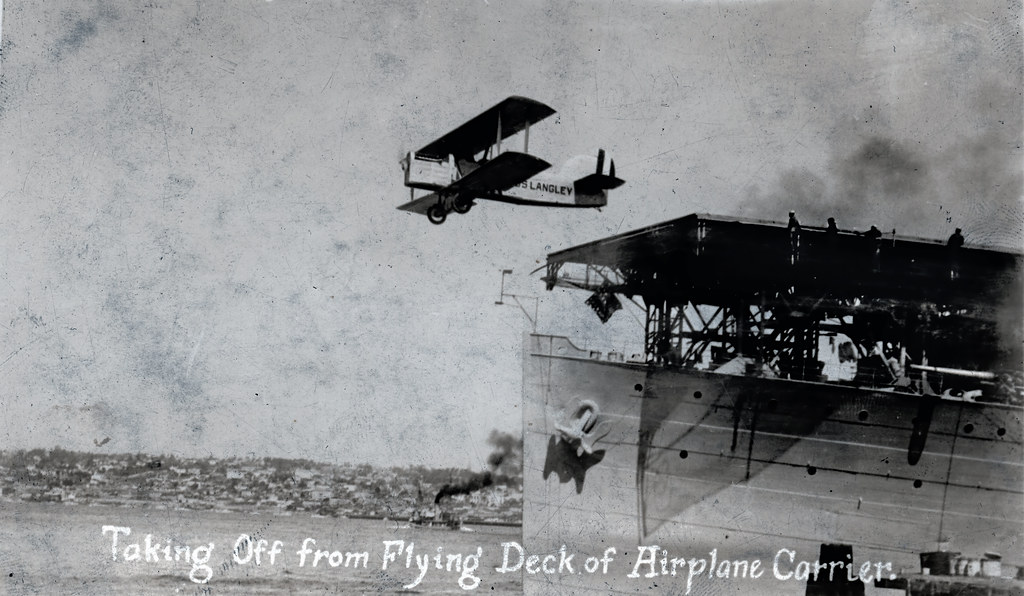
©"USS Langley" by Eli Dark is licensed under BY-SA 2.0. – Original / License
The United States Navy was decidedly late to the aircraft carrier game, not really laying down roots until the 1920s or so. The first true American carrier is one of those forgotten aircraft carriers that gets lost in the shuffle. The USS Langley was a converted coal ship, making for a slow, awkward vessel that was nicknamed “The Covered Wagon”.
Despite these humble origins, the Langley was instrumental in developing American naval doctrine in the coming decades, laying the groundwork for naval aviation strategy that would be seen in the Pacific Theater of World War 2. Among its more noteworthy innovations are things like arresting gear and tailhooks, technologies that remain a standard more than a century later.
This ugly, grease-laden ship was used for repeated drills, serving as a classroom of sorts for the admirals who would take command during the Second World War. The United States honed its technical expertise in carrier warfare here, something that enabled it to succeed at the Battle of Midway and throughout the whole of the Pacific Theater.
HMS Hermes
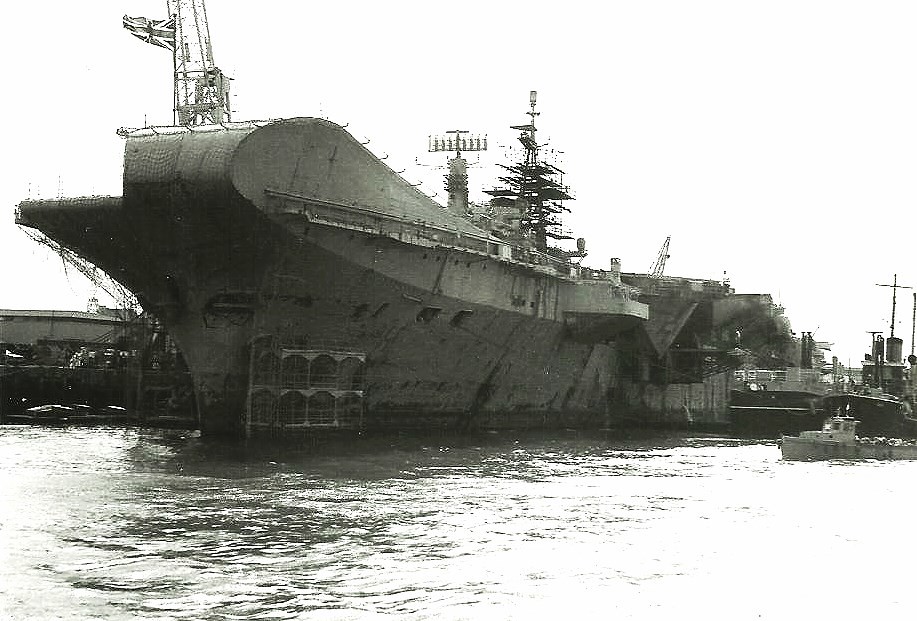
©"HMS Hermes" by hugh llewelyn is licensed under BY-SA 2.0. – Original / License
Both the Argus and Langley that we’ve discussed were conversions of existing ships. This forgotten aircraft carrier, the HMS Hermes, was the first purpose-built vessel of its kind. From the keel to the flight deck, it was designed as a true aircraft carrier, making no compromises on functionality. Among its bigger innovations was the introduction of the island superstructure. While flat decks were ideal for landing aircraft, the ship still needed the means to steer and navigate on the open waters.
This offset design would later serve as the default layout of all future aircraft carriers, with the bridge and funnel being placed on the starboard side. While not quite as innovative as some of the previously covered vessels, the Hermes would inform the design philosophy going forward on aircraft carriers, something adhered to even a century after it was launched in 1919.
Tragically, the Hermes never got to test its mettle against another vessel. It met its end early in the Second World War, sunk by carrier-based aircraft from Japanese forces. It’s poetic in a way that one of the world’s most influential aircraft carriers would meet its end by the very means and methodology it helped to inspire.
Akagi and Kaga
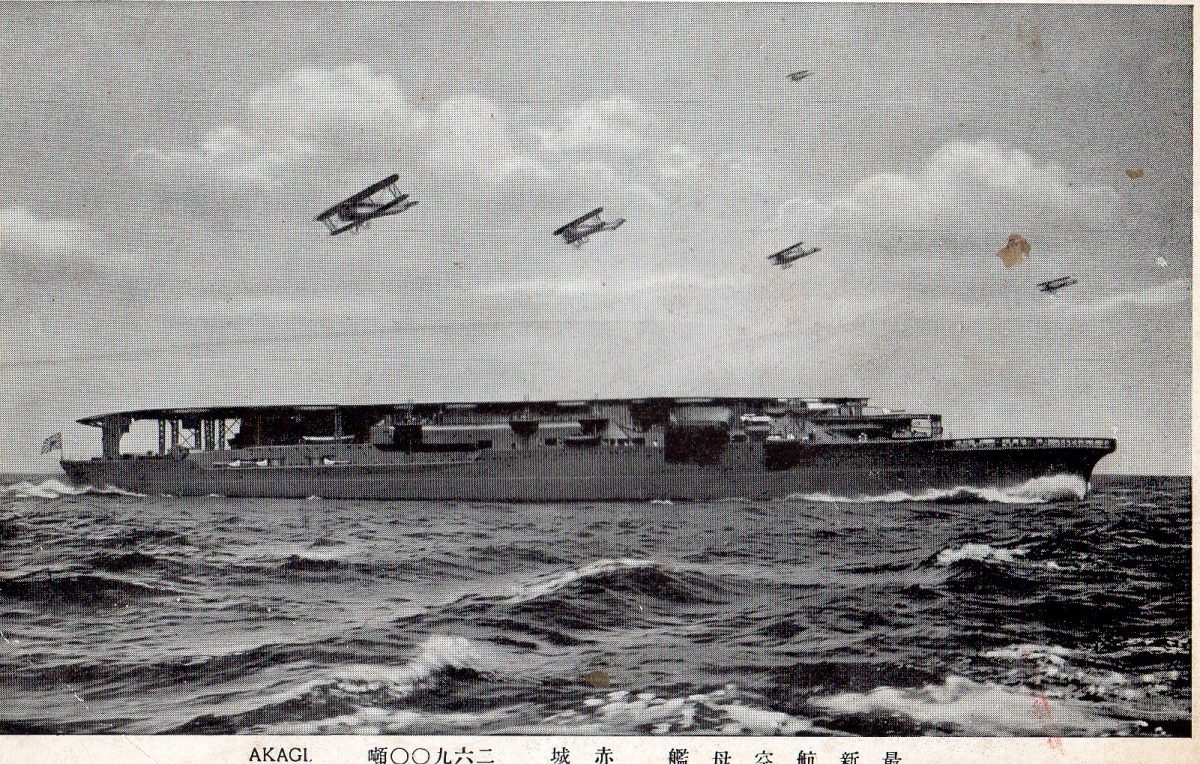
©"File:航空母艦 赤城ポストカード.jpg" by やまーみーね is licensed under BY-SA 3.0. – Original / License
Before the start of the Second World War, you could make the argument that the Imperial Japanese Navy was one of the first true masters of carrier-based aviation. A pair of forgotten aircraft carriers, the Akagi and the Kaga, made some rather interesting innovations to the standard layout for the time. They were highly experimental, as most innovations would be during the pre-war years. Both vessels made use of a bizarre triple-deck configuration.
In concept, this had its merits, as ships would land on the top deck and depart from the lower deck. In practice, the flaws in this configuration became readily seen. The lower deck was too short to allow for the proper take-off of more modern aircraft. Smoke billowed up from the funnels, blinding pilots as they attempted to make landings.
These pioneering aircraft are largely forgotten when discussing naval warfare, despite their later pivot to a typical single-deck configuration. This comes down chiefly to their role in the Second World War, where both ships led the attack on Pearl Harbor on December 7, 1941. Their status as pioneers of naval aviation is superseded by their role as an enemy force, and the subsequent destruction they inflicted in the process.
HMS Victorious
©"HMS Victorious" by hugh llewelyn is licensed under BY-SA 2.0. – Original / License
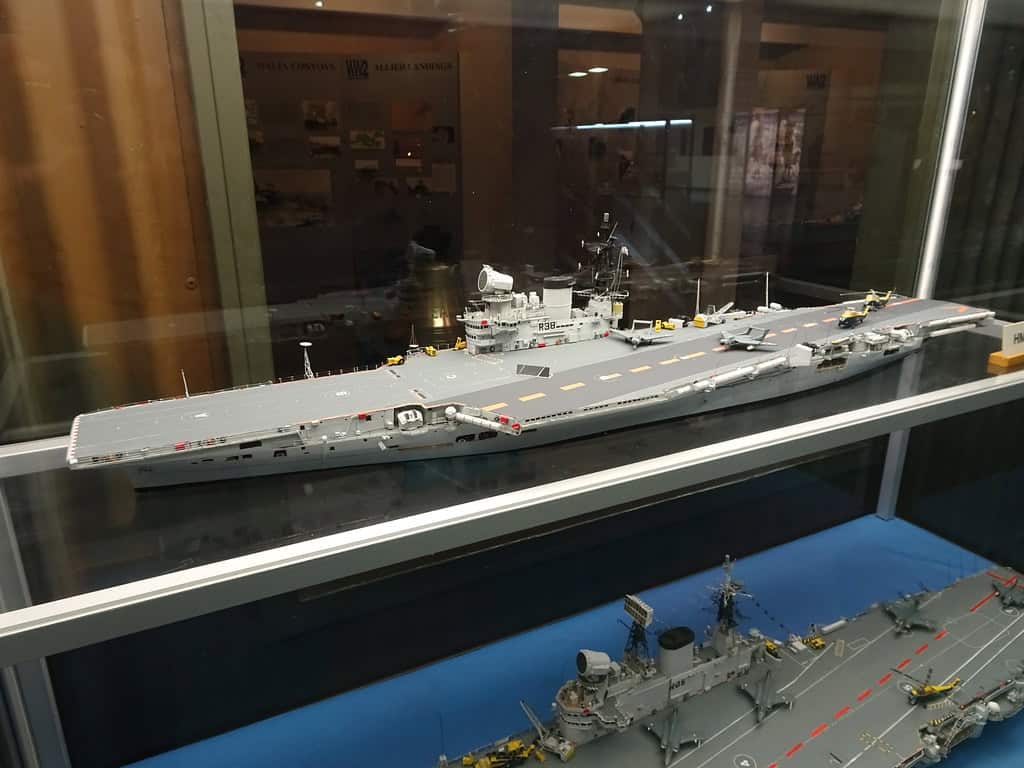
One thing we haven’t touched on at all when discussing these forgotten aircraft carriers is the materials used when constructing flight decks. During the early days of the Second World War, American aircraft carriers like the Lexington and Yorktown made use of wooden flight decks. These were light, cheap, and allowed for relatively fast vessels. That said, aircraft carriers are prime targets for carrier-based aircraft, and these fragile ships were floating targets.
The HMS Victorious, another British design, made use of a fully armored flight deck. This allowed the deck itself to sustain direct hits from carrier-based aircraft, even withstanding kamikaze attacks. By 1943, the United States Navy was so short on aircraft carriers that it borrowed the Victorious, codenamed the USS Robin, until they could make the switch for their own aircraft carriers.
The Victorious is largely lost in the shuffle of the more famous carriers that saw action throughout the Second World War. Its armored flight deck would become a standard feature on all aircraft carriers in the coming years, informing the development of our next two entries.
USS Midway
©"USS Midway Aircraft Carrier-turned museum, San Diego Harbor, California" by Crunchy Footsteps is licensed under BY 2.0. – Original / License
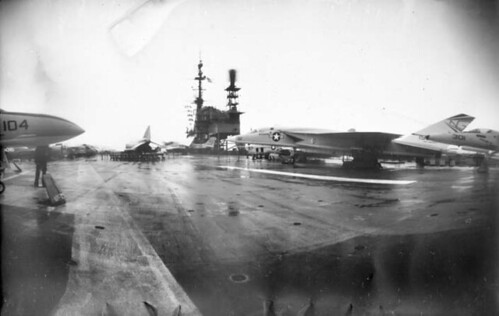
Commissioned mere days after the end of World War 2, the USS Midway was a massive, forgotten aircraft carrier built for a war it would never see. It often gets lost in the discussion of noteworthy vessels, as popular history discourse centers around the war hero ships seen throughout the war. However, that doesn’t do the Midway credit, as it is the first true example of a supercarrier. It was too large to pass the Panama Canal, signaling the shift in design philosophy. Further, its massive size proved vital for the transition from piston-driven propeller aircraft to the heavy jets that would dominate the skies.
The Midway served for an astonishing 47 years, from 1945 until the Operation Desert Storm in 1991. Along the way, it received numerous upgrades like steam catapults and an angled flight deck. If anything, this proved that a supercarrier could enjoy a long service life, provided it had a solid foundation to build upon.
Remarkably, such a vessel saw the use of aircraft like the F4F Corsair well into the era of the F/A-18 Hornet, encompassing multiple generations of multi-role fighters.
HMS Triumph
©"14 HMS Triumph Atlantic Jan1972" by Isaac Newton, RN is licensed under BY-SA 2.5. – Original / License
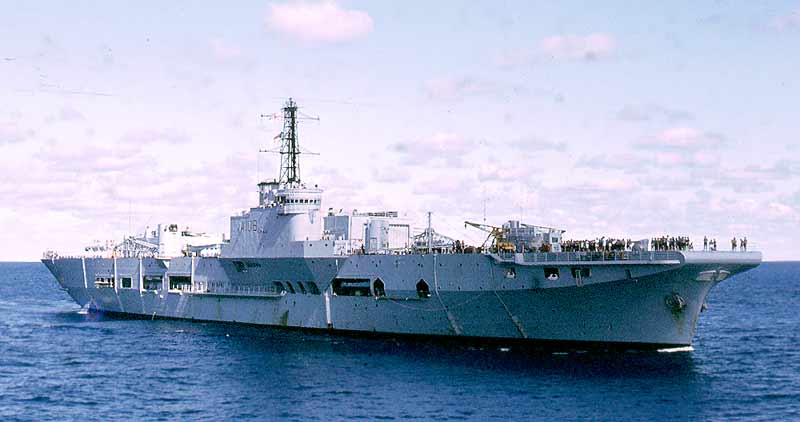
There is no single innovation more important when discussing these forgotten aircraft carriers than the angled flight deck. Upon its introduction, it saved countless pilots, as they could merely try again when it came to a botched landing without running the risk of crashing. They simply needed to throttle up and catch the edge of the deck, coming back for another pass.
It was introduced in the 1940s with the launch of the HMS Triumph, a Royal Navy ship. This was experimental at the time, as the concept of canting the deck up a few degrees went well against the grain of what made for a successful aircraft carrier.
More than 80 years on, the angled flight deck is an expectation for any new aircraft carrier. Given the prevalence of heavier, jet aircraft, it is a must.
Conclusion
The forgotten aircraft carriers we’ve looked at today represent something of an awkward, transitional phase in naval development. They lacked refinement, often appearing crude to our modern eyes, and frequently were quite dangerous for the pilots on board. That said, without their development, the battles like Midway and the Marianas Trench never would’ve happened. The possibilities and methodologies they helped to develop turned the ocean into mobile airfields, which is simply incredible given that it took place over a few short decades.
The image featured at the top of this post is ©U.S. Navy photo by Photographer's Mate 2nd Class Robert D. Bunge / Public domain – License / Original