
There was a thought that, as the guns fell silent at the close of World War 2, the world might experience a lasting peace. This illusion was shattered fairly quickly, as the Iron Curtain extended into Eastern Europe, and the Cold War began. An arms race sparked off in many different sectors of the defense industry, with the Cold War aircraft being a potent reminder of either side’s destructive potential and technological prowess.
The threat of nuclear war loomed throughout the 1950s, well into the late 1980s, and aircraft played a major role in that perception. They were interceptors, reconnaissance aircraft, and the delivery systems for some of the most powerful weapons ever devised. What aircraft defined the Cold War? Let’s dive in and find out.
Boeing B-52 Stratofortress
©"Boeing B-52 Stratofortress" by twm1340 is licensed under BY-SA 2.0. – Original / License
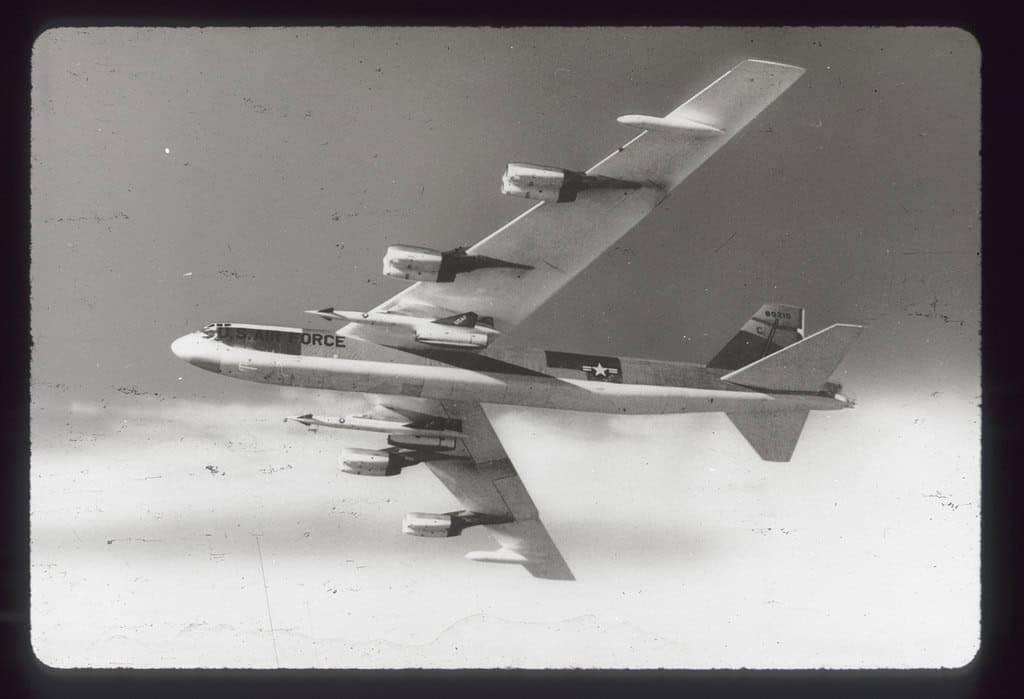
Not many heavy bombers can claim the sort of service record or duration as the B-52 Stratofortress. First taking flight in 1952, we can fully expect these to see a near century of use, albeit with modernization, refurbishments, and additional upgrades at the forefront. Successive variants and upgrades from the B-52A to the B-52H have seen it outlast the very bombers that were developed to replace it. Not a bad service record for a Cold War aircraft, if you think about it. Supersonic bombers like the B-1 and XB-70 Valkyrie largely were sunset in favor of the Stratofortress.
It isn’t hard to see why, either. Since entering Strategic Air Command in 1955, the B-52 has been one of the cornerstones of American nuclear deterrence. It couples an astounding payload, capable of delivering some of the heaviest nuclear arms in the American arsenal, with an operational range of over 8,000 miles.
It didn’t matter where the B-52 launched from. The threat of a nuclear attack on Soviet strongholds was ever-present. Further, given its ubiquity in the American air fleet, the Strategic Air Command could’ve scrambled from bases along the Pacific, Europe, and the continental United States to strike the Soviet Union. If there is one bomber that defines Cold War aircraft, it’s the B-52.
Mikoyan-Gurevich MiG-15
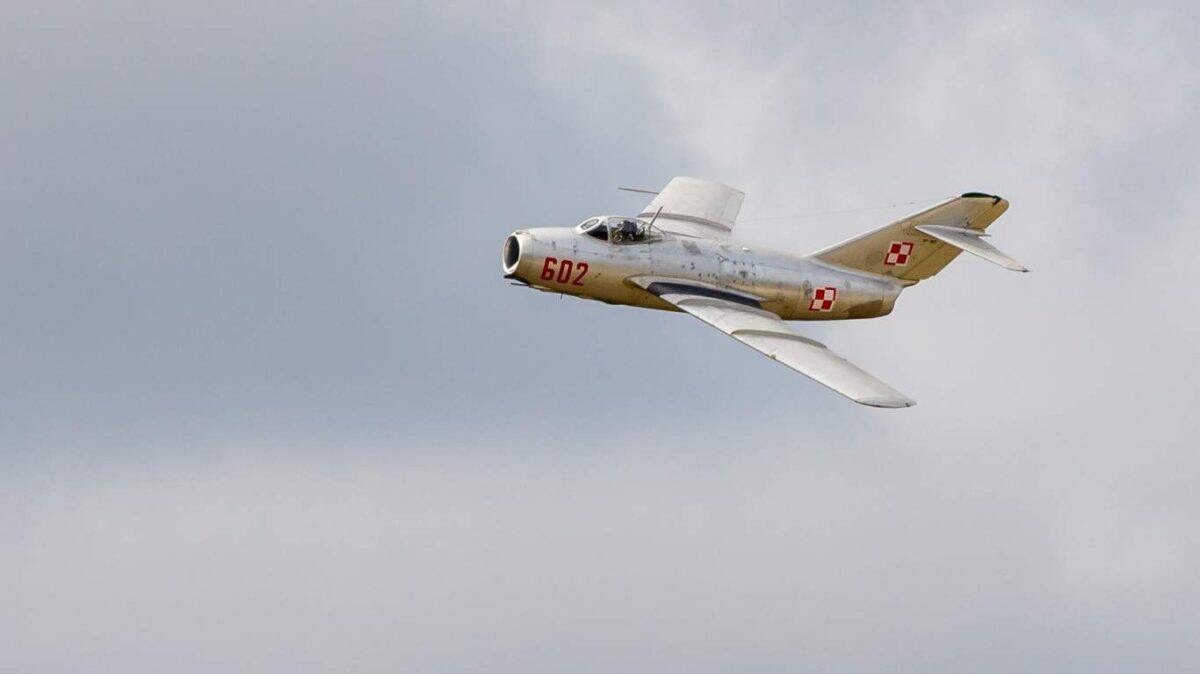
The Korean War broke out after 5 years of drawdowns and downsizing for the American military. The United States fully expected to gain air superiority by using World War 2 aircraft like the P-51 Mustang. They were quickly proven wrong by the MiG-15, a Cold War aircraft that made use of every technological advance gained in the years since the end of World War 2. The swept-wing Soviet jet could outclimb, outturn, and outgun American fighters.
The MiG-15 would be a constant threat, leading to MiG Alley, where the earliest jet-to-jet fights for air dominance took place. It wasn’t developed in a vacuum, as some British aid, namely jet engines, had been sold to the Soviets. While Great Britain would later regret this decision, the message the MiG-15 posed was very clear. This wasn’t a mere copy or clone of Western technology, but rather a refinement and advancement that would have the world scrambling in another arms race.
This Cold War aircraft enjoyed widespread popularity, serving in over 40 air forces around the world, and became an enduring symbol of the early years of Soviet dominance. The technological gap between the Soviet Union and the United States was far narrower than planners could’ve anticipated. It triggered accelerated development into the American adoption of fighter jets, something that would continue well into the Soviet Union’s collapse in 1991.
Lockheed U-2
©"Lockheed U-2" by Armchair Aviator is licensed under BY 2.0. – Original / License
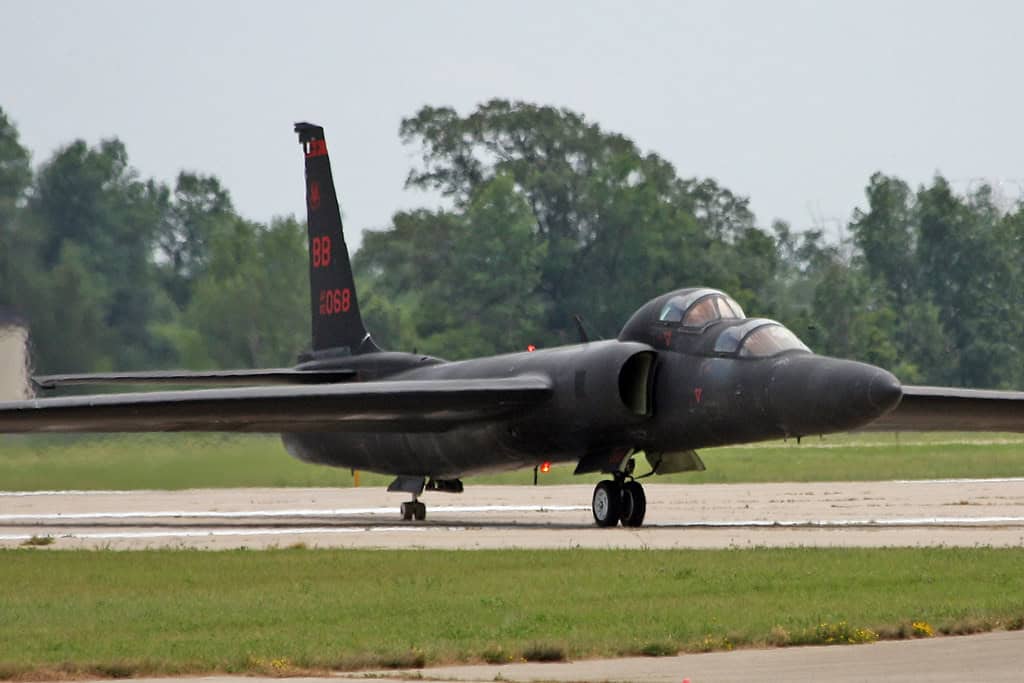
If the B-52 Stratofortress represents the United States’ overwhelming power during the Cold War, the U-2 Dragon Lady is indicative of the overwhelming paranoia that gripped the entire nation. It was developed in absolute secrecy by Lockheed’s legendary Skunkworks, something we’ll revisit a little later on, under the direction of Kelly Johnson. The U-2 lacked any sort of air defenses, no chaff, minimal armor, and so forth. Instead, the aim was to fly so high that surface-to-air missiles and interceptors couldn’t even begin to touch it.
The U-2 had an operational ceiling exceeding 70,000 feet, which gave the American intelligence apparatus unprecedented access to enemy territory. Photographs were taken of Soviet military installations, missile silos, and airfields. For a time, the five years or so after it first took flight, the U-2 proved to be such a secretive Cold War aircraft that its very existence was cloaked in mystery.
That all came to an end in 1960. Pilot Francis Gary Powers was shot down over the Soviet Union by a surface-to-air missile, and the extreme altitude that was such a prized asset for the U-2 was no longer reliable. The incident itself sparked an international crisis, derailing a planned summit between then-President Dwight Eisenhower and Soviet Premier Nikita Khrushchev. Despite this, the U-2 would prove vital during the Cuban Missile Crisis in 1962, and still serves as a vital reconnaissance aircraft over 70 years after its first flight.
North American F-86 Sabre
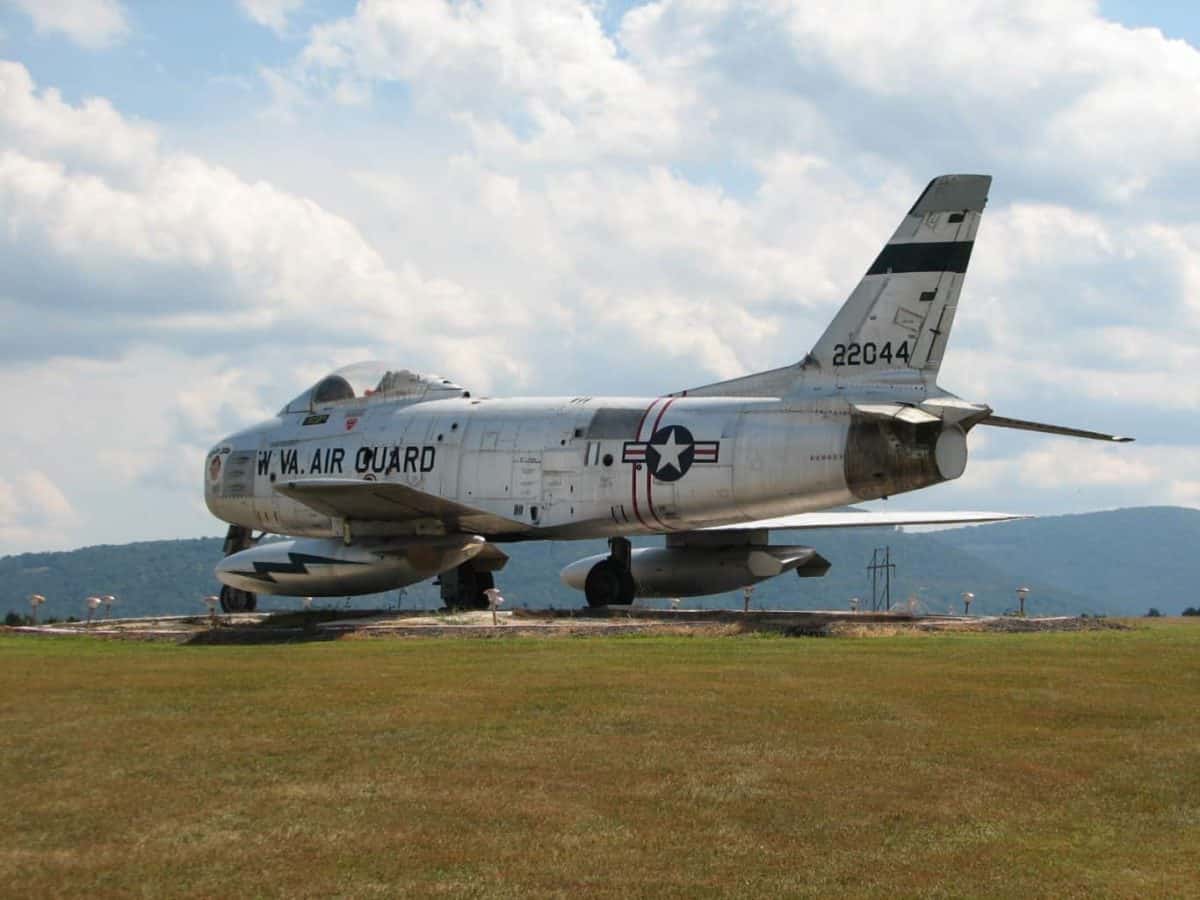
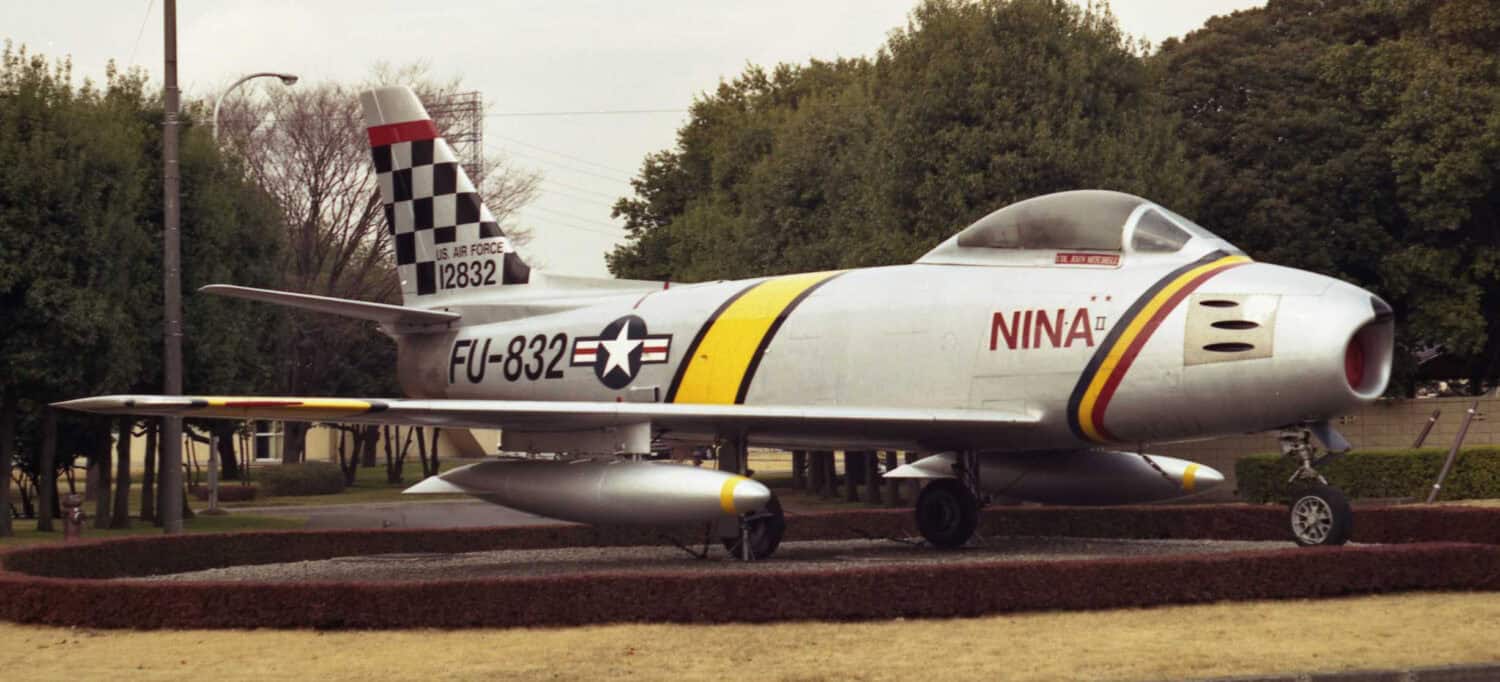
While the piston-driven aircraft that had dominated European and Pacific skies during the Second World War were obsolete by the time of the Korean War, the United States had an ace up its sleeve. MiG Alley was no place for the P-51 Mustang, but it proved to be an ideal hunting ground for the F-86 Sabre. This swept-wing Cold War aircraft was fast, maneuverable, and had the added bonus of being flown by combat-hardened fighter pilots.
The proof was in the proverbial pudding, and the Sabre was able to boast astounding kill ratios, with contested figures hovering around 10 MiGs shot down for every Sabre that was lost. Its potency in the air was a symbol of national pride, showing that the United States still had the definitive edge when it came to technological prowess.
It serves as something as a Western analogue to the MiG-15, equipping numerous NATO air forces during the early 1950s. More importantly, it would serve to be an influential factor in the design of later American aircraft, informing the design decisions for the likes of the F-100 Super Sabre and the Century series fighters that would see use during the 1960s.
Tupolev Tu-95 “Bear”
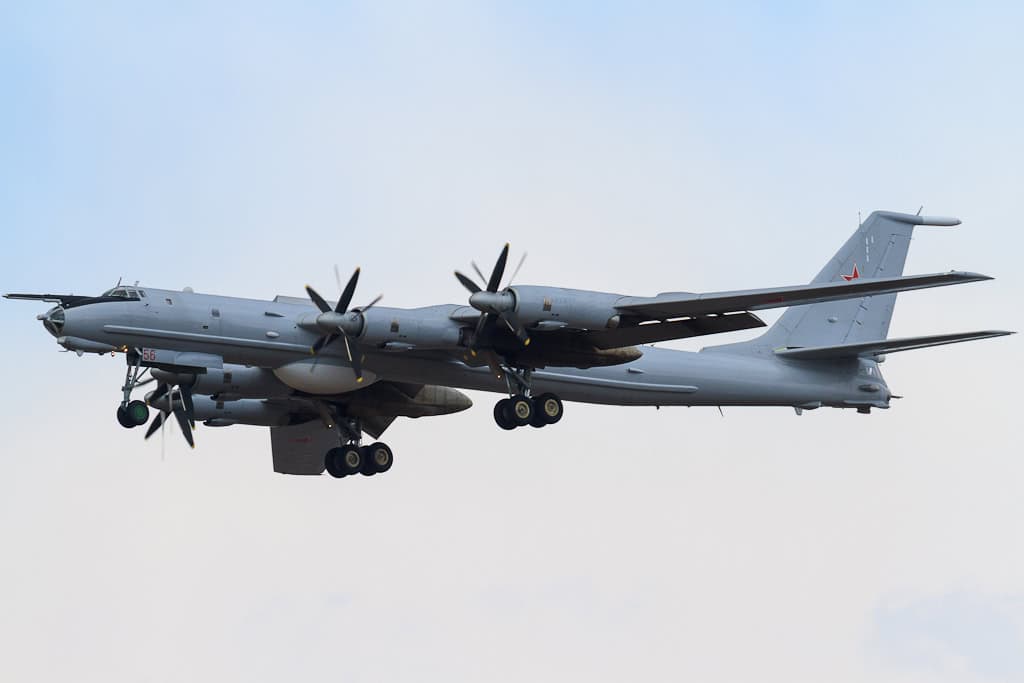
©"File:Tupolev Tu-95 (6906568850).jpg" by Fedor Leukhin is licensed under BY-SA 2.0. – Original / License
The Soviet counterpart to the B-52 Stratofortress is a testament to sheer audacity. The Tupolev Tu-95 was equipped with 4 enormous turboprop engines driving contra-rotation propellers. The massive aircraft had an unmistakable sound signature. It was loud and instantly informed you what Cold War aircraft you were dealing with. Submariners in NATO subs would joke that they could hear the prop wash on sonar. The engineering had some validity behind it, as the Bear was fuel-efficient while delivering near-jet speeds.
Like the Stratofortress, the Bear was the cornerstone of Soviet nuclear deterrence in the early years of the Cold War. Its enormous fuselage could accommodate even the largest weapons in the Soviet arsenal. Further, it made regular appearances in multiple theaters, probing Western air defenses. Brinksmanship was the name of the game, and the Bear was a familiar sight for most Western pilots stationed in Europe and the West Coast of the United States.
Much like the B-52, the Tu-95 has an impressive service duration, still seeing use today. It’s proven to be rather versatile, being adapted for the likes of marine reconnaissance, electronic warfare, and toting cruise missiles. Naturally, it still probes Western defenses, occasionally appearing near British and Scandinavian airspace to prompt an interception.
Lockheed SR-71 Blackbird
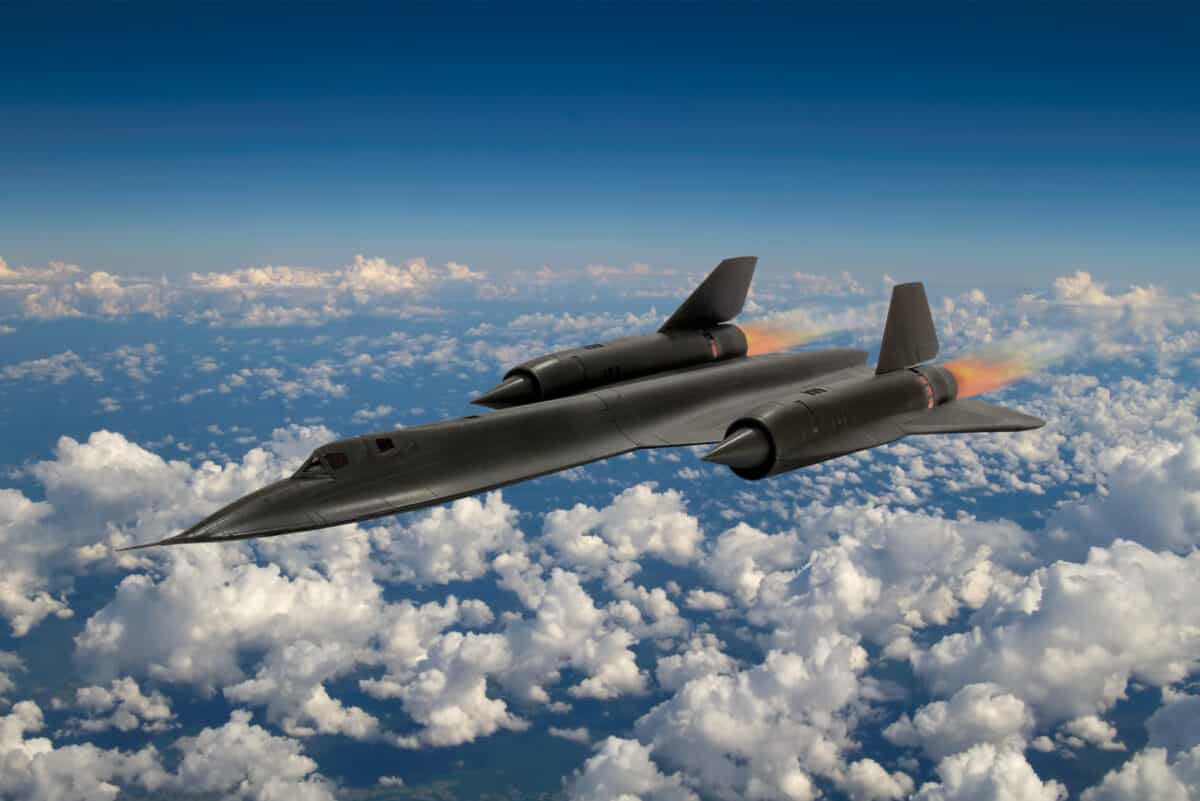
©Keith Tarrier/Shutterstock.com
If there is any Cold War aircraft that shows the extremes of the arms race, it was the SR-71 Blackbird. Capable of flying at speeds exceeding Mach 3.2, faster than most rifle bullets, and with an operational ceiling exceeding 85,000 feet, nothing could touch the Blackbird. Over the course of its operational career, no Blackbirds were lost to enemy fire. The Soviets and other nations certainly tried, as hundreds of missiles were fired at it.
The Blackbird had a rather simple defensive doctrine: if you encountered a radar lock and missiles were launched, you sped up. The SR-71 was a direct successor to the U-2, intending to defeat the surface-to-air missiles that were growing in prevalence as the Cold War wore on. It proved to be a rousing success, flying missions over North Vietnam, the Middle East, the Soviet Union, and along the Chinese border.
It was capable of gathering intelligence that no contemporary satellite of the time could hope to acquire, especially in terms of image resolution and response times. When the Blackbird was finally retired in 1998, it left a gap in the American reconnaissance network that has proven rather difficult to fill.
Conclusion
The Cold War aircraft today weren’t mere machines, but rather a showing of the ideological conflict at play. Every time a new design showed itself on radar, it prompted a response from Soviet and NATO engineers alike, hoping to eliminate the advantage and return things to a sort of parity. The Cold War has an interesting legacy, a potent mix of fear and pride that mingled with the enduring threat of nuclear war. The Cold War ended in 1991 without any grand final confrontation, but the aircraft that sprang from its engineers and designers still show the ingenuity that comes about when your nation’s very existence hangs in the balance.
The image featured at the top of this post is ©Justin Lancaster/Shutterstock.com