
History is filled with tales of underdogs prevailing against seemingly daunting forces. Smaller armies trying their best to hold out against massive empires, plucky fleets taking the fight to the most powerful navies to take to the sea, and desperate defenders holding out against a horde of bloodthirsty conquerors. While victory wasn’t assured, it went to those forces that could adapt, endure, and make the impossible happen. The battles we’re covering today were fought against insurmountable odds, making for a compelling point of view no matter how you slice it. It isn’t about what you bring to the battlefield in terms of material, men, and firepower, but rather what you can accomplish with what you have. Today, we’re looking at some of history’s biggest upsets.
Thermopylae
©David C Azor/Shutterstock.com
The Battle of Thermopylae isn’t what we could call a traditional victory by any means. This 480 BCE battle wasn’t a Greek victory, but rather a resounding defeat. The Spartan-led coalition tasked with staving off the Persian invasion was annihilated. Spartan King Leonidas would fall in battle, with mere hundreds of Spartans and a few thousand at most from the rest of their forces, meant to bear the brunt of Persia’s forces. Persian forces numbered in the tens to hundreds of thousands, depending on the historical sources you’re looking at. Thermopylae accomplished its aims of delaying, though, thanks to some rather ingenious factors in how the battle was waged.
The Battle of Thermopylae was fought in a narrow pass, enabling only a limited number of men through at a time. The terrain didn’t allow the Persians to effectively deploy their forces, negating part of their numerical advantage. The Greek hoplites were able to hold back the wave of attackers for days before the final stages of the battle began. It wasn’t mere attrition that did in the Spartans and their allies, but rather an act of betrayal. The Spartans and Thespians at the battle would fight to the last, buying precious time for the other Greek city-states to mobilize and prepare for a brutal war.
Athens would be evacuated while the battle raged, defenses were bolstered, and a decisive naval victory at Salamis would happen shortly after. Thermopylae might have been a resounding defeat for the Spartans and their allies, but it showed that even a delaying action in defeat could win the whole war. The grit to endure impossible odds enabled the Greeks to avoid becoming yet another vassal state under Persian rule.
Agincourt
For much of Europe’s history at war, France was one of the most dominant forces to take to any battlefield. Centuries of French dominion in infantry-based warfare was toppled at the Battle of Agincourt in 1415, as the English King Henry V led a dirty, sick army against a far larger, superior French force. Estimates vary, as you’re wading through multiple historical sources, but the prevailing thought seems to place the French forces outnumbering the English 3 to 1. By all rights, the English were a defeated army trying to keep the inevitable at bay. They lacked cavalry, and their numbers had been depleted by a brutal campaign.
Henry’s forces won the day, however, thanks to a combination of solid tactical planning and a bit of luck when it came to the weather and terrain. English longbowmen were able to loose devastating volleys on the French, time after time, and the battlefield was rendered into a muddy pit, essentially rendering the French heavy cavalry ineffective as their horses and knights couldn’t ably navigate the landscape. The volleys of English arrows tore through French ranks as they desperately tried to close the distance in tight, compressed ranks.
Morale was high as Henry took to the field, while French nobles were being cut down en masse. If anything, Agincourt demonstrates that you can have a top-of-the-line army and still fail when not taking a full stock of the environmental factors of the battlefield. As we’ll see in another of these entries, it is absolutely crucial when looking to maximize your advantages and destroy an enemy force.
Siege of Vienna
©"The Turkish Siege of Vienna" by Tyssil is licensed under BY-SA 3.0. – Original / License
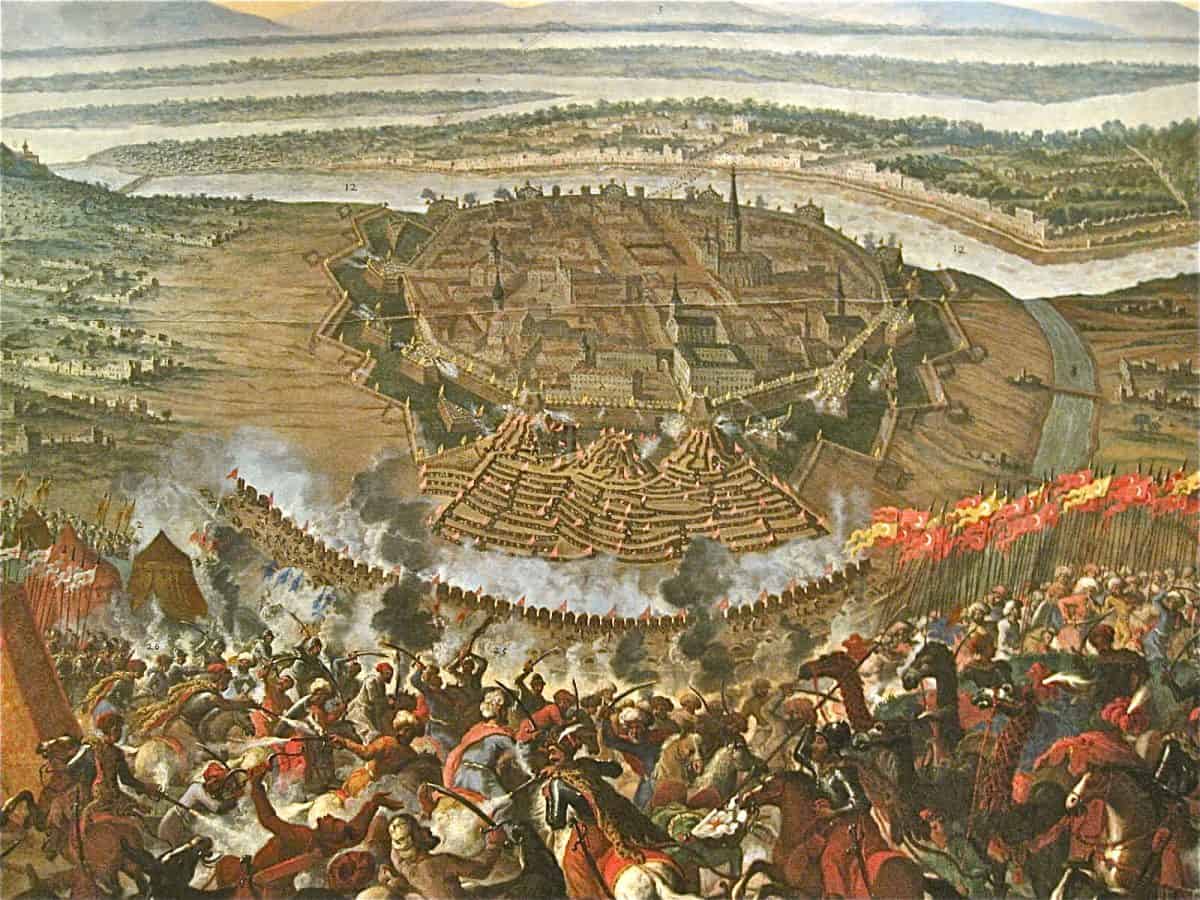
The 17th century saw one of the final attempts by the Ottoman Empire at trying to conquer much of Europe. As they descended upon Vienna, all seemed to be lost. The Ottomans had one of the most powerful military forces of the era, and as they surrounded Vienna, the prognosis was grim. The city was outnumbered, undersupplied, and increasingly desperate. However, as the siege wore on, the Ottomans couldn’t secure victory.
Vienna held fast for months, allowing their allies to muster their forces. This came to a head when King Jan III Sobieski of Poland launched a massive attack, conducting one of the largest cavalry charges in history. The Ottoman lines were brittle, stretched thin by the long siege and fighting on extended battle lines. It didn’t take long for the Ottomans to be routed, and their incursion into Central Europe drew to a close.
Europe has always had a contentious relationship between neighbors, but the strength of the coalition supporting Vienna cannot be understated. Tactical genius and tenacity can only take you so far. However, by having allies to rely upon, Vienna, and the rest of Central Europe, for that matter, was able to stave off the Ottomans’ ambitions. Victory was secured long before the swords left their scabbards, being the result of the slow, arduous process of forging lasting alliances.
Rorke’s Drift
Close-quarters fighting can be some of the most brutal combat a unit can see. In 1879, the Anglo-Zulu War was reaching a fever pitch, with the British suffering a devastating defeat at Isandlwana. A tiny British garrison, numbering around 150 men, was stuck at the mission station of Rorke’s Drift and under the constant threat of thousands of Zulu soldiers. Discipline won the day, not mere numbers. The defenders of Rorke’s Drift set up makeshift defenses of biscuit boxes and bags of meal, while firing disciplined volleys against their attackers.
The garrison held out for hours, withstanding assault after assault. The Zulu seemed to just keep coming, with wave after wave of men falling to the British guns as the battle raged on. Eventually, the Zulu attacks would cease, as the British were finally able to breathe a sigh of relief. The Zulu would withdraw from the battle, leaving one of the most legendary victories in British military history behind them.
Rorke’s Drift highlights a few important aspects of close-quarters combat, the need for morale, and the power of defenses. In tight, chaotic combat, the ability to remain disciplined and protected becomes paramount. While the odds were stacked against the British, they were able to keep cool enough heads to bleed the Zulu attackers enough to make them regret their waves of attacks.
Stalingrad
©"File:RIAN archive 642989 'To Heroes of the Battle of Stalingrad' monument-ensemble.jpg" by Viktor Chernov / Виктор Чернов is licensed under BY-SA 3.0. – Original / License
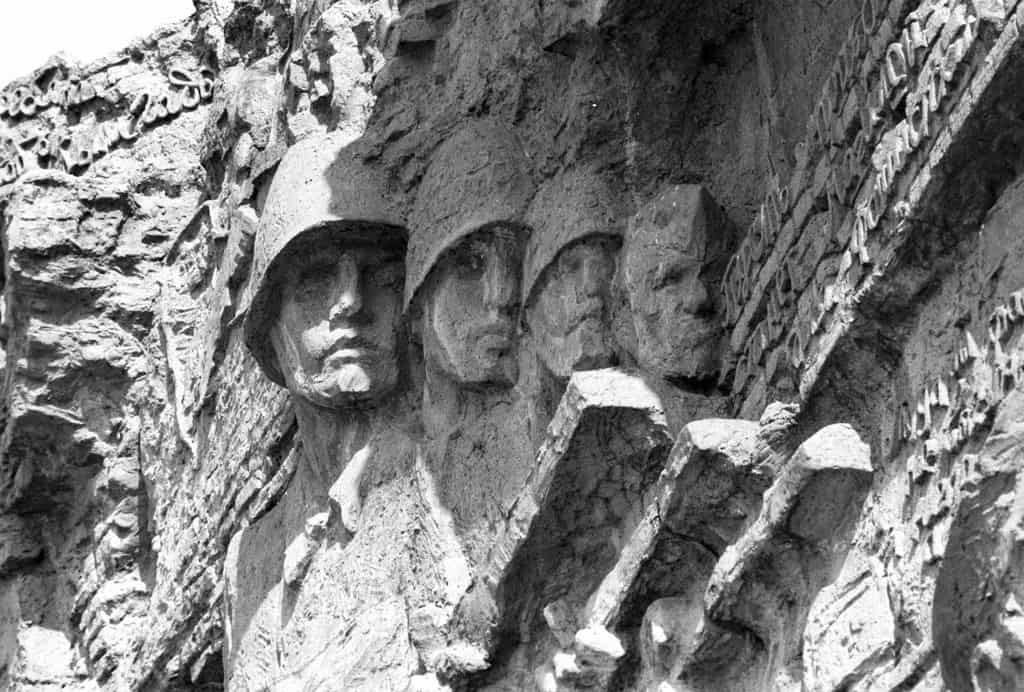
Our last two entries are perhaps some of the most astounding victories to be achieved in the 20th century. By 1942, Soviet forces were between a rock and a hard place, as the German advance into their territory as a result of Operation Barbarossa had left much of their industry laid to waste and with vital resources unable to be effectively utilized. The German command capitalized on the initiative, setting their sights on Stalingrad, hoping to capture the city that bore Stalin’s name as a grand prize before the year was up.
The Wehrmacht of 1942 was seemingly unstoppable, having already laid the French low and taken Poland purely by force. The British were bloodied and desperate after the evacuation of Dunkirk. By all rights, their expansion into Soviet territory was to be an easy victory. However, despite the numerous military purges of the Soviet high command, the Red Army refused to yield. Street after street, building after building, simply would not capitulate to the encroaching Wehrmacht.
Soviet planners got to work at planning a counter-offensive as the city’s defenders grew more and more desperate. House-to-house fighting was increasingly common, with Stalingrad remaining one of the largest battles ever fought in history. Eventually, the counter-offensive would come, completely encircling the German Sixth Army. The seemingly unstoppable Wehrmacht would surrender at Stalingrad, with millions dead in the wake of the battle.
Dunkirk
Victory can have a few different definitions, at least not going strictly by military terminology. Sometimes, it’s enough to just survive to fight another day. This was best seen with the 1940 Miracle of Dunkirk. Hundreds of thousands of Allied troops were left trapped on Dunkirk’s beaches, driven to the sea by the steady advance of the Wehrmacht. All seemed lost, as France had already fallen, with the Wehrmacht steaming across the Maginot Line.
However, something miraculous happened, as thousands of civilian vessels and naval ships worked together to rescue the trapped troops. Dunkirk wasn’t a traditional battle by any means, as the only strategic objective was to retain the core of the British army. They succeeded and then some, as the British were able to hold on for another year, as American forces would soon enter the fray. While drier military texts deem Dunkirk a defeat, Great Britain and the rest of the Allies would emerge from the war victorious.
Conclusion
Battles won against seemingly impossible odds remain a point of interest for even the armchair military historian. There’s something compelling about insurmountable obstacles being overcome, with forces snatching victory from the jaws of defeat. If anything, they’re a demonstration of the human spirit, where the willingness to survive and endure can prevail against anything.
The image featured at the top of this post is ©zef art/Shutterstock.com