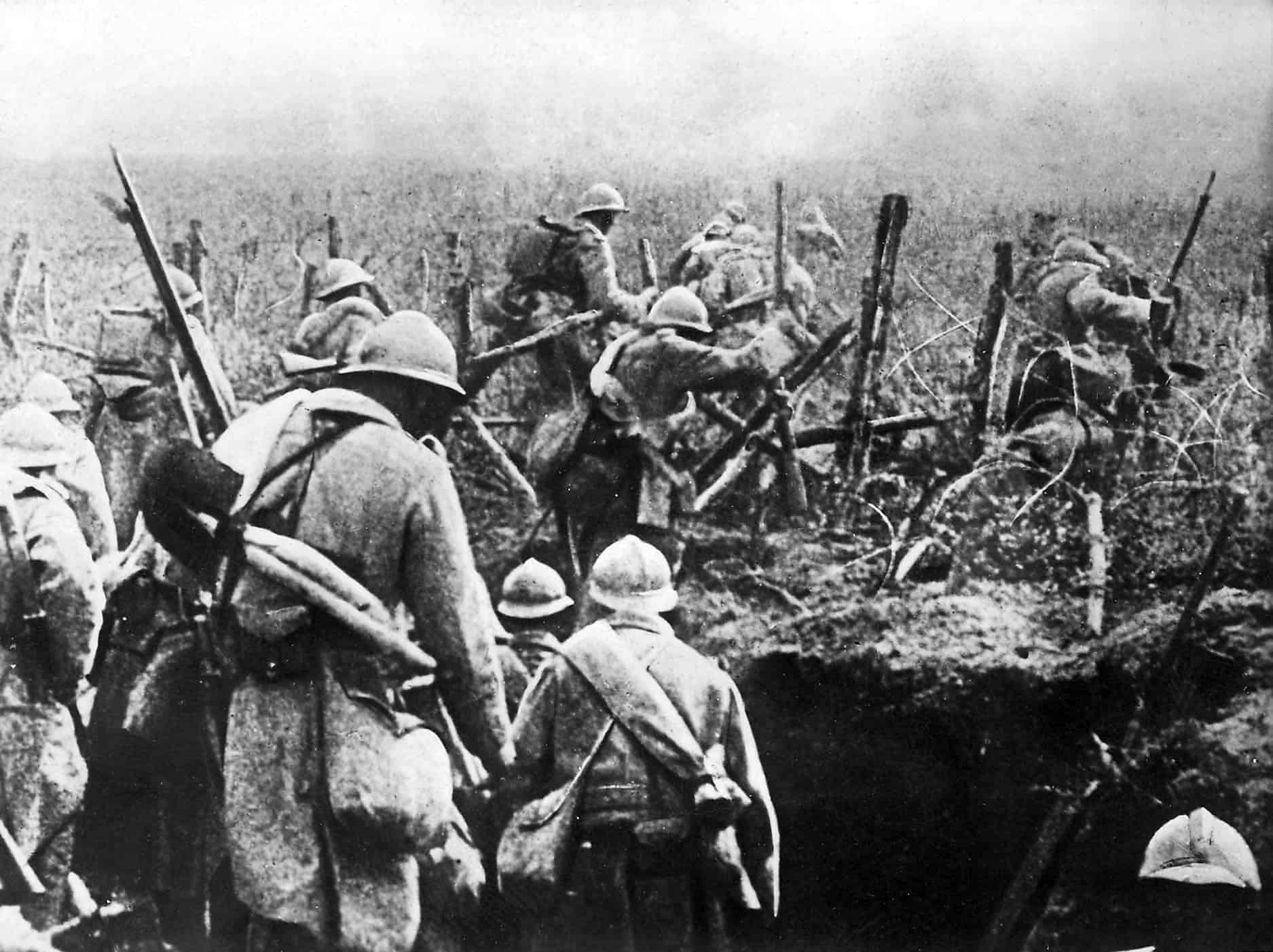

Popular history often paints the First World War as a conflict dominated by static warfare. Men lived and died in trenches while machine guns raked No Man’s Land and artillery barrages turned the ground into a series of poison gas-filled craters. As the first true industrialized conflict, there is some truth to the static warfare claims, but it ignores the technological innovations at play throughout the war. While we wouldn’t see the massive leaps forward seen in the Second World War, the war served as something of a lab experiment, with soldiers as the test subjects.
The cost of failure could be measured in thousands of lives, a precious resource as the war wore on. The technologies born during the Great War didn’t just change the nature of the war; they also laid the foundation for modern warfare itself.
The Battle Tank
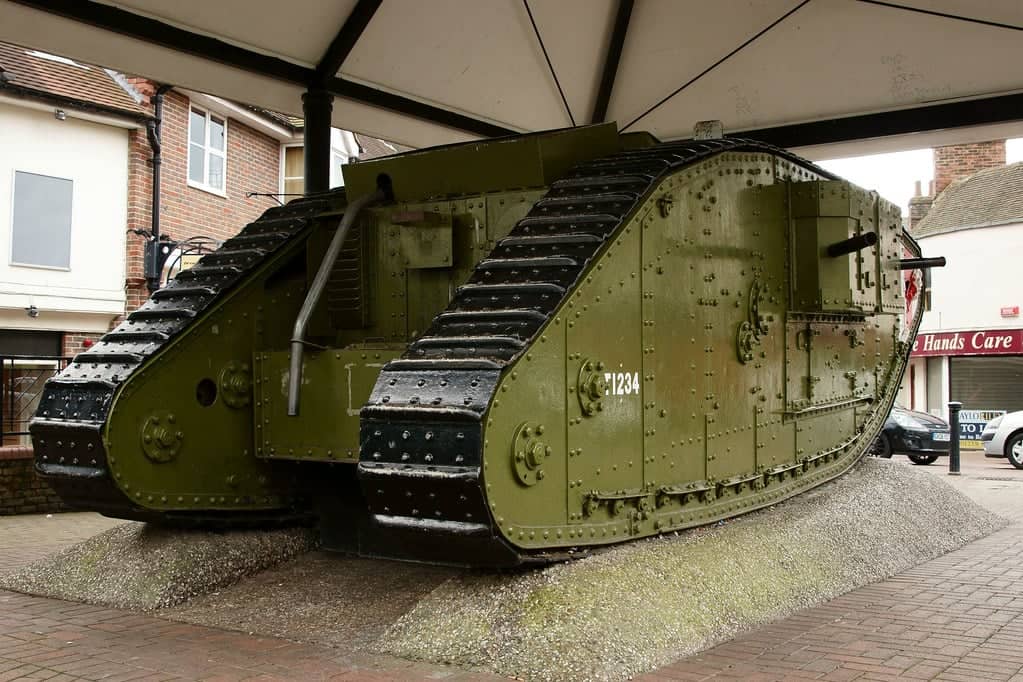
©"British Mark IV Tank, Ashford, Kent" by Peter G Trimming is licensed under BY 2.0. – Original / License
The first battle of the war, the First Battle of the Marne, showed just how horrible the war could be. While the Entente would claim overall victory, it came at a ghastly cost, with nearly 250,000 French soldiers dead or wounded, and nearly 13,000 British troops suffering the same fate. In 1914, the war was seen as an affair that would be over by Christmas, something that would be quickly proven wrong. Machine guns and artillery had become a modern nightmare, devastating advances and turning the battlefield into a slaughterhouse.
The solution to the eventual static emplacements and networks of trenches would come from a rather unlikely place: the British Admiralty. Winston Churchill, then the First Lord of the Admiralty, backed the Landships Committee. They were tasked with finding some sort of way across No Man’s Land. The result was the battle tank, a project guarded under lock and key, with workers being told they were working on mobile water tanks for Tsarist Russia.
When the British Mark I tanks lumbered out of the fog and into the line of fire at the Somme, they were something of a mechanical marvel. These armored vehicles made use of caterpillar tracks, inspired by the use of treads on American tractors. Barbed wire crushed underneath them as they rolled onward, and they could bridge 10-foot gaps. It wasn’t all roses, as the soldiers inside the battle tank were as much mechanics as they were combatants. They ran the risk of enduring extreme temperatures, with the interior of the Mark I reaching up to 122 degrees, while breathing in a toxic cocktail of carbon monoxide and oil smoke. Warfare had changed, and the future was mechanization.
The Science of Sound
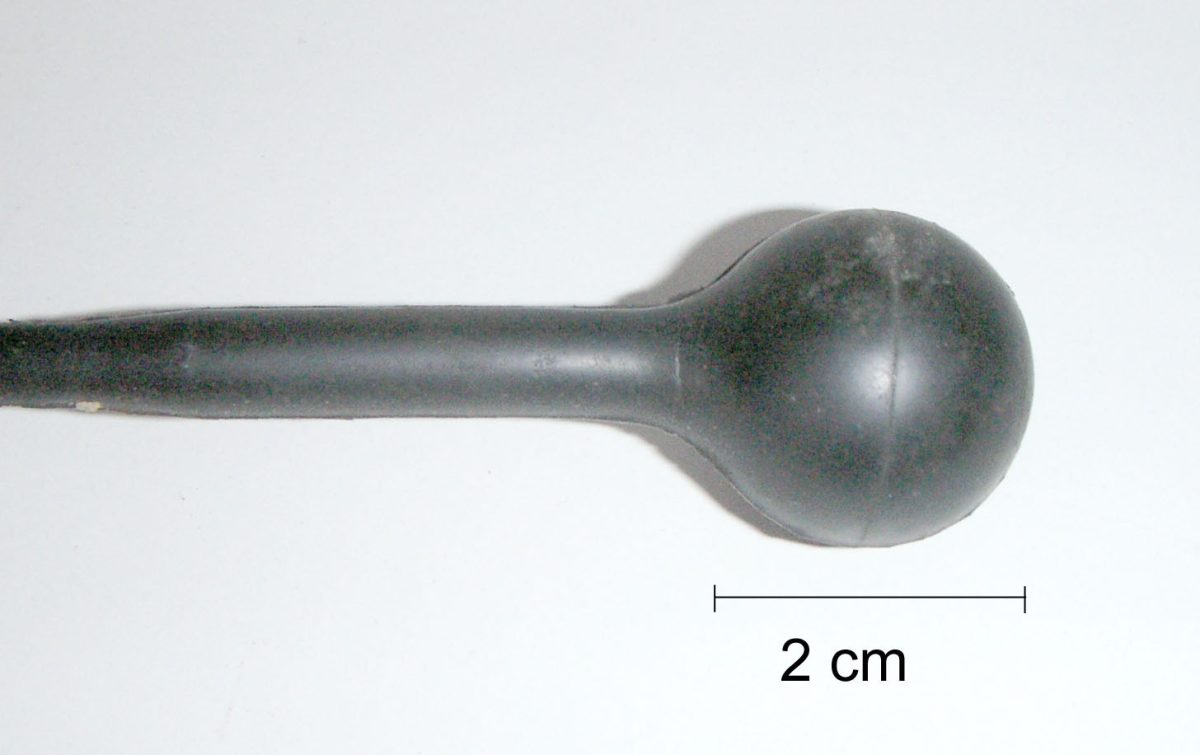
©"Hydrophone" by Jelly is licensed under BY-SA 3.0. – Original / License
One of the biggest killers in World War I wasn’t machine gun fire, though that did play a significant role, but rather artillery. Modern artillery, at least in 1914, was a vast improvement over the field guns of the 19th century. Uninterrupted barrages could devastate units of thousands of men. It led to the development of counter-battery tactics, which often became a deadly game of hide-and-seek as commanders attempted to destroy enemy guns without risking their own.
The solution to find these guns for the Entente was rather high-tech, for the time at least. The field of sound ranging, or the use of microphones to determine the exact position of a battery, was developed. Microphones were placed miles apart, and when a gun fired, the sound would reach each microphone at slightly different times. Using complex hyperbolic geometry, or high-level math in the midst of a combat zone, they could place the exact location of a battery.
In the Atlantic, sound was used for entirely different reasons. There was no bigger threat to the Entente’s supply lines than the German U-boats. The convoy system had been developed to combat the threat, but the United Kingdom and France were being strangled by an unseen enemy. The first true passive sonar, or the hydrophone, was developed. Sailors would sit in cramped compartments, wearing a set of headphones, while rotating underwater microphones to listen for the sound of a submarine’s propellers.
Interrupter Gears
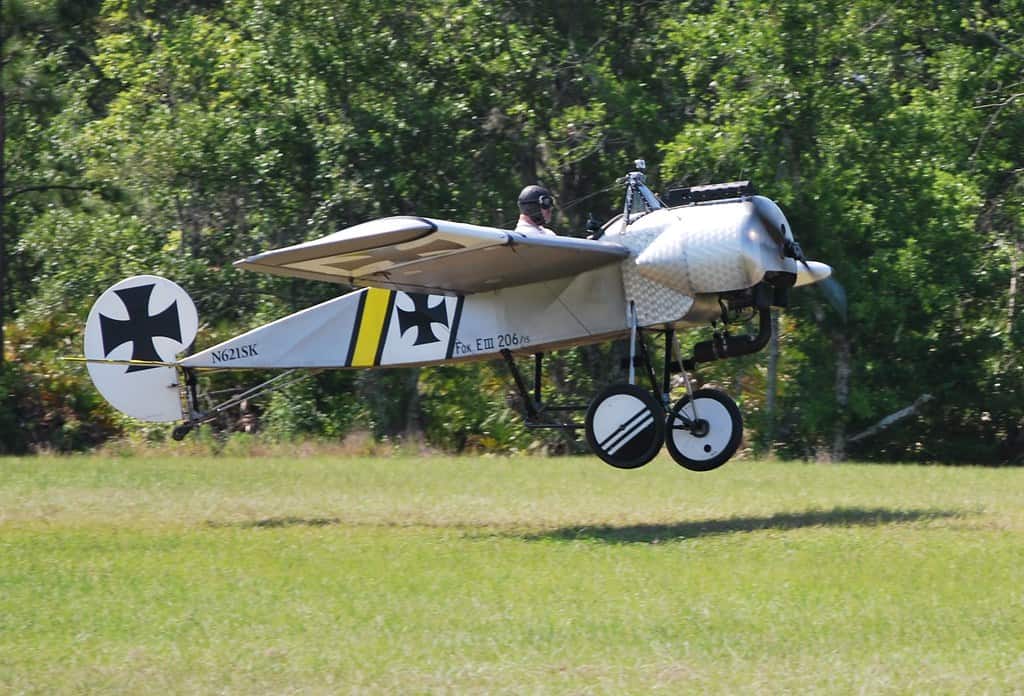
©"Fokker Eindecker" by foqus is licensed under BY 2.0. – Original / License
History shows us that you had about a 30% chance of meeting a grisly fate on the front lines of the First World War, a rather stark difference when compared to the more popular historical take on it. The same wouldn’t hold for the burgeoning air forces across the Central Powers and Entente. Fresh pilots had a life expectancy of around 11 days. At the start of the war in 1914, planes were little more than machine-driven kites intended for reconnaissance. By 1915, they had become deadly war machines, waging a war in the sky while men toiled on the ground.
The first true leap for aircraft was the synchronization of the interrupter gears. These linked the firing pin of the frontal machine guns to the spin of the propeller. In turn, this allowed pilots to directly engage in combat without fear of peppering their propeller with gunfire. The weapon could only fire when the propeller’s blade was out of the way.
This development would largely be unnecessary by the 1930s, as planes grew more sophisticated and took on multiple engines and stronger armament. However, for the time, this is what allowed the first aces to truly earn their place in history. Without the interrupter gear, pilots would’ve still been resorting to pintle-mounted machine guns, pistols, and who knows what else.
Camouflage and Chemistry
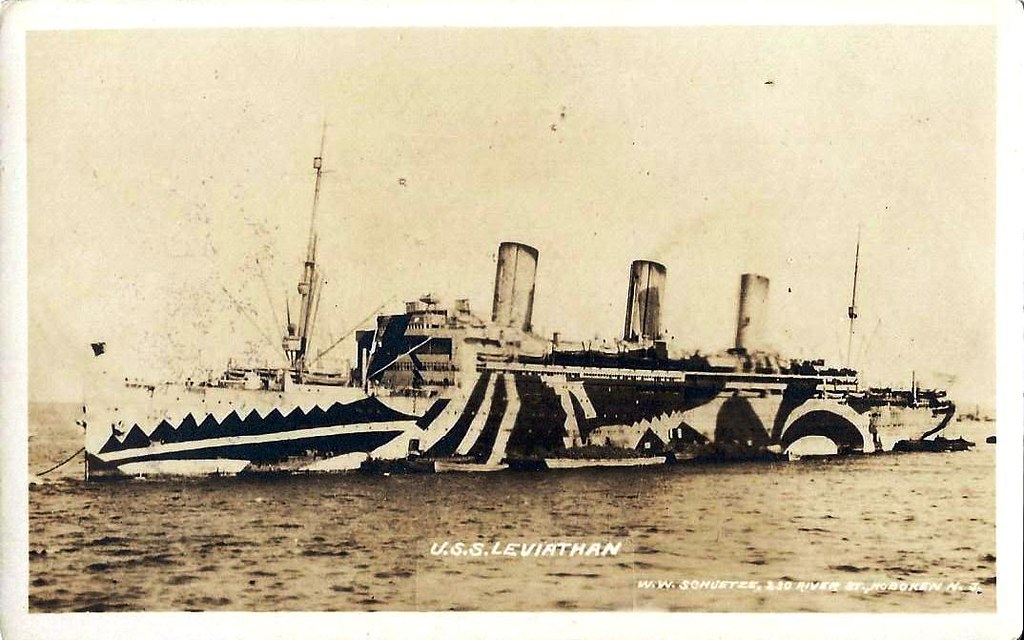
©"Vintage Postcard of the U.S.S. Leviathan Painted With A World War I 'Dazzle' Camouflage Pattern" by France1978 is licensed under BY-SA 2.0. – Original / License
Personal armor had long since been obsolete since the advent of high-velocity rifle rounds and the like. Instead, the means of protection came down to deception above all else. At the start of the Great War, most troops marched into battle wearing uniforms that wouldn’t be out of place in the late 19th century. As the war raged, it gave rise to camouflage, with artists, designers, and engineers transforming the battlefield. Helmets were painted in patterns akin to woodland forests, hollow trees were built to hide snipers, and dazzle patterns adorned battleships to make it difficult to target them.
When discussing World War I, it’s impossible to avoid the widespread usage of chemical warfare. The introduction, en masse, of chemical weapons made it necessary for precautions and safeguards to be in place for troops. This led to the development of the small box respirator, a charcoal-filled canister affixed to a wearable mask. As the first true gas mask, the small box respirator enabled troops to survive the lethal clouds of mustard and chlorine gas that swept over the battlefields, and served as a predecessor to the NBC suits used by troops today.
The introduction of SBRs dramatically dropped casualties from gas attacks. Previous British gas attack helmets, namely the P, PH, and PHG, introduced in 1916, couldn’t withstand the use of phosgene gases. German chemical attacks often relied on chlorine and phosgene mixes. The aforementioned SBR, introduced in 1917, dropped mortality rates significantly, as the effects of these chemical attacks often weren’t seen for hours after their use.
Mobile Medicine
©MattL_Images/Shutterstock.com
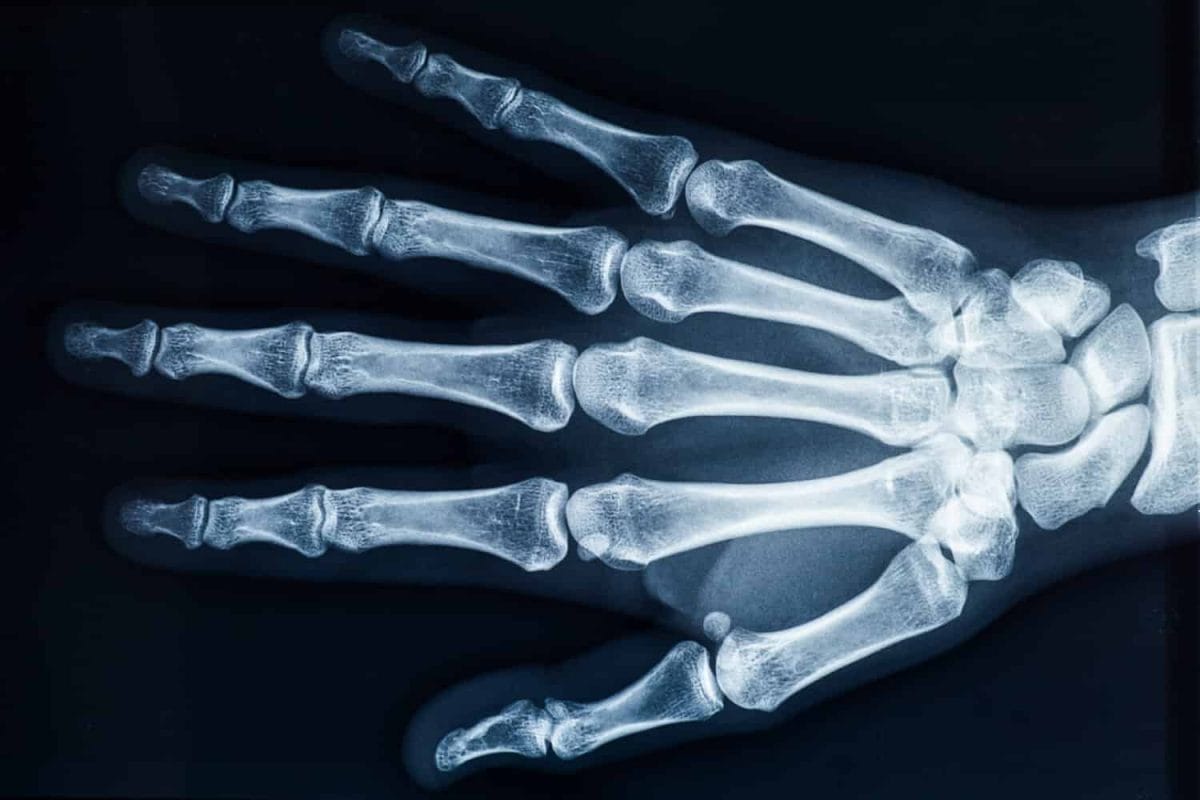
Perhaps the most enduring and lasting technology to be developed during the Great War wasn’t a weapons system, but rather something intended to save lives. In 1914, Marie Curie, the first woman to win the Nobel Prize, recognized the need for mobile radiology units. Shrapnel kills in insidious ways, often inflicting wounds that lead to infections that couldn’t be seen. Rather than risk the loss of life and limb, Curie wagered that finding this shrapnel could save thousands of lives.
Mobile radiography units, or petites Curies, first became operational in 1914 under the Red Cross. Curie, with assistance from her teenage daughter, directed the installation of 20 mobile radiological vehicles, with a further 200 radiological units deployed to field hospitals along the Western Front.
It’s estimated that nearly a million wounded soldiers were treated by these units. Further, Curie would develop hollow needles containing radon gas, which could effectively sterilize infected tissue. While a far cry from modern medicine, it saved lives. Curie was never recognized by the French government for her service during the war, something which she was all too aware of.
Conclusion
The technological leaps forward during the First World War are something of a working paradox. Much of it was developed with the express intent of more efficiently killing the enemy, but other aspects of it were in service of saving lives. The foundations for modern flight, medical imaging, and combined arms warfare were all forged in the crucible of the First World War. For those who fought and died during the war, they weren’t just at the crossroads of the old and new, but rather at the frontier of the modern age.
The image featured at the top of this post is ©Collection DocAnciens/docpix.fr / Public domain – License / Original