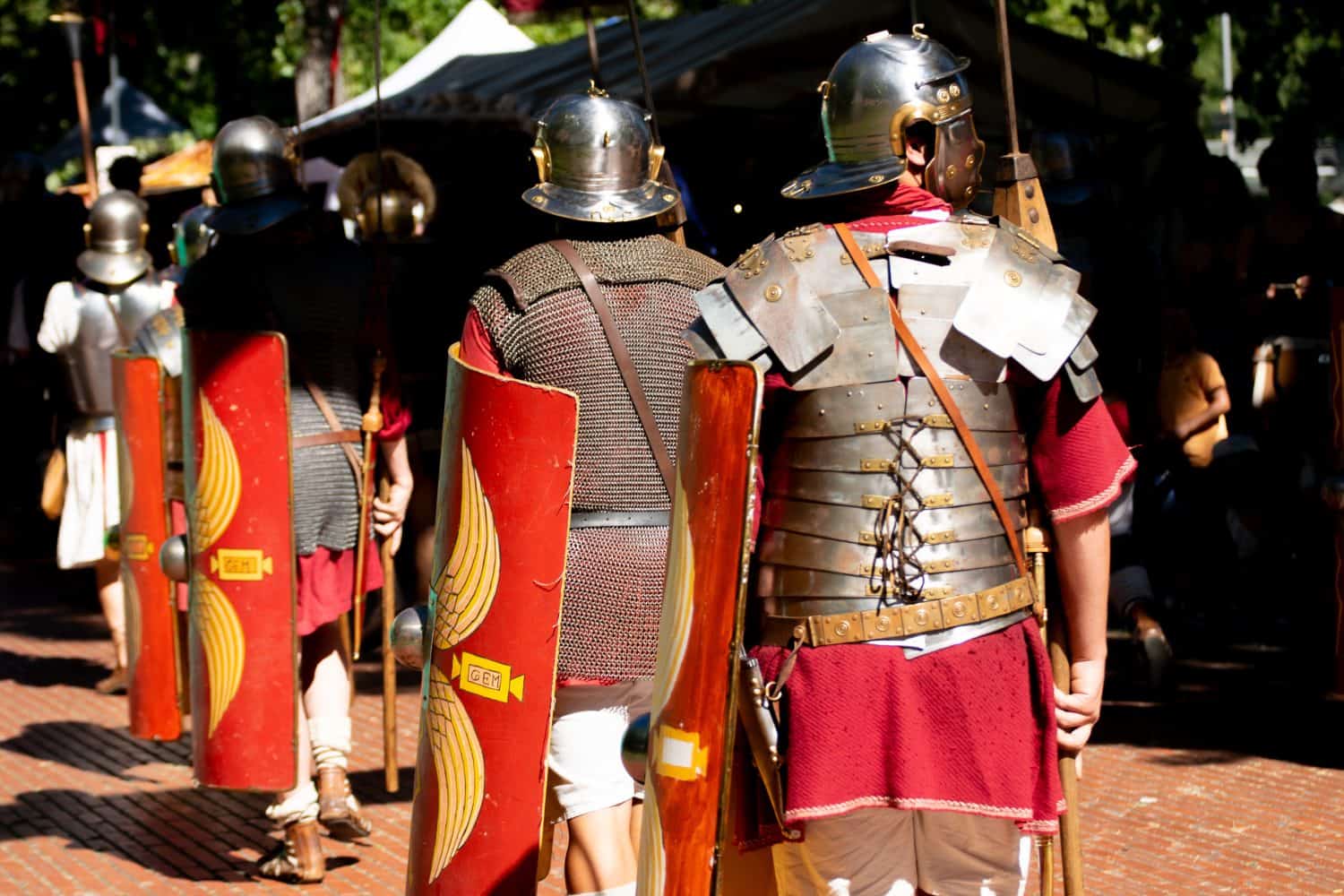

Often, when we think about antiquity and ancient military technologies, we fall into the usual view of ancient warfare. You might picture phalanxes of Greek spearmen crashing into one another. The simple truth is that while technological advances might not have been up to snuff with the modern era, there was plenty to be amazed by in the ancient world. Antiquity and ancient warfare cover thousands of years, encompassing dozens of civilizations. There was no shortage of brilliant engineers, skilled tacticians, and logistical acumen to bring some weapon systems to bear. With that in mind, let’s look at some of the more surprising ancient solutions to warfare and what makes them so remarkable in the first place.
Antikythera Mechanism
©Zde, CC BY-SA 4.0 <https://creativecommons.org/licenses/by-sa/4.0>, via Wikimedia Commons – Original / License
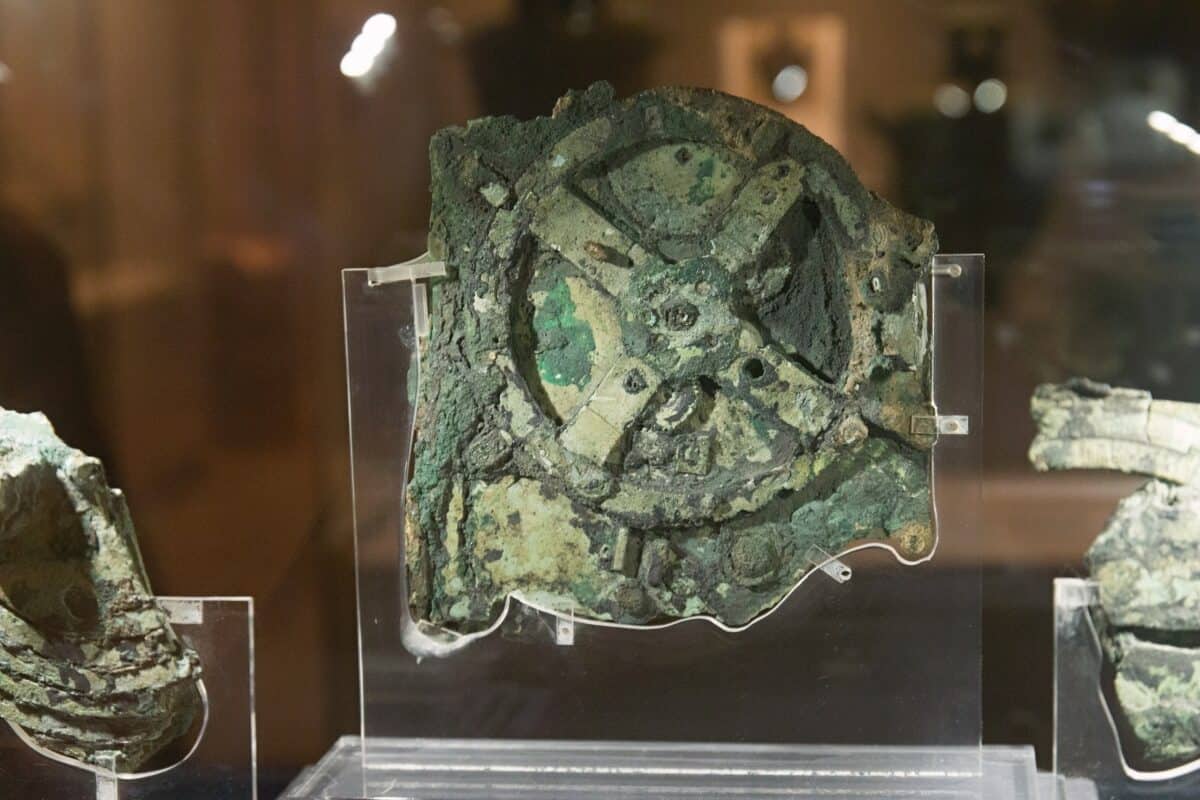
Avid students of history will recognize the Antikythera mechanism, a calendar device recovered from a shipwreck. Its wider tactical implications are seldom discussed, and it’s perhaps one of the most sophisticated bits of ancient military technology to exist. Naval commanders aboard Greek and Roman vessels would need to predict celestial events with some degree of precision. This wasn’t done for spiritual reasons by any means, but with more practical applications in mind.
Having an understanding of celestial events with some degree of precision enabled naval engagements, sieges, and long marches that might depend on moonlight, tidal cycles, and accommodations for the weather. The Antikythera mechanism is an analog computer at its core, giving Greek military planners access to one of the most sophisticated astronomical tools of its era.
Hydraulic Mining
©"Hydraulic mining in Colorado 1970." by mcdolan79 is licensed under BY 2.0. – Original / License
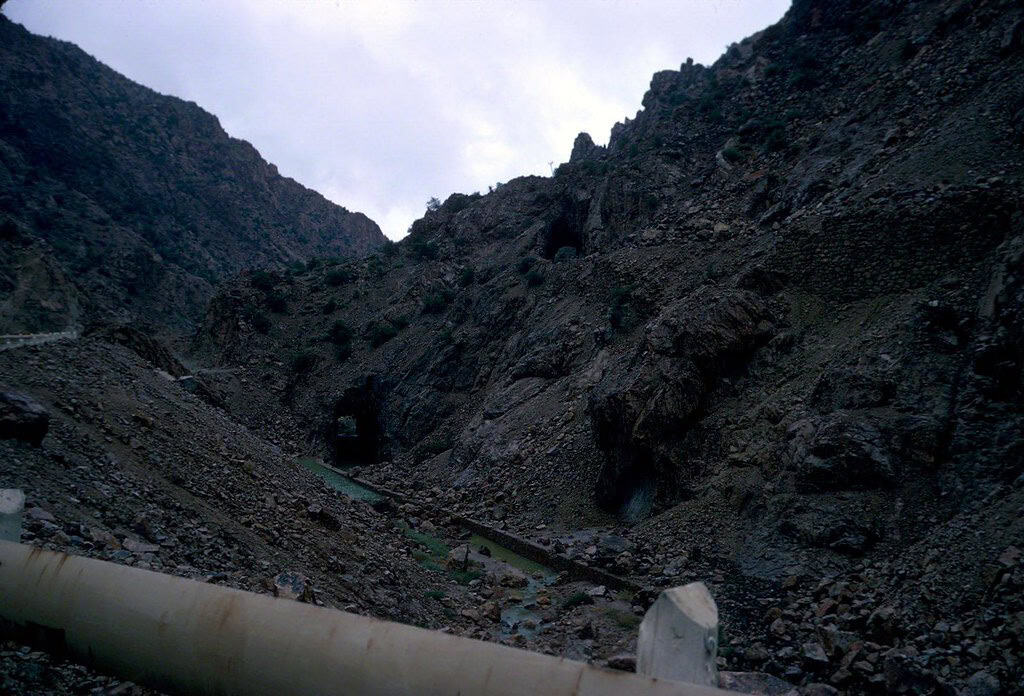
We often think of hydraulics as something more modern, but the concept stretches back to Antiquity. Ancient military applications of the use of hydraulics can be found in Rome, where its engineering prowess still gets lip service in popular discourse. The use of hydraulic mining techniques for military applications has 2 notable use cases: the siege of Uxama in the Iberian Peninsula and Dolaucothi in what is now Wales.
Roman engineers diverted entire waterways while constructing miles of aqueducts to redirect water to the hillsides. Militarily, this meant the Romans were able to completely saturate the soil, collapsing embankments and fortifications, and leaving cities vulnerable to the waiting legions. Just doing this once was an accomplishment, as the logistical effort it entails is massive. Roman engineers would’ve had to survey terrain, construct cisterns, calculate the flow rates of water, and ultimately decide on the right time to let it release. It easily rivals the accomplishments of any modern combat engineer with the aid of modern computers.
Inflatable River Crossings
©Osama Shukir Muhammed Amin FRCP(Glasg) / CC BY-SA 4.0 – Original / License
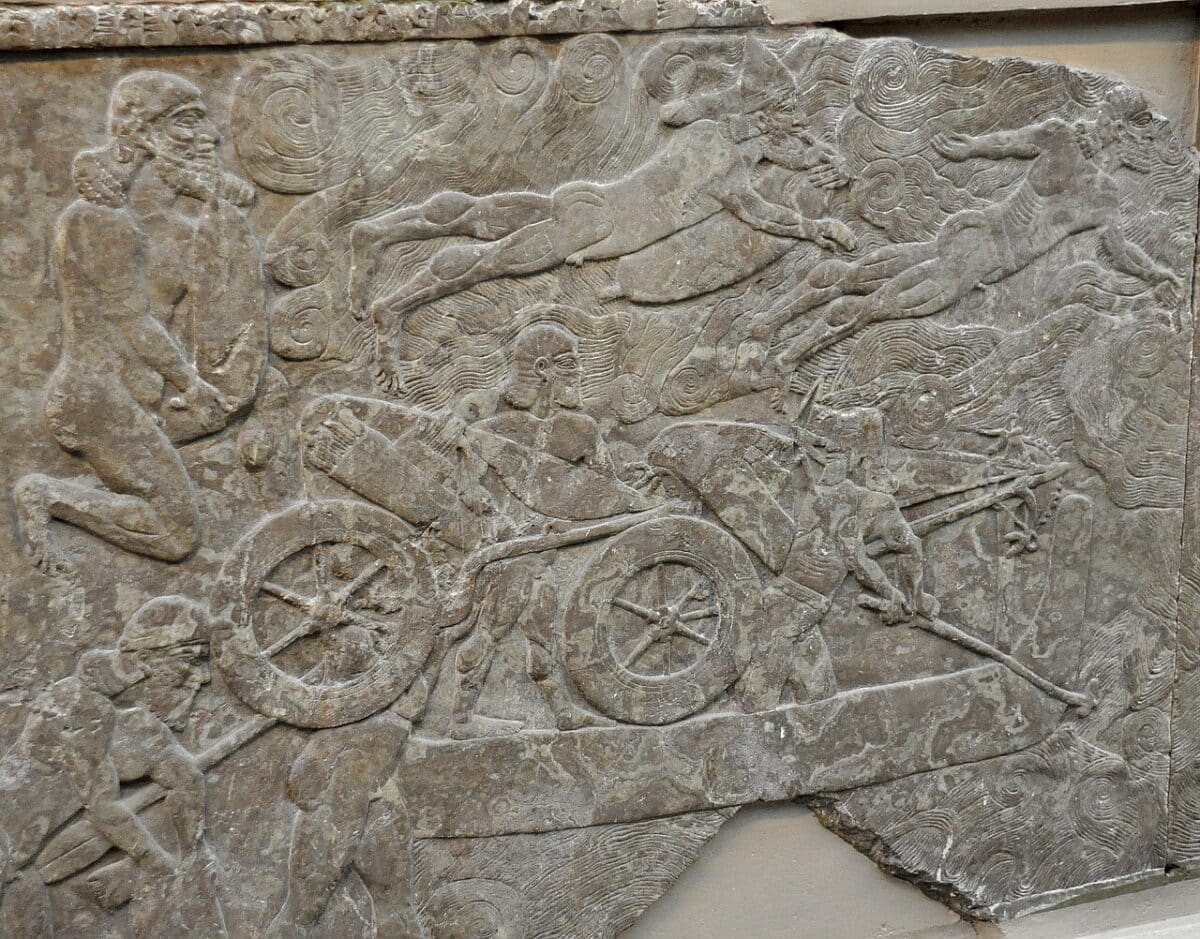
The Assyrian army of the 9th and 8th centuries BCE was capable of crossing rivers with minimal planning needed. This was well before the era of inflatable pontoon bridges, but the concept remains shockingly similar. It lacks the glitz and luster of some weapons platforms of the ancient world, but this is a relatively advanced ancient military invention, making use of inflatable animal-skin bladders. Assyrian soldiers would inflate these bladders to use as personal flotation devices. In some cases, they’d lash multiple skins together to create a raft to carry horses, supplies, and siege craft.
These are documented in Assyrian reliefs and are frequent enough to bear mention. Soldiers are seen holding inflated skins while crossing waterways, with officers standing along the shore and directing traffic. The logistical simplicity at play here is rather breathtaking as well, as animals would often accompany soldiers on marches. They’d be butchered, eaten, and then their hides would be repurposed as vital military infrastructure.
Repeating Crossbows
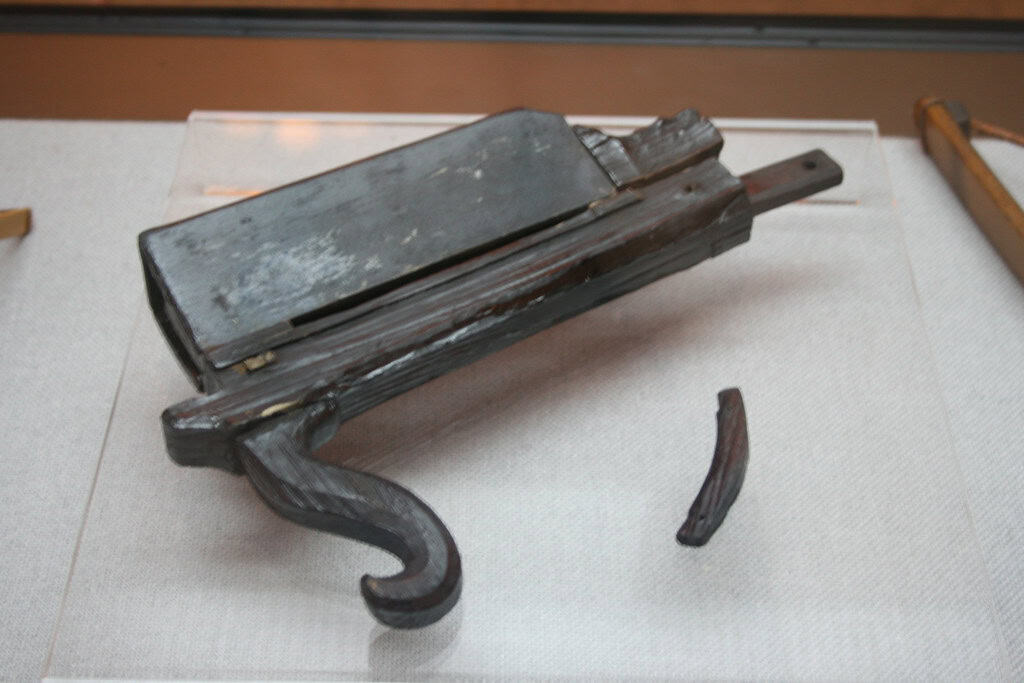
©"Warring States Repeating Crossbow" by Gary Lee Todd, Ph.D. is licensed under CC0 1.0. – Original / License
Ancient Chinese commanders understood a shockingly modern principle of combat: it isn’t the power of weapons, but the volume of force you can levy at a target. Quite a bit is said about repeating crossbows, and there are certainly some drawbacks. They lack the power of their more usual brethren seen across medieval Europe, and certainly lack the raw power of dedicated artillery pieces like ballistae or arbalests. When you’ve got dozens or hundreds trained on the same formation, that doesn’t matter.
The zhuge nu, or repeating crossbow, was able to discharge 10 bolts in 15 seconds. They might not penetrate armor, but they could break cavalry charges. A charging horse bearing a rider isn’t likely to notice the weapon firing upon it as it tries to get out of harm’s way. Further, it took minimal training to get soldiers up to speed with it. Effectively, you could have a drilled cadre of troops capable of laying down hundreds, if not thousands, of bolts in a prolonged engagement.
The Royal Road
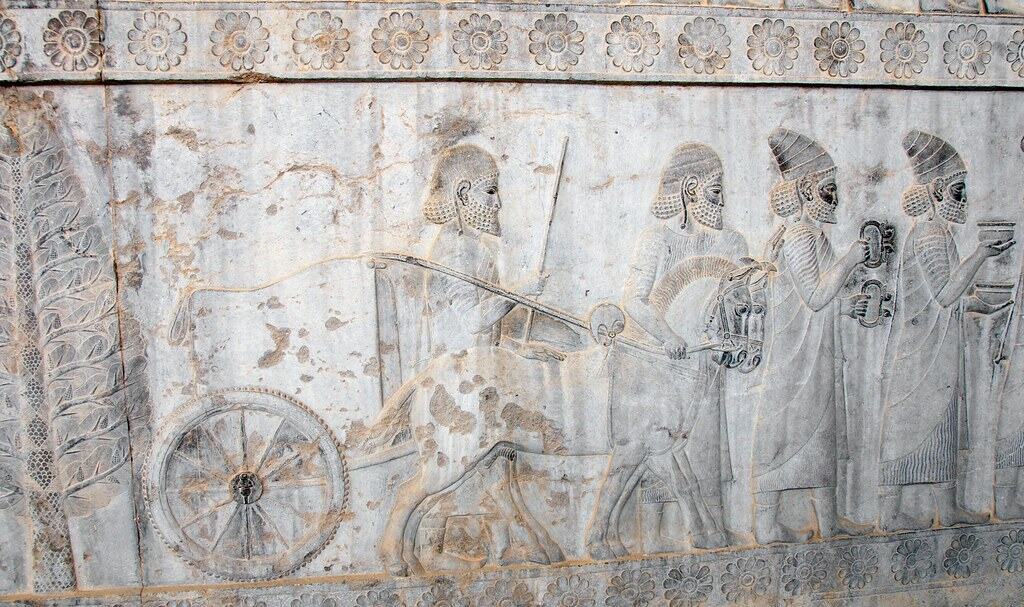
©"Lydian Tribute Bearers on the Apadana Staircase 19 (Best Viewed Size 'Large')" by A.Davey is licensed under BY 2.0. – Original / License
Intelligence is a vital part of any ancient military, playing a vital role since Bronze Age spearmen met on the battlefields of history. While we often look at the likes of field telephones, radios, and other modern communication equipment these days, the Achaemenid Persians weren’t afforded the same sort of luxuries. Instead, they came up with the Royal Road, a 1,700-mile expanse stretching from Susa to Sardis.
What made this such a notable accomplishment was the speed of transmission. Fresh horses and riders were positioned at intervals that would take a day to cross. Messages could cross the entire empire in about a week, faster than dedicated runners and riders sent to carry things back. The Greek historian Herodotus noted that they carried messages with such speed that “neither snow, nor rain, nor heat, nor darkness” would stop the riders. For such a vital technology, it was deceptively simple, but the practical applications of fast-traveling intelligence made the Achaemenid Persians one of the dominant empires of their era.
Corvus
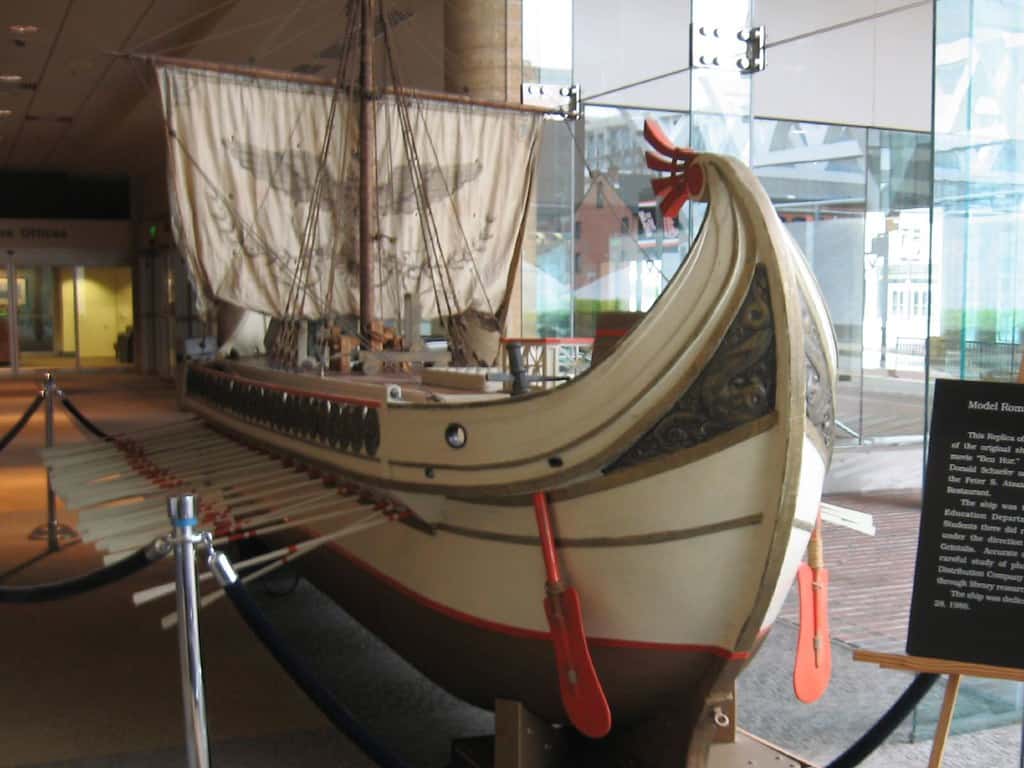
©"Model Roman Ship from the movie Ben Hur" by twbuckner is licensed under BY 2.0. – Original / License
The Roman Republic found itself outmatched when it came to the naval prowess of the Carthaginians during the First Punic War. They lacked the centuries of naval traditions and were primarily a land force centered around the Mediterranean. It would take ages to muster the same level of discipline and drilling, and that wasn’t something afforded to the Romans. Instead, they came up with a rather elegant, brutal solution.
The corvus was a spiked boarding bridge mounted on the bow of Roman warships. Rather than waging war on the sea, a Roman ship would close in, drop the bridge, and let its soldiers disembark and fight with sword and shield. As an ancient military technology, it shows a fair amount of tactical skill. Rather than combat the enemy through the development of its own naval methodologies and doctrines, the Romans eliminated the advantage held altogether.
Arthashastra

©ADragan/Shutterstock.com
There is no shortage of military treatises and texts from throughout history. Few match The Arthashastra, which is attributed to Kautilya circa around 300 BCE or so. It is the first truly comprehensive manual for unconventional warfare. It covers the use of incendiary agents through the use of plants, fats, and powder. The text also covers the use of contaminated water supplies and waging psychological warfare campaigns.
It isn’t a philosophical text. There isn’t time for navel gazing, but rather just an ancient military manual covering the most unusual aspects of warfare and showing just how effective it could be. Some of the reasoning is sound, and the formulations for poisons and incendiary have been evaluated to some degree of functionality. Kautilya reasoned that an army could meet defeat before soldiers ever met on the battlefield.
Viking Ships
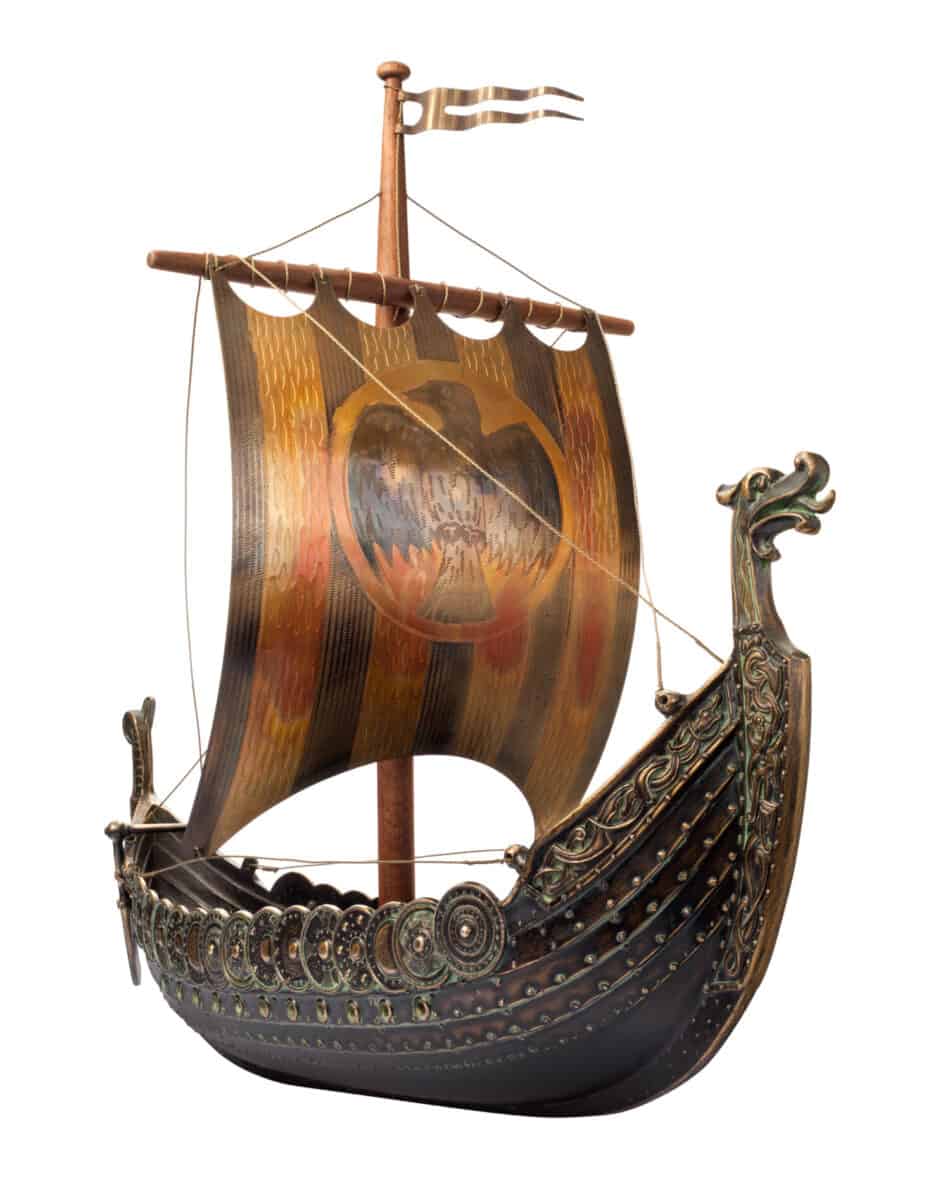
©Danny Smythe/Shutterstock.com
Rounding out our ancient military inventions is something that skirts right along the accepted boundaries of the ancient world. Viking longships often belonged to the early Middle Ages, marking the fall of Western Rome and the shift of powers that would see the Byzantines carry on as a successor state. These longships do bear mention, however, in part thanks to their rather elegant design.
Viking shipwrights built a typical longship with a rather shallow draft, meaning naval vessels could cross rivers, not just the sea. In an era when coastal fortifications might have meant the difference between a successful invasion and protecting your home, the Vikings simply bypassed that entirely. The Vikings understood all too well that navigating all waterways was a means of projecting force, a concept that still holds true today.
Conclusion
If you were to trace the common elements between the ancient military technologies covered today, you’d see a focus on the practical. It isn’t so much about who brought the most sophisticated or advanced implements to bear, but how those reflected on an operational level. Ancient military engineers weren’t looking to reinvent the wheel, but rather solve practical problems in the field with solutions they could readily implement. As we find with hindsight, these solutions often were so well considered that they would see use today.
The image featured at the top of this post is ©VicVa/Shutterstock.com